The seven hills of Lisbon are not a selling point. They are a physical fact of the city that every piece of tourism copy romanticizes and every pair of legs eventually resents. Lisbon is built on steep gradients, and the azulejo-tiled facades and terracotta rooftops that look so gentle in photographs are connected by cobblestone streets that climb at angles no one warned you about. This is also, ultimately, why the city is worth every step.
Start at Baixa, the flat grid of streets rebuilt after the 1755 earthquake under the direction of the Marquis of Pombal. This is Lisbon at its most legible — wide pedestrian avenues, the Praça do Comércio opening onto the Tagus, coffee that costs what coffee should cost if you sit at the counter rather than a terrace chair. Eat a pastel de nata at Manteigaria on Rua do Loreto before climbing anything. This is not optional.
Alfama is the oldest district in the city and the one most likely to disorient you completely within three minutes. The Moorish street plan — if it can be called that — predates the earthquake and was too entangled to raze and rebuild. Alleys fork without warning, dead-end at someone’s laundry line, then resume at a different level. The Igreja de São Vicente de Fora, with its eighteenth-century azulejo panels depicting the fables of La Fontaine, is worth finding. The Miradouro da Graça above it has a view of the Tagus and the castle and the 25 de Abril bridge that looks implausibly like a smaller San Francisco — because the same company that built the Golden Gate built it.
Bairro Alto is the hill that matters at night. The neighborhood is quiet through the afternoon and then fills, around ten in the evening, with a density of bars and restaurants and people sitting on steps that is entirely out of proportion to the width of its streets. Fado houses here are tourist-oriented but not fraudulent — the music is real even when the audience is not local. For fado with a local crowd, cross into Mouraria.
Belém is technically a separate district, accessible by tram along the river. The Jerónimos Monastery is the most important building in Portugal and one of the most important in Europe — the late Gothic Manueline style, all maritime ornament and twisted stone rope, is found nowhere else in quite this form. The Torre de Belém in the river is photographed constantly and is smaller than expected. Visit it anyway. The Tagus at this point is very wide and the light on the water in the afternoon has a Mediterranean flatness that Lisbon’s northern latitude should not logically produce.
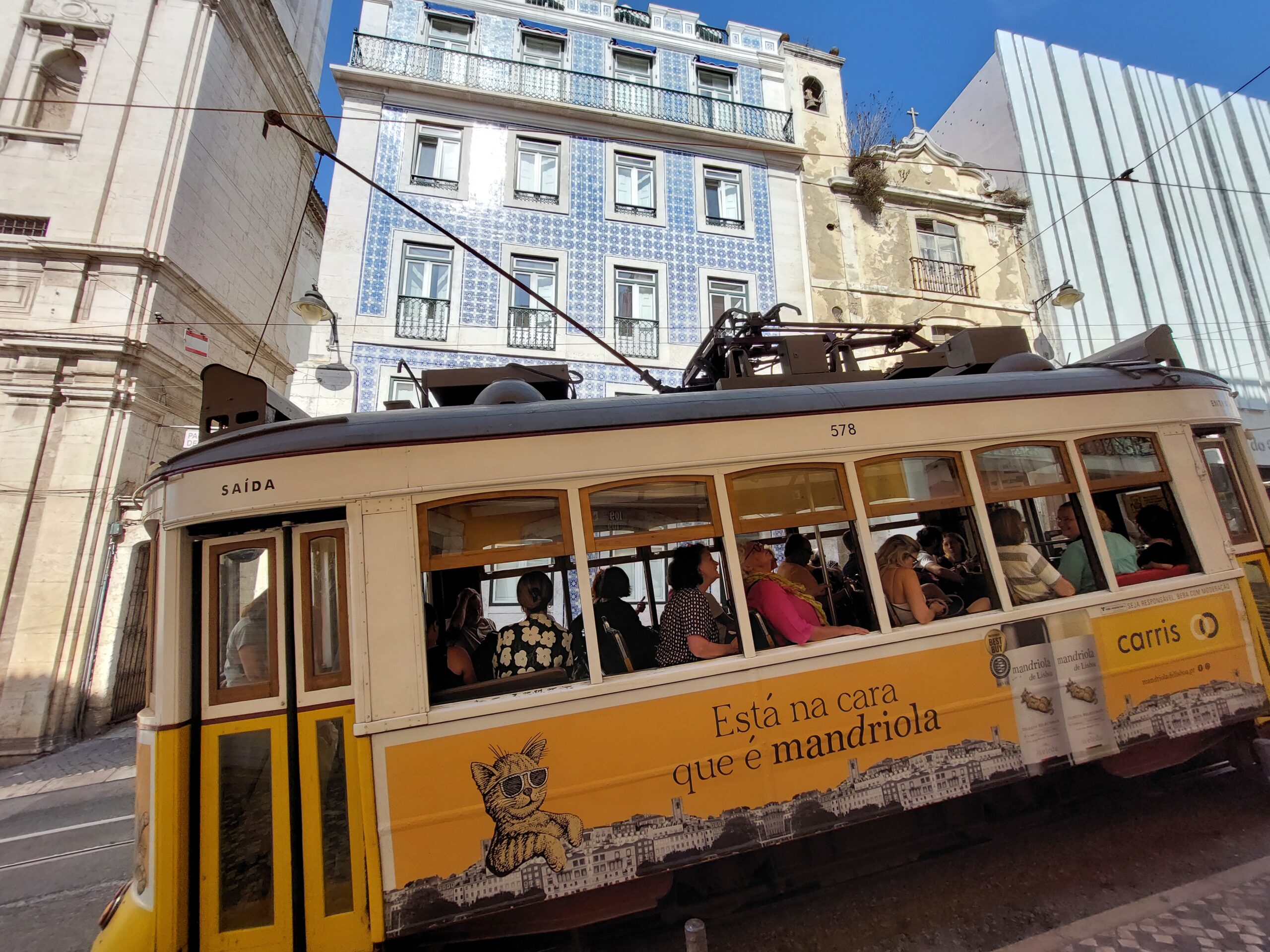
The trams are not a tourist gimmick. Tram 28, despite its reputation as a pickpocket corridor, is still the fastest way to move between Alfama, Baixa, and Bairro Alto if your legs are done. Hold your bag in front of you, watch the door numbers, and accept that the tram will be packed. The alternative is the elevadores — the funiculars that Lisbon built in the nineteenth century to manage its own topography. The Elevador da Bica, climbing through a narrow street in Misericórdia, is the most photographed. The Elevador da Glória, connecting Restauradores to Bairro Alto, is the most useful.
One truth the walking guides omit: Lisbon is best in October and March. July and August are crowded past the point of comfort and hot in a way that makes the hills punishing. The city’s light — that famous, specific Atlantic light — is actually better in the shoulder seasons, lower and more golden, and the miradouros are not yet full of people taking vertical phone videos of the view.