• Skip to main content
  • Skip to secondary menu
  • Skip to footer

Virtual Travel Guide

Top Travel Destinations in Digital Media

  • Sponsored Post
  • About
    • GDPR Compliance Statement
  • Contact

A Day at The Metropolitan Museum of Art

July 7, 2024 By admin

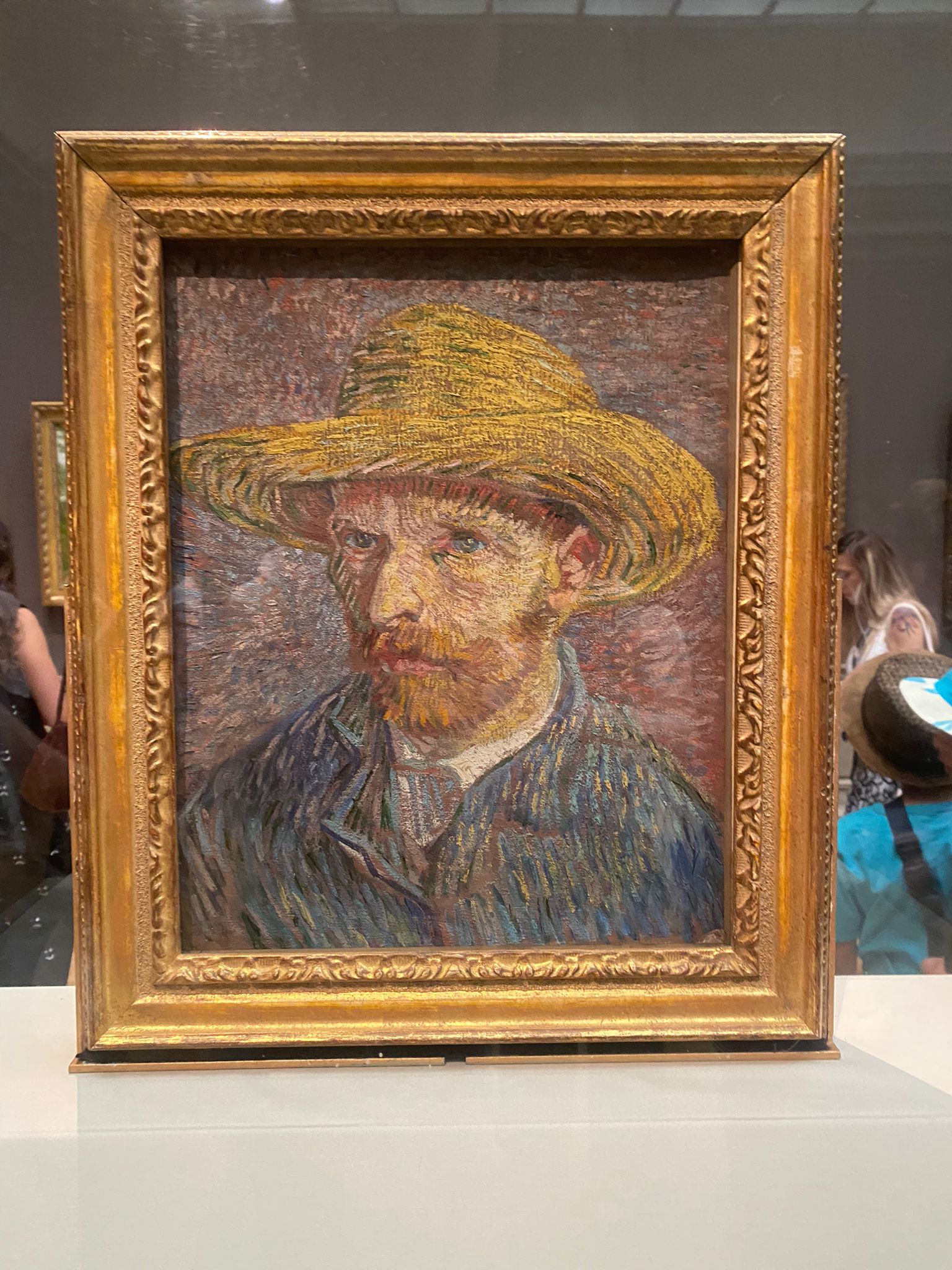
The museum visit began with an immersive step into the world of Vincent van Gogh at The Metropolitan Museum of Art. The first painting that caught the eye was a self-portrait, a striking image of the artist himself. Van Gogh’s face is framed by a broad straw hat, its brim casting a shadow over his intense eyes. His beard is a vibrant orange, contrasting with the muted, earthy tones of his jacket. The background is a swirl of colors, typical of Van Gogh’s unique brushwork, giving the painting a lively, almost hypnotic energy. The intricately carved golden frame adds a touch of elegance, making the portrait feel even more significant, as if it were peering into the very soul of the artist.

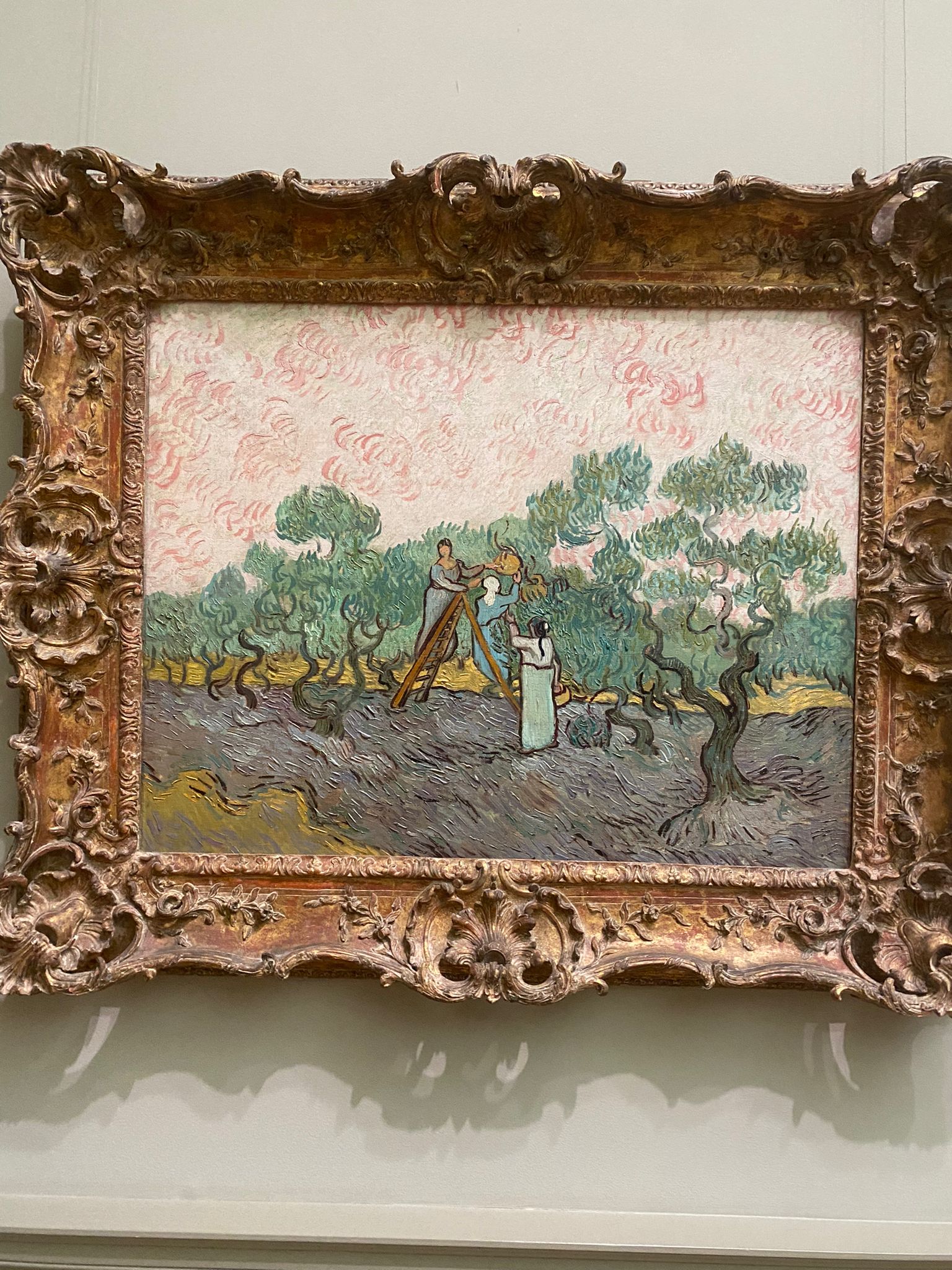
Moving along, the next masterpiece was another Van Gogh painting, this time capturing a pastoral scene of laborers in a field. The canvas is alive with the motion of workers and the texture of the landscape, painted with broad, expressive strokes. The swirling, thick application of paint creates a dynamic sense of movement and depth. The sky is painted in a mesmerizing blend of pink and blue, with the ground showcasing vibrant greens and browns. The ornate frame, richly detailed with baroque elements, frames the painting like a window into another world, emphasizing its historical and artistic value.

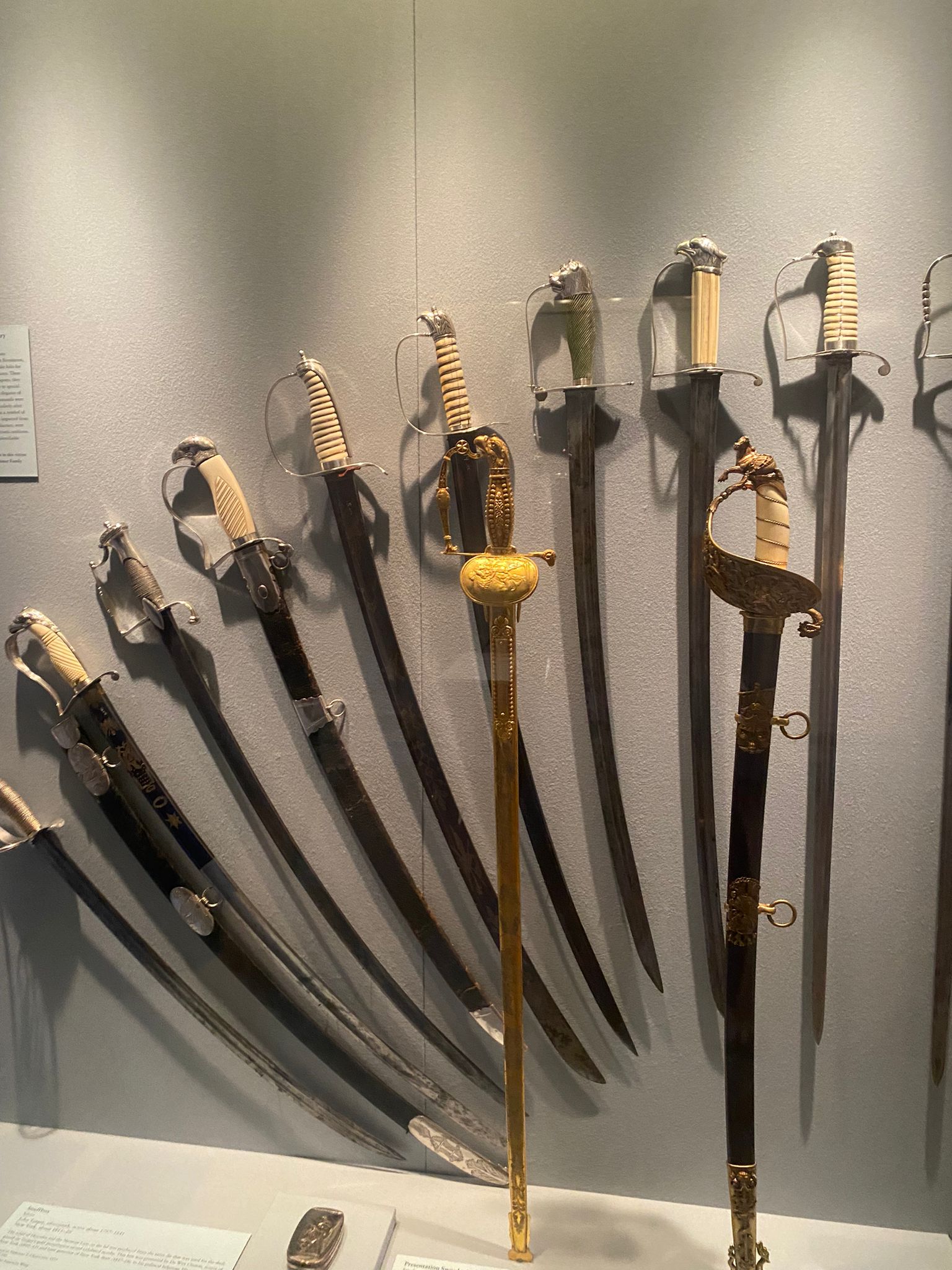
Transitioning from the vivid colors of Van Gogh, the exhibit shifted to a collection of historical weaponry. The display of swords is both daunting and fascinating. Each sword is meticulously crafted, with handles wrapped in intricate designs and blades that glisten under the museum lights. One particularly stunning piece stands out – a golden sword with an ornate hilt, engraved with delicate patterns and symbols. The display highlights the artistry and craftsmanship that went into these weapons, transforming them from mere tools of war into works of art.

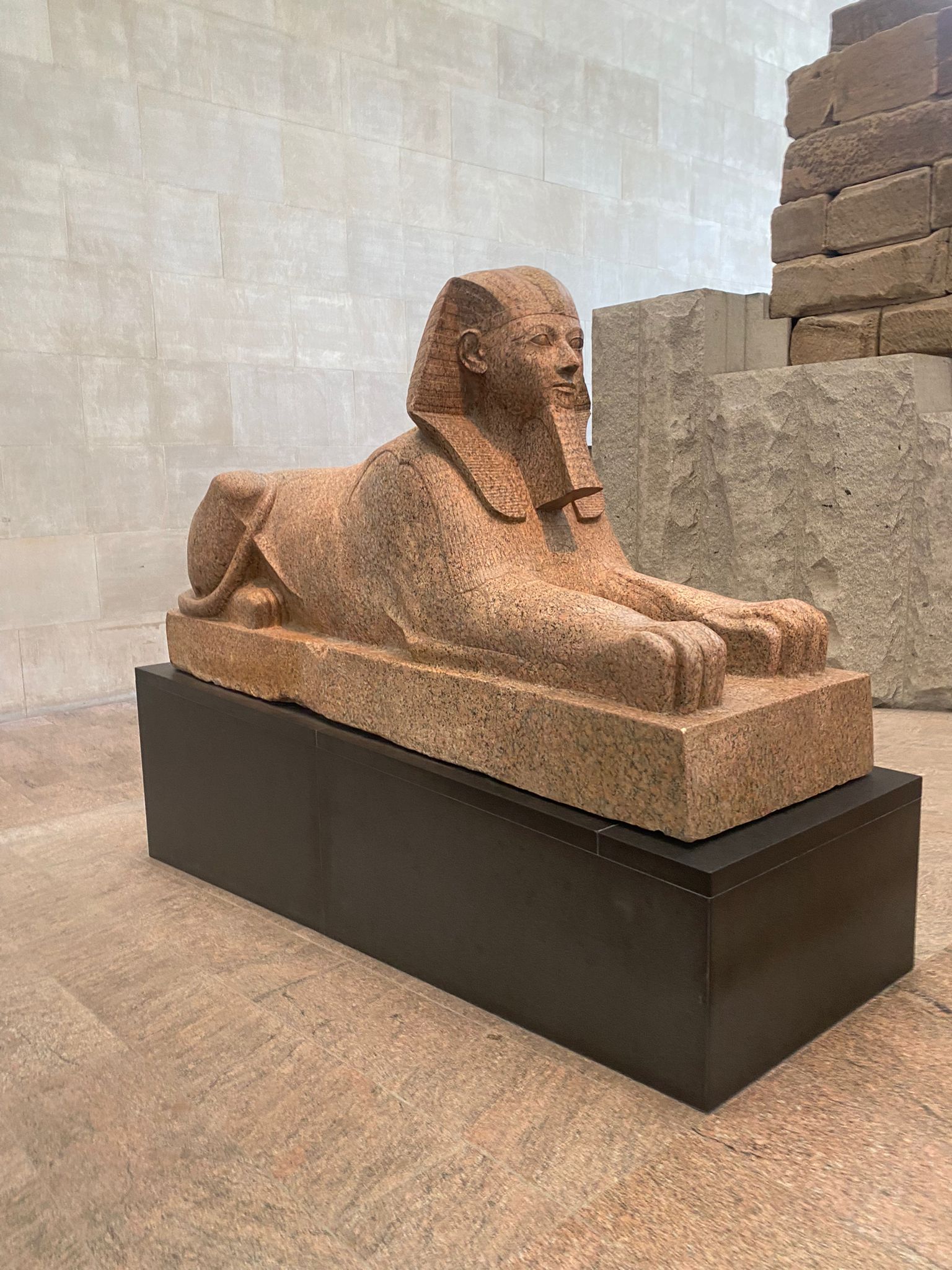
The journey through time continued with an encounter with an ancient Egyptian sphinx. This majestic statue, carved from a single block of granite, radiates a sense of timelessness. The sphinx, with its calm, regal expression and powerful lion’s body, stands on a solid black pedestal, giving it a sense of gravity and importance. The wear and texture of the stone tell a story of an era long past, evoking a deep sense of history and mystique.

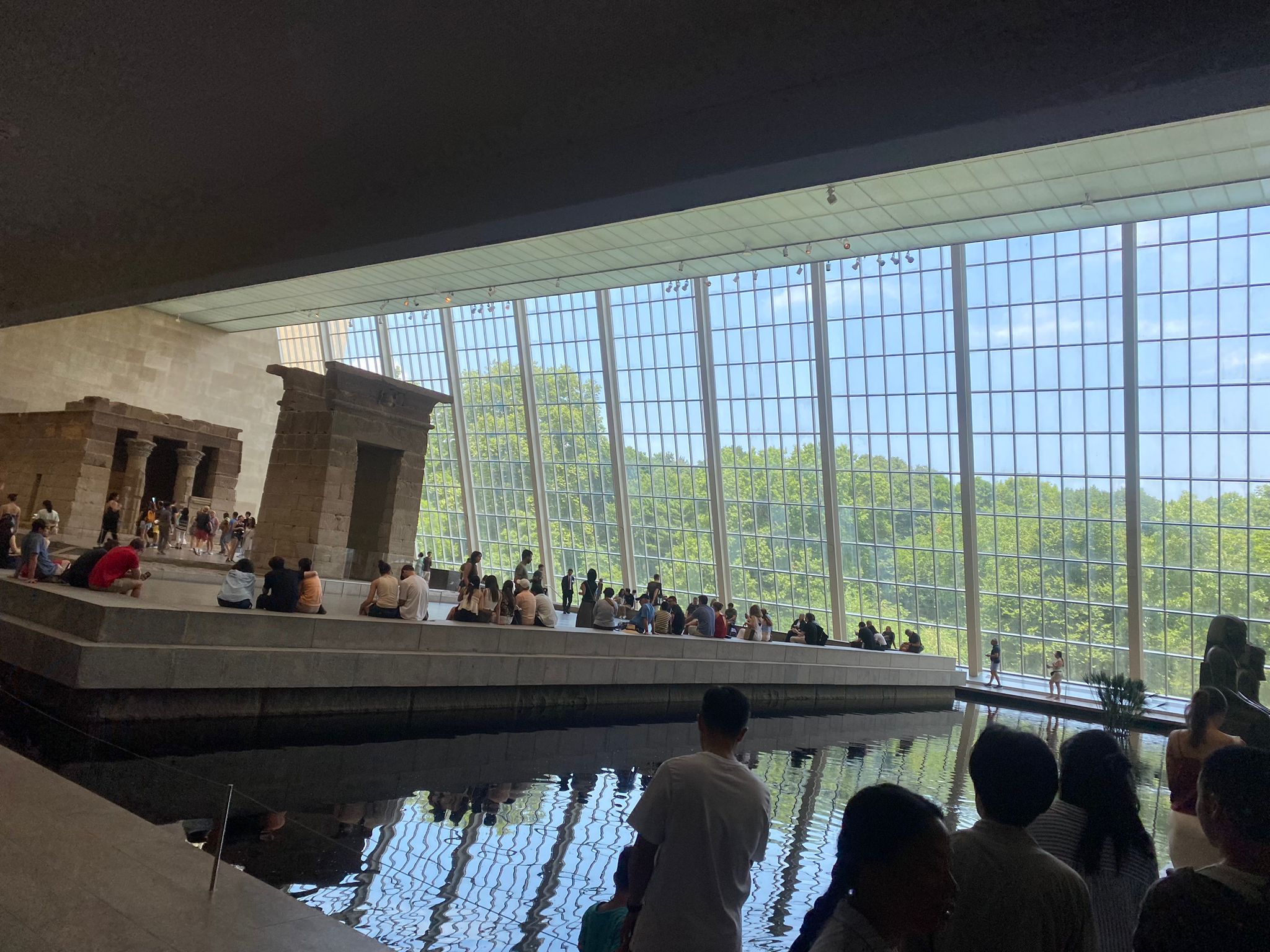
The museum’s architecture itself became a part of the experience in the next hall, featuring the Temple of Dendur. This ancient Egyptian temple, housed within a grand, glass-enclosed space, offers a breathtaking view. The temple’s sandstone blocks are bathed in natural light, highlighting their weathered surfaces and intricate carvings. The reflection of the temple in the still waters of the indoor pool adds a serene, almost otherworldly atmosphere. Visitors sit around, some deep in thought, others engaged in quiet conversations, all absorbing the historical significance and tranquil beauty of the scene.

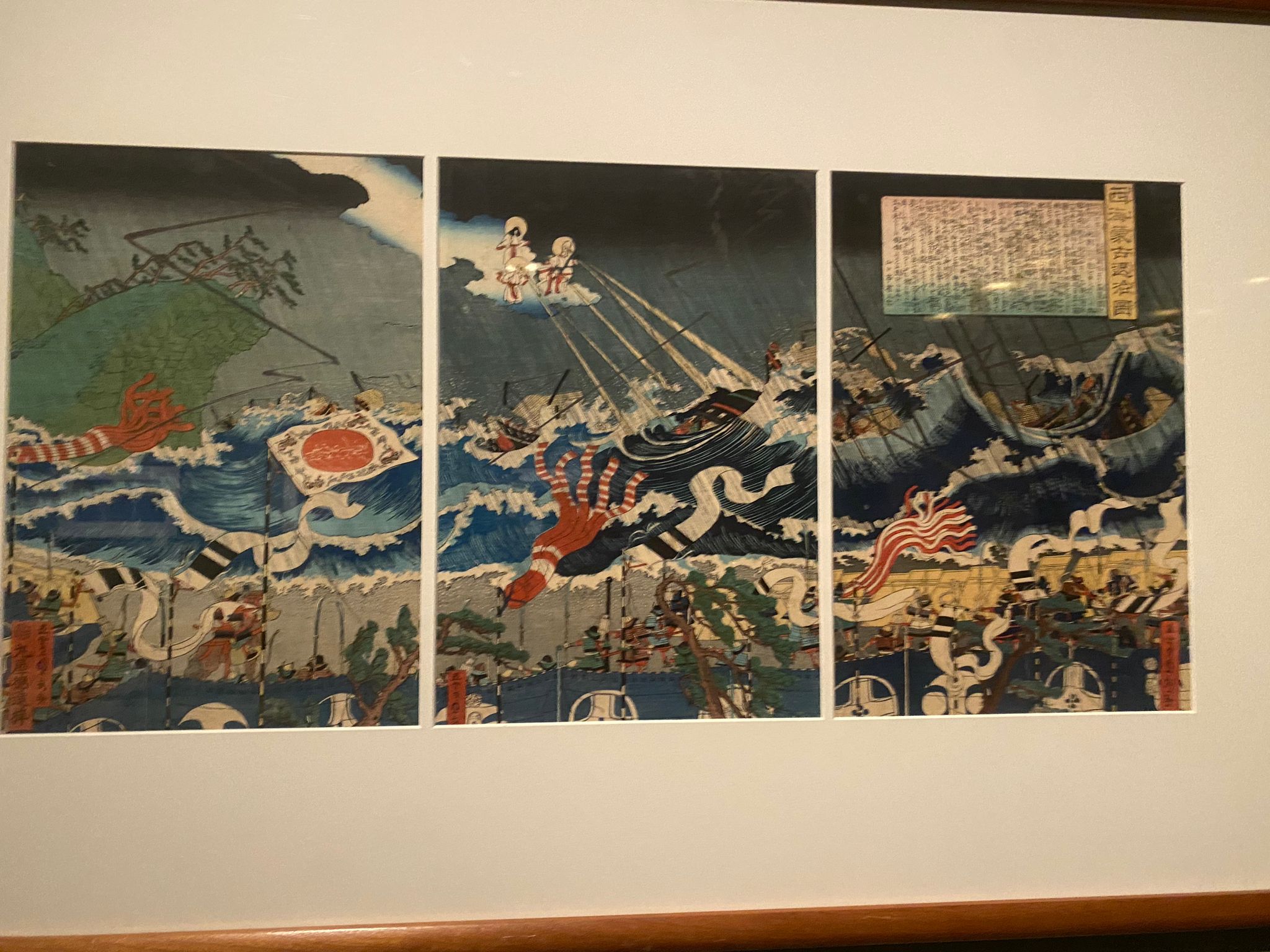
A turn into another hall brought the vivid scenes of Japanese art into view. A triptych of prints displayed a chaotic and dramatic naval battle. The vibrant colors and dynamic composition capture the ferocity of the waves and the intensity of the conflict. Each panel tells a part of the story, with samurai warriors, ships clashing, and the tumultuous sea all intricately detailed. The careful composition and bold lines reflect the mastery of Japanese woodblock printing, drawing viewers into the heart of the action.

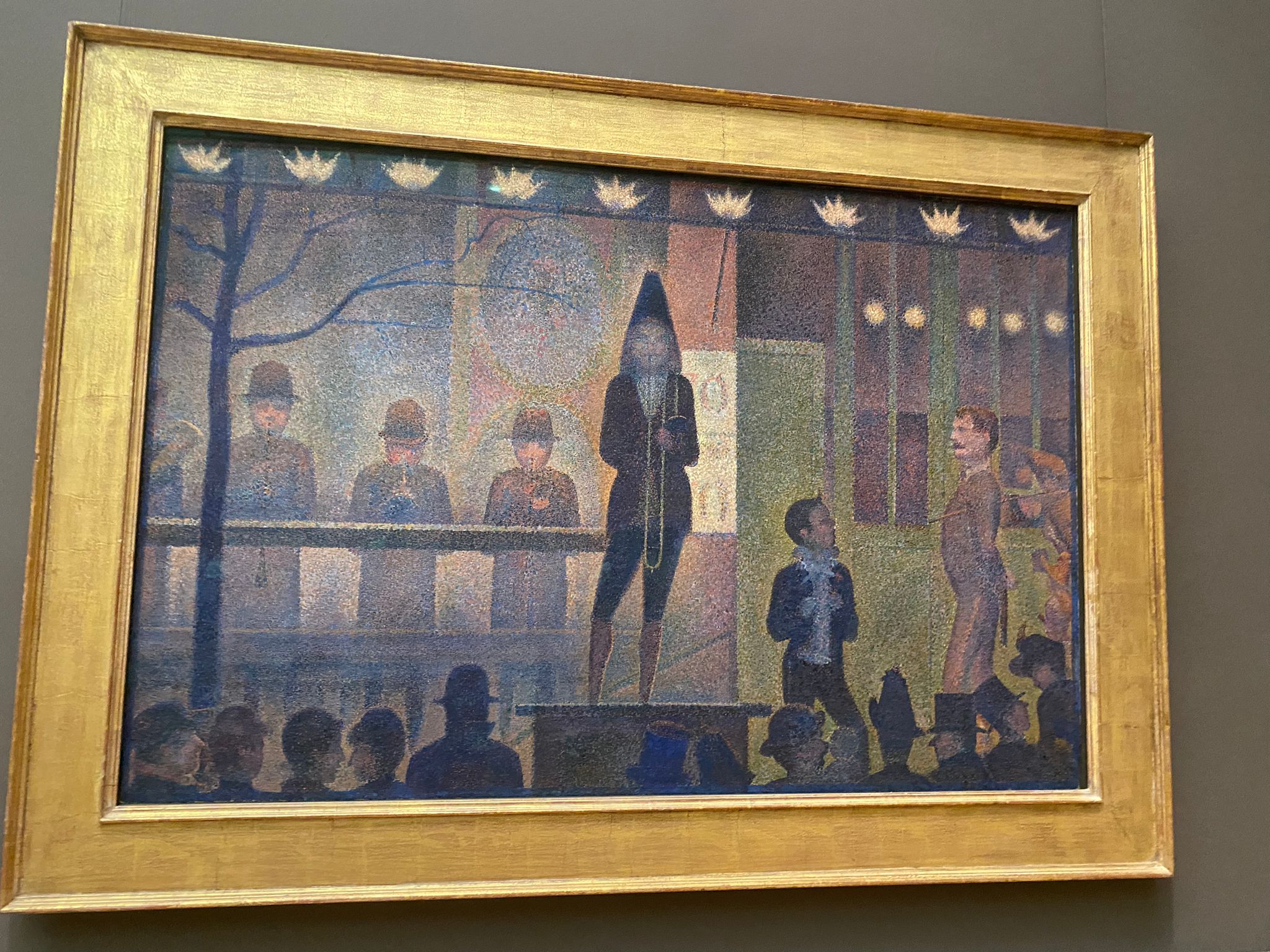
Further along, the exhibit shifted to the works of Georges Seurat, specifically a vibrant scene depicted in pointillism. This technique, with its meticulous dots of color, creates a rich tapestry when viewed from a distance. The painting captures a lively moment, possibly a fair or a carnival, with figures engaged in various activities. The use of light and shadow through color dots gives the scene a unique vibrancy and depth, inviting viewers to step closer and marvel at the painstaking detail.

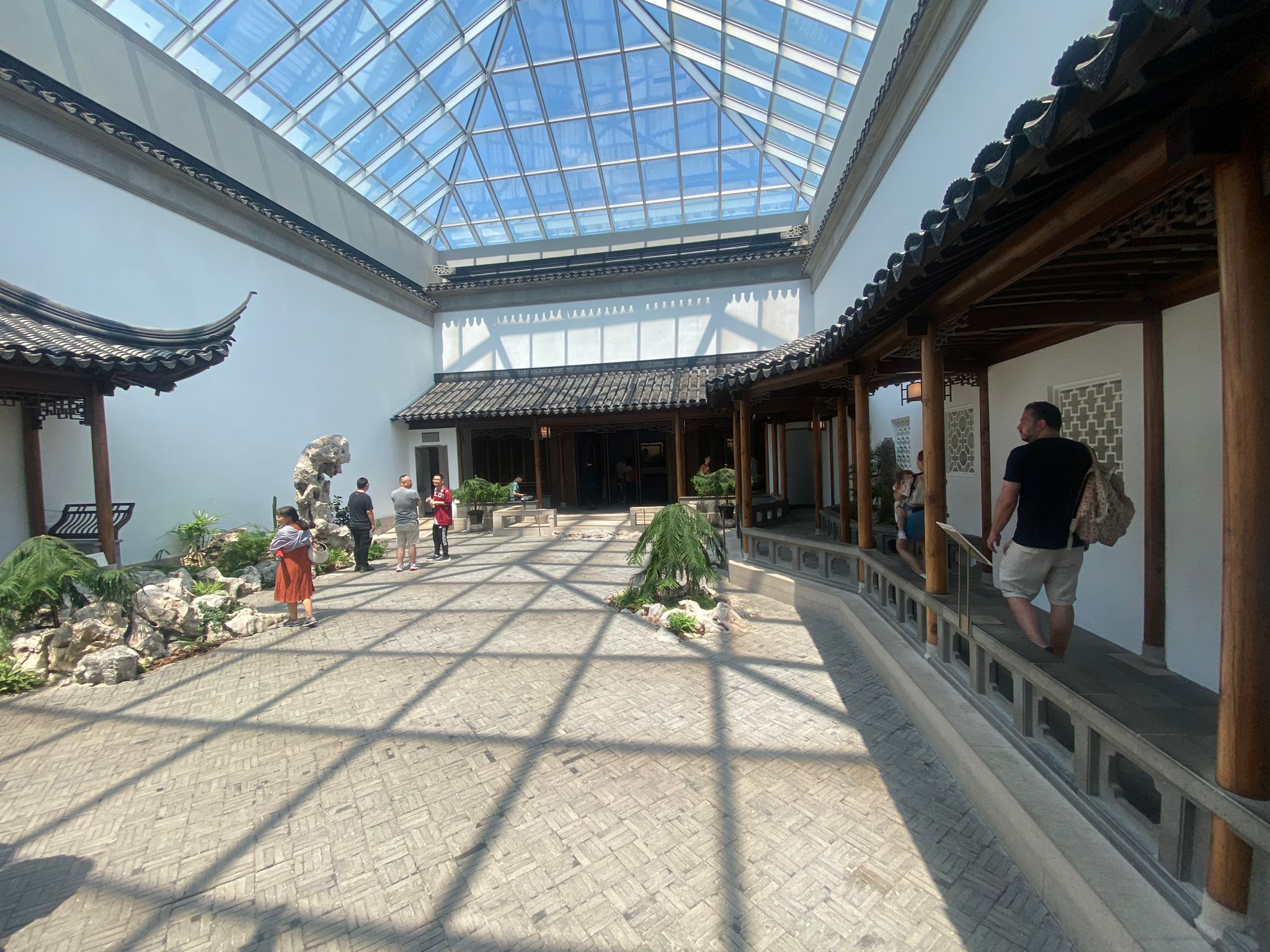
The final stop on the tour was a serene Chinese garden courtyard, a space of tranquility and reflection. The courtyard, under a glass roof, is bathed in natural light, casting intricate shadows on the stone floor. Traditional Chinese architectural elements, with their curved roofs and wooden beams, frame the space. Visitors wander or sit quietly, surrounded by lush greenery and carefully placed rocks, creating a harmonious blend of nature and structure. The calmness of the courtyard offers a peaceful conclusion to the diverse and enriching museum visit.

Each exhibit, from the powerful strokes of Van Gogh to the intricate details of ancient artifacts, told a unique story, enriching the mind and soul with layers of history, culture, and art. The visit to The Metropolitan Museum of Art was not just a journey through art and history but a journey through the human experience, captured in colors, stone, and steel.
A Day at The Metropolitan Museum of Art

A Day at The Metropolitan Museum of Art

A Day at The Metropolitan Museum of Art

A Day at The Metropolitan Museum of Art

A Day at The Metropolitan Museum of Art

A Day at The Metropolitan Museum of Art

A Day at The Metropolitan Museum of Art

A Day at The Metropolitan Museum of Art

Filed Under: News

Footer

Recent Posts

  • Palermo Must-See Guide, the Places I Would Never Let a Friend Skip
  • Lisbon Is So Multilayered, Literally
  • Musée des Beaux-Arts de Quimper: An Incredible Art Museum in Brittany
  • Florence Leaves Room for the Unexpected
  • Why Bordeaux Is Never Boring
  • Évora, a Roman Temple, a Chapel of Bones and a Walled Town in the Alentejo
  • Porte de Bourgogne Marks the Entrance to Historic Bordeaux
  • What Museum Rooms Tell Us Before We Look at the Exhibits
  • The First Hour After Arriving in an Unfamiliar City
  • Bom Jesus do Monte and the Art of the Climb in Braga

Travel Marketing

  • Travel Marketing
  • Timey.org
  • Ancient Rome
Festa dei Morti in Palermo, When the Dead Bring the Presents and Pastry Shops Fill With Sugar Dolls
Krakow After Dark: The Timeless Beauty of the Main Market Square
Álava Armoury Museum: Discovering the Age of Knights in Spain’s Basque Country
Salamanca From Above: A Journey Through Nine Centuries of Spanish Architecture
Krakow Is a European Gem That Still Deserves More Attention
Golden Hour in Rhodes: How to Spend a Perfect Evening in the Medieval Old Town
Royal Armouries at the Tower of London, Where Knights and Their Horses Still Stand Guard
Lisbon Cathedral, Where Medieval Portugal Meets the Modern City
Hotels Lose Direct Bookings at the Checkout Page When Mandatory Fees Show Up Late
Small Hotels Can Turn Local Partnerships Into Better Direct Bookings
Why Cities Keep Rebuilding Their Past
How Historic Interiors Teach Us to Behave
Alte Nationalgalerie in Berlin and the Art of Looking Across Centuries
Villa Pacini and Catania's Headless Bourbon Kings
Historical Reenactment Shows and the Desire to Watch the Past Come Alive
Spain’s National Day 2026: A Ceremony of Continuity, a Government Nearing Its End?
Vienna Secession: The Golden Dome That Declared Art's Freedom
Orbital Launch Schedule, Late September and October 2026, With Crew-13 and Starship Flight 14
Martian Moon eXplorer 2026, October 19, Yoshinobu Launch Complex LP-2, Tanegashima
Why Lisbon Left the Carmo Convent Roofless
Sheffield Researchers Recreate the Lycurgus Cup Effect and Show How Hard the Roman Trick Was
Roman Road Milestones Were the First Navigation System
Caligula: What the Sources Say About the Mad Emperor, and What They Invented
Piranesi's Altar to Apollo and the 18th-Century Business of Selling Ancient Rome
Juno Moneta: How a Roman Goddess Gave Us the Words Money and Mint
Julius Caesar's 44 BCE Denarius: The Coin That Helped Get Him Killed
Half of This Roman Mosaic Glass Bowl Is Plaster, and the Smithsonian Kept It
George Loring Brown's Temple of Peace Painting and the Roman Forum's Most Misnamed Ruin
The Badminton Sarcophagus Was Carved While the Roman Empire Was Coming Apart
A Freed Slave in Augustan Rome Paid to Have His Wrinkles Carved in Marble

Media Partners

  • Travel Market
  • Travel Magazine
Salamanca Travel Guide: Cathedrals, University and the Golden City
Sagrada Familia Rewards a Closer Look at Its Carved Stone Doorways
Expedia Fall 2026 Release Adds an AI Activity Planner, Hotel Answers From Reviews and Pay-Later Vrbo Stays
Paris Wallace Fountains Offer Free Drinking Water With a Winter Catch
Seabourn Expands Earth and Ocean Into a Fleetwide Culinary Philosophy
IMTM 2027, February 16–17, EXPO Tel Aviv
Spain Continues Its Fight Against Tourism With 10% VAT on Holiday Rentals From December 1
American Museum of Natural History: $37 for Out-of-State Adults and a $465 Million Gilder Center
EU Entry/Exit System Is Live at Every Border, and ETIAS Is Delayed Again With No Date
Hofbräuhaus Munich Pours a Litre for €11.60, About €4 Less Than an Oktoberfest Mass
Mortadella, the Unsung Modest Hero of Italian Cuisine
A Smartphone Is All You Need to Start Travel Vlogging Today
Dining in Rennes
Plaza de España in Seville, the 1929 Expo Square With a Tiled Alcove for Every Province
Pena Palace Cloister Preserves the Monastery Inside the Royal Fantasy
Plan a City Break Around One Good Walk
Why a Waterfront Makes a Useful Starting Point for Exploring a City
Lyon Riverboat Tours: Seeing the Saône From Vieux Lyon to Confluence
Taormina, Sicily: A Fountain, a Crowd and the Art of Enjoying a Piazza
Belém, Where Lisbon Keeps Its Seafaring Memories

Copyright © 2022 VirtualTravelGuide.com

Market Analysis & Market Research