• Skip to main content
  • Skip to secondary menu
  • Skip to footer

Virtual Travel Guide

Top Travel Destinations in Digital Media

  • Sponsored Post
  • About
    • GDPR Compliance Statement
  • Contact

The Splendor of the Antiquarium in Munich’s Residenz

July 6, 2024 By admin

The image captures the magnificence of the Antiquarium in Munich’s Residenz, a breathtaking hall that exemplifies Renaissance architecture and art. As one steps into this grand space, the eyes are immediately drawn to the intricate ceiling frescoes, depicting a celestial array of mythological scenes and divine figures. The central panel showcases a radiant Madonna surrounded by cherubs, exuding an ethereal glow that illuminates the entire hall.
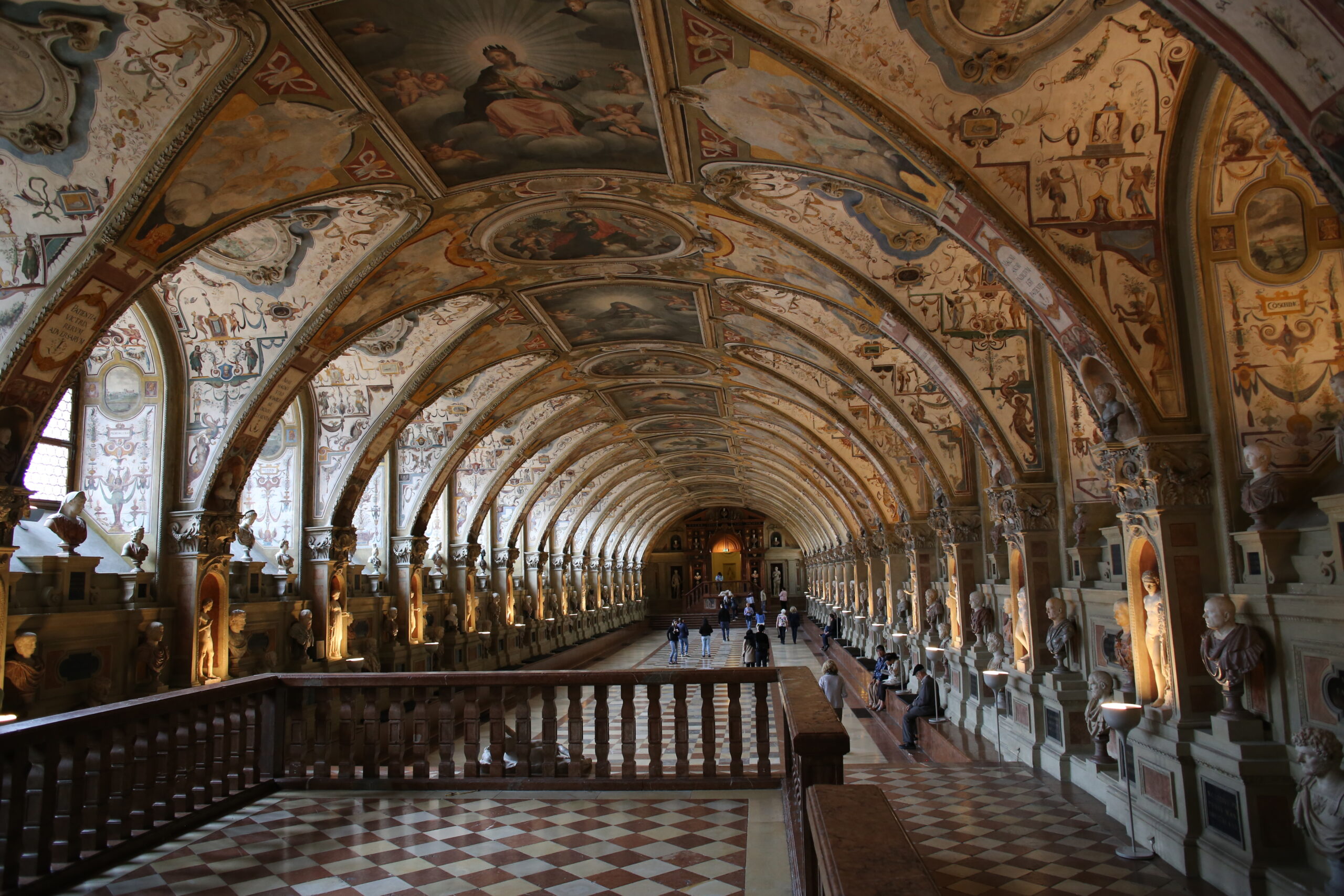
The Splendor of the Antiquarium in Munich's Residenz

The hall’s long, vaulted ceiling is adorned with a series of arches, each meticulously painted with elaborate motifs and delicate flourishes that celebrate both classical mythology and Renaissance humanism. Below the arches, a row of niches houses an impressive collection of busts and statues, each one a testament to the craftsmanship and artistic prowess of the era. These sculptures, bathed in soft, ambient light, create a rhythm along the hall’s length, guiding visitors towards the far end where a large, ornate altar stands as the focal point.

The floor of the Antiquarium is equally striking, with its polished, checkerboard pattern of red and white tiles reflecting the grandeur above. This harmonious blend of geometry and artistry enhances the spatial elegance, creating a sense of endless depth and perspective. Visitors strolling along this path are not just observing art; they are immersed in a continuum of history, art, and culture.

The balustrade in the foreground, made of finely carved wood, offers a vantage point that elevates the viewer’s experience, providing a panoramic view of the hall’s grandeur. It is from here that one can truly appreciate the symmetry and harmony of the design, as well as the scale of the artistic endeavor that brought this masterpiece to life. In the distance, a few visitors can be seen, their presence giving a sense of scale and adding a touch of liveliness to the otherwise solemn and reverent atmosphere. The Antiquarium, with its opulent décor and serene ambiance, stands as a timeless tribute to the artistic and cultural achievements of the Renaissance, inviting every visitor to step back in time and experience the splendor of a bygone era.

The Antiquarium is part of the Munich Residenz, the former royal palace of the Wittelsbach monarchs of Bavaria. This historic complex, situated in the heart of Munich, is one of the most significant and expansive palaces in Germany. It traces its origins back to a modest castle built in 1385, which over the centuries, expanded into a sprawling residence boasting a mix of Renaissance, Baroque, Rococo, and Neoclassical styles. Each addition and renovation reflects the evolving tastes and ambitions of its royal patrons, making the Residenz a living museum of architectural and artistic trends.

The Antiquarium itself, constructed between 1568 and 1571, is the largest Renaissance hall north of the Alps. Commissioned by Duke Albrecht V, it was originally intended to house his collection of antique sculptures. Over time, it became a ceremonial hall used for banquets and court festivities. Its design is a masterful blend of grandeur and intimacy, with every detail meticulously planned to impress and inspire. The hall’s decorative program, overseen by Friedrich Sustris, a notable artist and architect of the period, showcases a harmonious integration of sculpture, painting, and architecture, creating an immersive experience for visitors.

The Munich Residenz encompasses a series of courtyards and wings, each with its own unique character and purpose. Among the notable sections are the Alte Residenz (Old Residence), the Königsbau (King’s Tract), and the Festsaalbau (Banquet Hall Wing). The Residenz also houses several museums, including the Treasury, which contains a stunning collection of jewels, crowns, and other regalia, and the Cuvilliés Theatre, an exquisite Rococo opera house.

Throughout its history, the Residenz has witnessed pivotal events and housed some of the most influential figures in Bavarian history. During World War II, the palace suffered significant damage from Allied bombing raids. However, a meticulous and extensive restoration effort in the post-war years has returned the Residenz to its former glory, allowing visitors today to appreciate its historical and artistic legacy.

Today, the Munich Residenz stands not only as a monument to Bavarian royalty but also as a cultural hub that offers a glimpse into the opulent lifestyles and artistic achievements of the past. The Antiquarium remains one of its most awe-inspiring spaces, inviting visitors to marvel at the harmonious blend of art, history, and architecture that defines this remarkable hall. Whether you are an art enthusiast, a history buff, or simply a curious traveler, the Antiquarium and the Residenz as a whole offer an unforgettable journey through time and beauty.

Filed Under: News

Footer

Recent Posts

  • Quimper, Brittany: A Gothic Cathedral, Medieval Walls and Gardens Full of Color
  • Largo do Chiado at Night: A Brasileira, the Bronze Poet and a Floor Made of Waves
  • Sintra at Noon, Venice at Midnight: Six European Cities and the Hour That Suits Them
  • Porto’s Chestnut Season Is the Shoulder Season Worth Booking
  • Venice at Night Is the Version No Access Fee Covers
  • The 18th-Century Fountain Hidden Inside Bordeaux’s Customs Museum Courtyard
  • The Bilbao Effect, 500 Years Early: Jerónimos Monastery And The Guggenheim
  • Bilbao’s Quiet Renaissance: From Industrial Port to Design Destination
  • Lisbon’s Seven Hills: A Walking Guide That Tells You the Truth
  • New Orleans: An American City That Plays by Different Rules

Travel Marketing

  • Travel Marketing
  • Timey.org
  • Ancient Rome
I Own a Small Pension Hotel. Should I Participate in Travel Trade Shows to Promote It?
Where to Find the Perfect Burnt Basque Cheesecake in Spain
One Airline App, Two Carriers: oneworld Tackles the Check-in Gap
Clear Security in Sonoma, Take a Bus Straight to Your SFO Gate
Malta’s Trip.com Partnership Turns Tourism Diversification Into a Distribution Strategy
Royal Caribbean Buys 50% of Sandals Resorts for About $3 Billion, Bringing Cruises and All-Inclusives Together
TOURISE Summit 2027: March 23-25, Riyadh, Saudi Arabia
Wrocław’s Market Square in Fisheye: Why I Kept the Distortion
Salamanca’s Stone Faces: A Photo Essay in Five Frames
Europe’s Tourist Crime Belt: Pickpockets, Bracelet Scams, and Why the Same Offenders Keep Working
Spain’s National Day 2026: A Ceremony of Continuity, a Government Nearing Its End?
Vienna Secession: The Golden Dome That Declared Art's Freedom
Orbital Launch Schedule, Late September and October 2026, With Crew-13 and Starship Flight 14
Martian Moon eXplorer 2026, October 19, Yoshinobu Launch Complex LP-2, Tanegashima
Why Lisbon Left the Carmo Convent Roofless
Plum Tart Is Coming, and These Are the Plums Going Into It
Gauguin's Arearea: The Red Dog Paris Mocked in 1893 and the Painting He Bought Back
Bandinelli's Hercules and Cacus: It Looks Like a Forced Sexual Act Prelude
The Fencer of Wroclaw: A 1904 Fountain That Outlived the City That Commissioned It
Wawel Hill in Kraków: The Castle, the Bronze Model, and the Churches Drawn on the Grass
Caligula: What the Sources Say About the Mad Emperor, and What They Invented
Piranesi's Altar to Apollo and the 18th-Century Business of Selling Ancient Rome
Juno Moneta: How a Roman Goddess Gave Us the Words Money and Mint
Julius Caesar's 44 BCE Denarius: The Coin That Helped Get Him Killed
Half of This Roman Mosaic Glass Bowl Is Plaster, and the Smithsonian Kept It
George Loring Brown's Temple of Peace Painting and the Roman Forum's Most Misnamed Ruin
The Boscoreale Bedroom at the Met May Be Named for the Wrong Roman
The Badminton Sarcophagus Was Carved While the Roman Empire Was Coming Apart
A Freed Slave in Augustan Rome Paid to Have His Wrinkles Carved in Marble
The Met's Caracalla Denarius Promised Imperial Heirs and Then Rome Erased the Bride

Media Partners

  • Travel Market
  • Travel Magazine
Seabourn Expands Earth and Ocean Into a Fleetwide Culinary Philosophy
IMTM 2027, February 16–17, EXPO Tel Aviv
Spain Continues Its Fight Against Tourism With 10% VAT on Holiday Rentals From December 1
American Museum of Natural History: $37 for Out-of-State Adults and a $465 Million Gilder Center
EU Entry/Exit System Is Live at Every Border, and ETIAS Is Delayed Again With No Date
Hofbräuhaus Munich Pours a Litre for €11.60, About €4 Less Than an Oktoberfest Mass
Hundertwasserhaus Vienna: Free to Look At, Closed to Visitors, With a Paid Museum Five Minutes Away
Les Halles de Bacalan: Bordeaux's Food Hall Next to the Cité du Vin, With About 20 Stalls and No Mondays
Les Machines de l'île Nantes: €12 to Ride a 48-Tonne Elephant, With Rides Paused From November
The Met Charges Visitors $30, While New York State Residents Still Pay What They Wish
Taormina, Sicily: A Fountain, a Crowd and the Art of Enjoying a Piazza
Belém, Where Lisbon Keeps Its Seafaring Memories
Syracuse Cathedral: A Greek Temple Behind a Baroque Facade
Vienna's Maria Theresa Square and the Art of Imperial Grandeur
Dolma in Baku: What to Order, How It's Served and Why UNESCO Lists It
Belém Tower Reopened in 2026: Timed Slots, a €15 Ticket and Whether to Go Inside
Big Buddha Temple on Koh Samui: The Naga Staircase, the Dress Code and When to Go
Burgos Cathedral: El Cid's Tomb, the Papamoscas and Free Tuesday Mornings
Caesarea Maritima: Herod's Harbour City, the Ticket and the Free Aqueduct Beach
Catania's Piazza del Duomo: The Lava Elephant, Sant'Agata and the Fish Market Next Door

Copyright © 2022 VirtualTravelGuide.com

Market Analysis & Market Research