Two buildings, one peninsula, five centuries apart — and the same strategic instinct behind both of them.
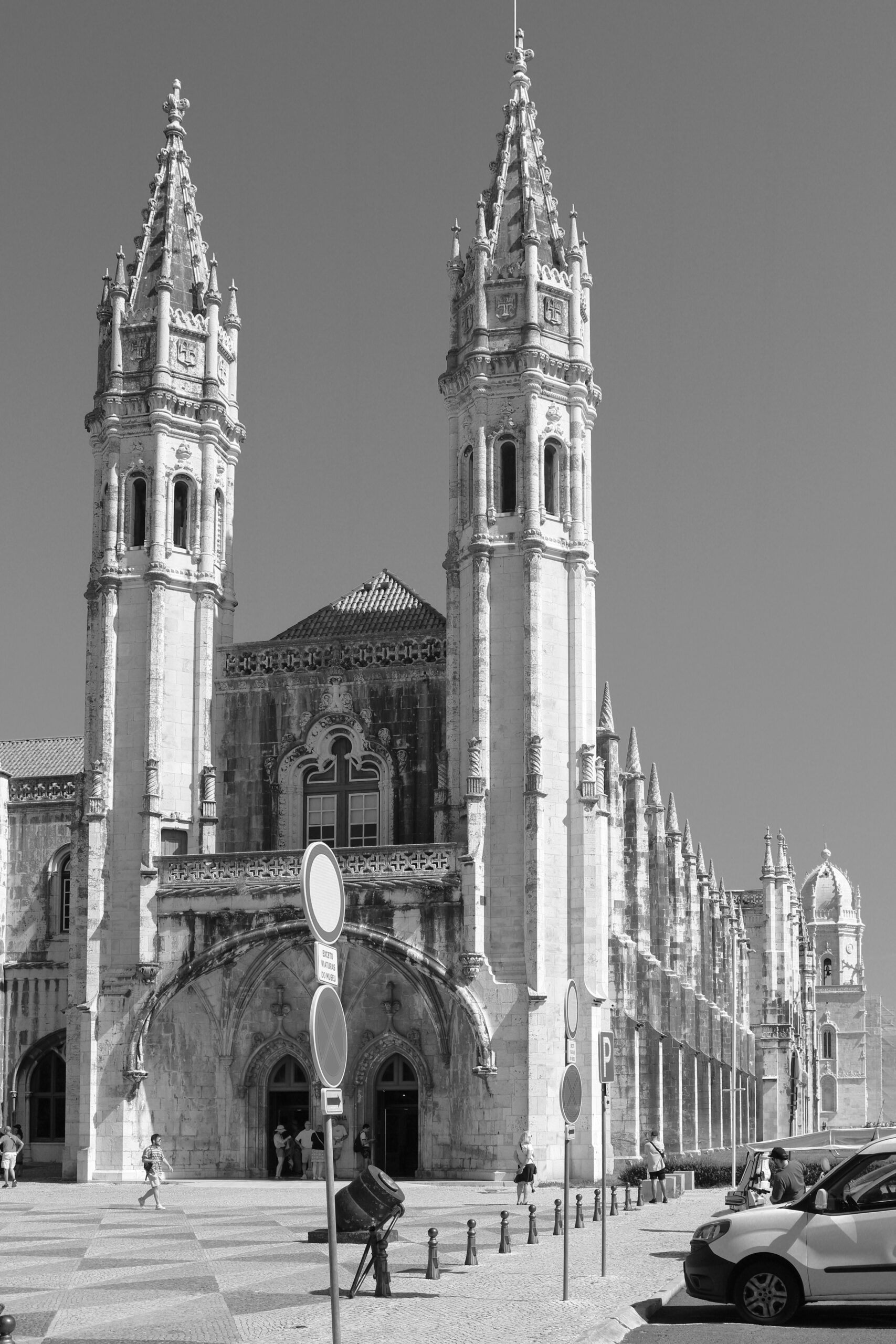
Jerónimos Monastery, Belém, Lisbon.
Jerónimos Monastery went up starting in 1501 on King Manuel I’s orders, paid for with a tax on the spice trade that Vasco da Gama’s route to India had just made obscenely profitable. The Manueline style covering every surface — twisted rope carvings, coral, armillary spheres, knotted cable columns — wasn’t decoration for its own sake. It was Portugal announcing, in stone, that a small kingdom on the edge of Europe had just become a maritime power nobody could ignore. The monastery was built to be seen and to be believed.
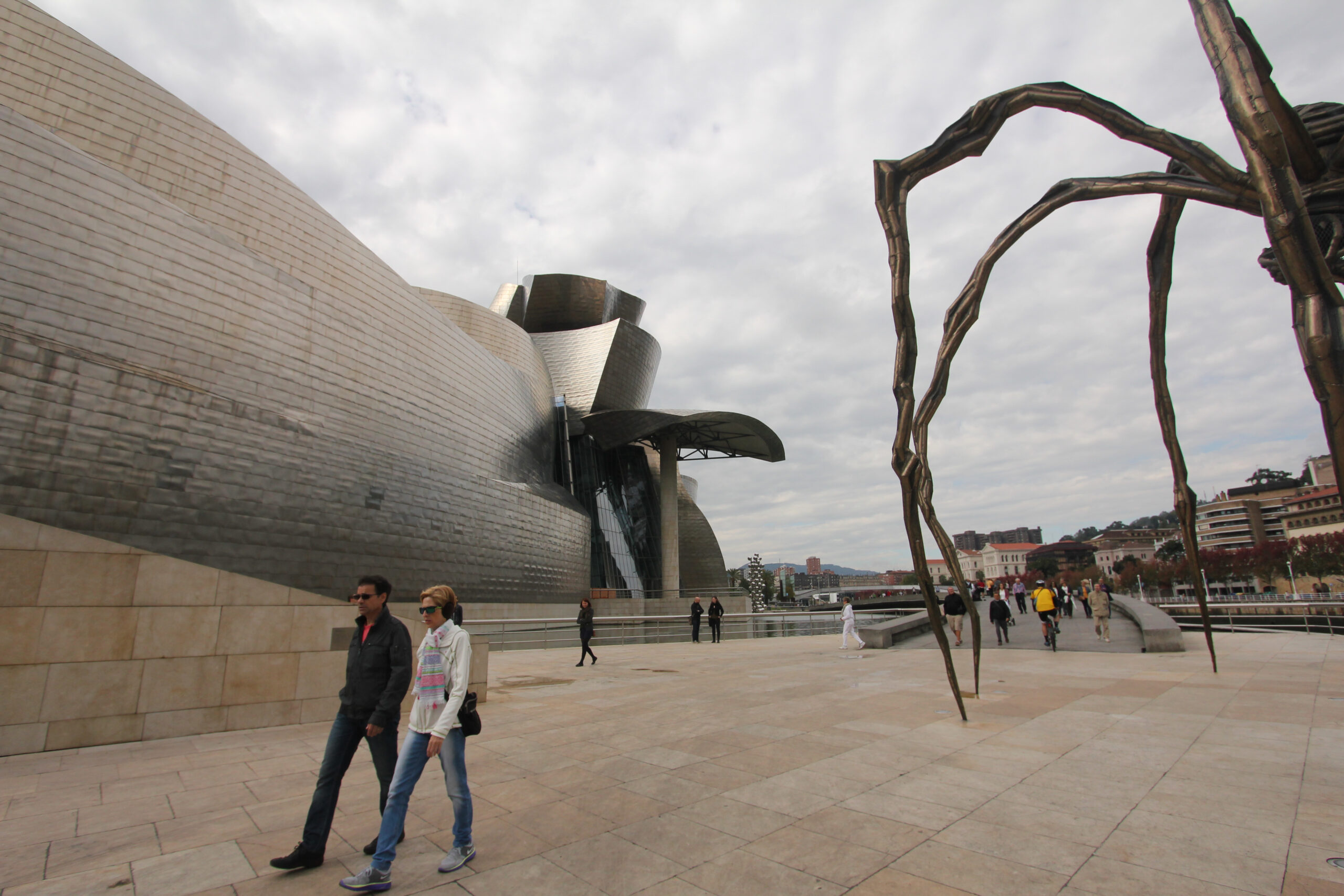
Guggenheim Museum Bilbao, with Louise Bourgeois’s “Maman” out front.
Bilbao in the early 1990s was the opposite of triumphant. Its shipyards and steel mills were dying, and the city needed a reason for anyone to visit who wasn’t there for industrial decline. The Basque government’s answer was to hand Frank Gehry a blank check for a titanium museum that looked like nothing else on earth. It opened in 1997, and within a few years “the Bilbao Effect” had become shorthand across urban planning circles for a single idea: one spectacular building can rewrite a city’s economy.
Put the two side by side and the pattern is hard to miss. A government with a sudden windfall — spice tax revenue in one case, EU regional development funds in the other — chooses to spend it on a building deliberately designed to be unmissable. Both were expensive. Both were controversial in their moment (Manueline ornamentation struck contemporaries as excessive; Gehry’s design struck plenty of Bilbao residents as an insult to a working-class industrial city). Both turned into the single image everyone associates with the city. And both worked: Belém is now one of the most visited corners of Lisbon almost entirely because of the monastery, and Bilbao’s museum did more for the city’s global profile than any policy document could have.
The only real difference is the material a given century had to show off with. In 1501, that meant limestone and a generation of master masons. In 1997, it meant titanium panels and a computer program originally built for aerospace design. The impulse — spend big, build strange, make the world look — hasn’t changed at all.