• Skip to main content
  • Skip to secondary menu
  • Skip to footer

Virtual Travel Guide

Top Travel Destinations in Digital Media

  • Sponsored Post
  • About
    • GDPR Compliance Statement
  • Contact

Salamanca Unveiled: Discovering Hidden Gems and Timeless Charm on the Spanish-Portuguese Border

June 2, 2024 By admin Leave a Comment

Gazing upon the enchanting panorama of Salamanca, one is immediately captivated by a tapestry of terracotta rooftops, centuries-old cathedrals, and a horizon that whispers tales of an illustrious past. Salamanca, nestled in the heart of Spain’s Castile and León region, presents an extraordinary blend of history, culture, and architectural splendor, all set against a backdrop that evokes the timeless charm of the Spanish countryside. This city, with its warm-hued buildings and majestic towers, seems almost frozen in a golden era, untouched by the hustle and bustle that characterizes more tourist-heavy destinations.
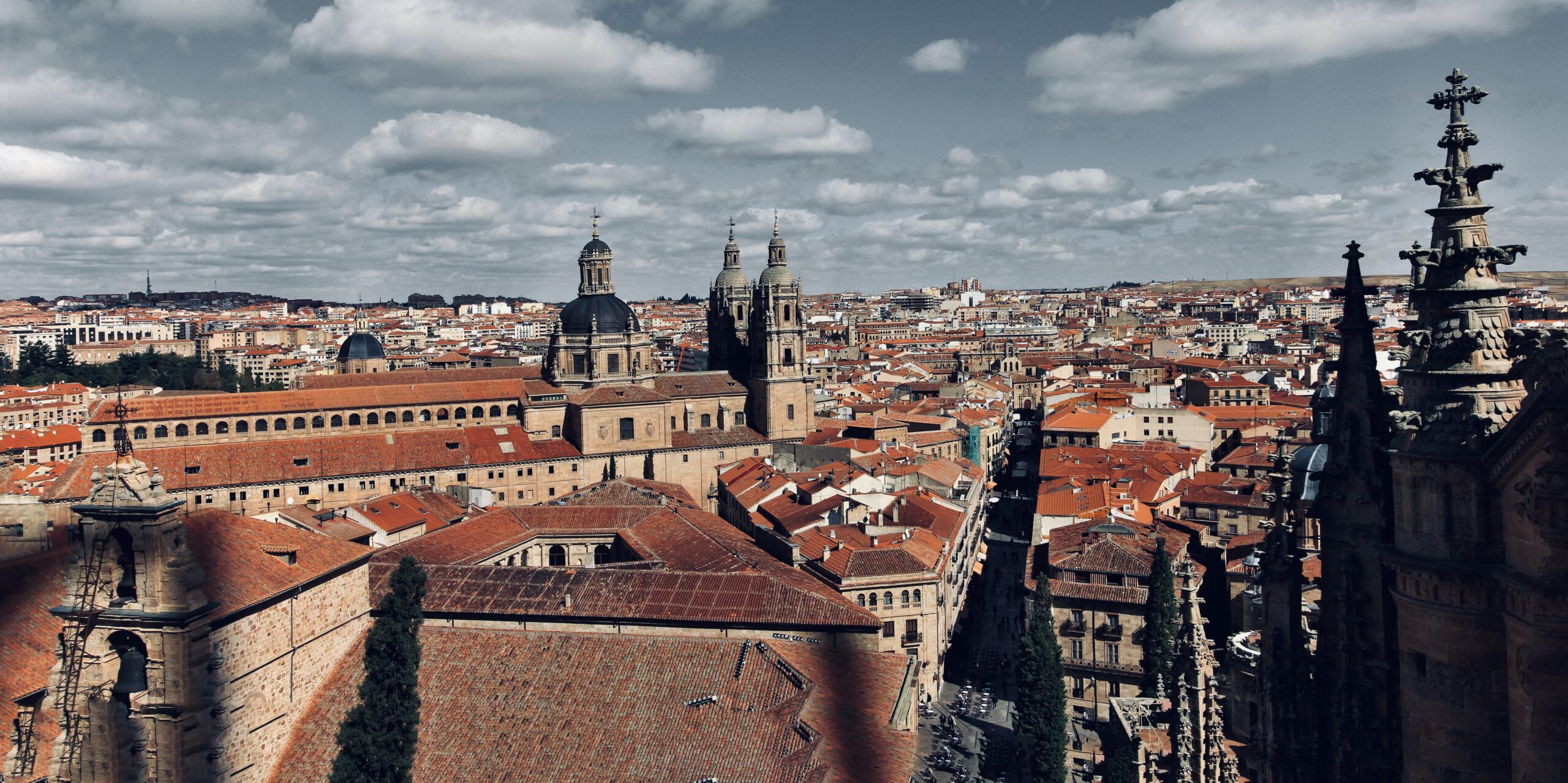
Salamanca Unveiled: Discovering Hidden Gems and Timeless Charm on the Spanish-Portuguese Border

A significant feature in the panorama is the imposing presence of the New Cathedral, with its Gothic and Baroque elements reaching skyward. Built between the 16th and 18th centuries, this architectural masterpiece stands as a testament to the city’s rich historical tapestry. Adjacent to it, the Old Cathedral, with its Romanesque style, offers a poignant contrast, showcasing the evolution of ecclesiastical architecture through the ages. The intricate spires, domes, and ornate carvings of these structures invite the viewer to delve deeper into the stories etched into every stone and gargoyle.

Wandering through the city’s labyrinthine streets reveals a treasure trove of hidden gems, each with its own unique charm and allure. The University of Salamanca, founded in 1218, is one such jewel, renowned as one of the oldest universities in Europe. Its Plateresque façade, adorned with carvings and reliefs, captures the essence of Spanish Renaissance art. The university’s historic classrooms and libraries, echoing with the whispers of scholars and luminaries such as Miguel de Cervantes, offer a glimpse into the intellectual heritage that has shaped the modern world.

But beyond these well-known landmarks, Salamanca’s true magic lies in its lesser-known corners and quiet, unfrequented spots. The Casa de las Conchas, for instance, is a stunning building decorated with over 300 carved scallop shells, each symbolizing the pilgrimage to Santiago de Compostela. This historic mansion now serves as a public library, where the serenity and quietude provide a stark yet inviting contrast to the lively Plaza Mayor nearby.

The Convento de San Esteban, another hidden marvel, is a Dominican monastery with a striking Plateresque façade that often goes unnoticed by hurried tourists. The cloisters and chapels within are havens of tranquility, their silence broken only by the soft murmur of prayers and the rustle of ancient manuscripts. Nearby, the Cueva de Salamanca, a mysterious cave steeped in legend and folklore, is said to have been a school of black magic attended by the devil himself. This eerie yet fascinating site adds an element of intrigue and mysticism to the city’s cultural narrative.

For those seeking a more intimate experience of Salamanca’s rich history, the Huerto de Calixto y Melibea offers a secluded garden retreat, perfect for a leisurely stroll or quiet reflection. Overlooking the ancient Roman Bridge and the serene River Tormes, this romantic garden is believed to be the setting for the tragic love story of Calixto and Melibea, immortalized in the Spanish literary classic “La Celestina.” The garden’s lush greenery and fragrant blooms provide a soothing escape from the city’s bustling plazas and thoroughfares.

Food enthusiasts will find Salamanca’s culinary scene to be a delightful exploration of traditional Spanish flavors and innovative gastronomy. Tucked away in the narrow streets, away from the main tourist routes, are family-run tapas bars and quaint eateries offering regional specialties such as hornazo, a savory pastry filled with pork, chorizo, and hard-boiled eggs. The Mercado Central, with its vibrant stalls brimming with fresh produce, local cheeses, and cured meats, is a sensory feast that showcases the region’s rich agricultural heritage.

Despite its many attractions, Salamanca remains relatively unspoiled by the throngs of tourists that descend upon Spain’s more famous cities. This allows for a more authentic and immersive experience, where one can truly connect with the local culture and history. The city’s proximity to the Portuguese border further enhances its appeal, offering opportunities for cross-border excursions to explore the charming towns and scenic landscapes of Portugal. The nearby Arribes del Duero Natural Park, with its dramatic cliffs and picturesque vineyards, is a must-visit for nature lovers and adventure seekers alike.

As the sun sets over Salamanca, casting a warm, golden glow over its historic skyline, the city takes on an almost magical quality. The streets, bathed in the soft light of lanterns, invite evening strolls and the chance to uncover yet more hidden gems. The lively buzz of tapas bars, the distant strumming of a guitar, and the laughter of locals enjoying the evening air create an atmosphere that is both enchanting and deeply inviting.

In conclusion, Salamanca is a city that offers far more than meets the eye. Its well-preserved historical sites and renowned landmarks are just the beginning. The true essence of Salamanca lies in its hidden gems, its quiet corners, and its rich tapestry of stories waiting to be discovered. It is a place where history and modernity coexist harmoniously, where every street and building has a tale to tell. For the discerning traveler, Salamanca promises an experience that is both profound and unforgettable, a journey into the heart of Spain’s cultural and historical heritage, unspoiled by the trappings of mass tourism. So pack your bags, set your sights on Salamanca, and prepare to uncover the myriad treasures of this extraordinary city.

Filed Under: News

Reader Interactions

Leave a Reply Cancel reply

Your email address will not be published. Required fields are marked *

Footer

Recent Posts

  • Sintra at Noon, Venice at Midnight: Six European Cities and the Hour That Suits Them
  • Porto’s Chestnut Season Is the Shoulder Season Worth Booking
  • Venice at Night Is the Version No Access Fee Covers
  • The 18th-Century Fountain Hidden Inside Bordeaux’s Customs Museum Courtyard
  • The Bilbao Effect, 500 Years Early: Jerónimos Monastery And The Guggenheim
  • Bilbao’s Quiet Renaissance: From Industrial Port to Design Destination
  • Lisbon’s Seven Hills: A Walking Guide That Tells You the Truth
  • New Orleans: An American City That Plays by Different Rules
  • Ha Long Bay Without the Cruise Brochure
  • Istanbul at the Threshold: A City That Has Always Been Two Things at Once

Travel Marketing

  • Travel Marketing
  • Peppers.org
  • Ancient Rome
Why Lisbon Cafés Are Putting Up No Laptops Signs: Coffee, Instagram, and the Remote Work Terrace
Four in Ten Travelers Visit Landmarks Mainly for the Photo: How Instagram and Reels Reshaped Tourism
Why Comporta Still Feels Empty: The Rice Estate Behind Portugal’s Most Coveted Beaches
Travel in 2026: Five Photos That Explain the Year’s Real Trends
Tiny Tourism: Why Travellers Are Choosing Towns Nobody Photographs
In Defence of the Hop-On Hop-Off Bus
EasyJet Agrees £5.7bn Apollo Takeover: What Changes for Passengers and What Doesn’t
Taormina Beach Guide: Mazzarò, Isola Bella, and What Nobody Tells You About the Pebbles
Juliet’s Balcony in Verona Was Added in the 1930s and the Crowds Do Not Care
St Mark’s Basilica in Venice: The Gold Mosaics Are Dimmer Than the Photographs Suggest
Bistecca alla Fiorentina, Sold by the Kilo and Sliced Too Soon
Every Food Festival Has One Chokepoint, and It’s the Condiment Table
Confessions of a Salad Cynic: How Fiery Mexican Bean Salad Made Me Reconsider Rabbit Food
How Tabasco Sauce Is Made
The Rustic Perfection of a Freshly Baked Country Loaf
A Plate of Bold Contrasts: Avocado Toast with Seared Beef and Red Pepper Sauce
Gravlax, Guacamole and Ciabatta, A Countertop Still Life
Rigatoni with Meatballs, A Bowl That Knows What It’s Doing
Ciabattas, 240°C, No Time to Wait
A Seoul-Inspired Lunch That Arrives Like a Little Ceremony
Roman Concrete in Museum Fragments: What the Cross-Section Actually Shows
Roman Sarcophagi Spent More Time as Fountains and Church Tombs Than as Graves
Aquincum Museum Reconstructs 16 Roman Faces From Skulls Found on Budapest's Danube Frontier
Roman Public Latrines Reveal an Empire That Built Sanitation Without Achieving Hygiene
Who Cleaned Roman Rome: The Social Economy of Waste
Water Across the Empire: Roman Aqueducts and the Hydraulic Logic of Conquest
The Pont du Gard: Rome's Most Perfect Structure
The Oath of the Horatii: David's Roman Republic in Paint
Spartacus: Blood and Sand — History as Exploitation
Spartacus (2010–2013): The Show That Earned Its Excess

Media Partners

  • Brands to Shop
  • pho.tography.org
  • Marketing Development
Grey Wool, Navy and One Red Knit: How to Shop This Night Street Look
Mirrored Sunglasses and Chrome Nails: How to Shop the Blue Metallic Creator Look
Navy Striped Polo Dress and Straw Hat: How to Shop the Beach Cover-Up Look
Pastel Sports Bra and High-Waist Leggings: How to Shop the Matched Activewear Look
Red Strappy Sandals and a Red Mini Bag: What to Buy to Copy This Look
The Black Tee and Beat-Up Jeans: How to Buy Street Style's Most Durable Formula
Why Europeans Look Put Together in Casual Clothes: The Rules Hiding in a Madrid Street Photo
Binoculars Buying Guide: What to Buy When You're Not a Birder
Cream Shearling Coat, Black Chelsea Boots: How to Shop This Italian Street Look
Black and White Striped Wide-Leg Trousers: Where to Shop the Whole Look
Why a Fisheye Is the Natural Lens for Cathedral Interiors
Wet Paving at Night: A Handheld Street Frame of Two Runners and a Collie
How to Cut Clutter Out of Ultra-Wide Photos at Trade Shows and Crowded Events
Street Photography Dos and Don'ts: Shooting a Crowded Promenade With a Long Lens
Shooting Wide Open at Night: Why a Fast Prime Beats a High ISO Body
Theatre Light Is a Trap: Metering, Shutter Speed and Silent Mode for Stage Photography
Shooting Through a Wet Train Window: Focus, Reflections, and the One Pass You Get
Robot Photo Booths at Events: What a Rolling Ring Light Can and Cannot Shoot
The Art of the High-Angle Cutaway: How a Two-Person Crew Covers a Whole City From One Balcony
Him, Her: A Photograph That Works Like a Renaissance Diptych
Social Media Marketing: Why Follower Growth Rewards a Repeatable Format
The Photo Walk as Brand Activation: Twenty Attendees, Hundreds of Assets, and Almost No Media Spend
AI Tools and Live Events Top 2026 Marketing Budgets: Brands Are Funding the Slop and the Escape at Once
Class A Malls Are Beating E-Commerce and the Dome Is Why
Silicon Valley's Two Percent Joke and the Real Gender Numbers at Tech Conferences
Tour Buses Are Ad Inventory: What a Madrid City Tour Wrap Actually Sells
VIP Marketing at Conferences: Why Executive Programs Fail the Executives
Which Websites Survive AI Search and Which Ones Don't
Pena Palace, Venice, and Prague: Four Travel Frames That Skip the Standard Angle
Stunt Marketing Economics: What a Street Activation Actually Buys and How to Price It

Copyright © 2022 VirtualTravelGuide.com

Market Analysis & Market Research