Thirty years ago, Bilbao was a byword for industrial decline. Its shipyards were closing, its river was polluted with decades of steel and shipping runoff, and the Basque Country’s economic engine was sputtering. Today, the city draws travelers who once would have skipped it entirely for San Sebastián or Madrid. The turnaround didn’t happen by accident, and it didn’t happen with a single landmark.
The Guggenheim Museum, which opened in 1997, gets most of the credit, and deservedly so. Frank Gehry’s titanium-clad building along the Nervión River is still the reason most visitors first put Bilbao on a map. But the museum was really the opening move in a much longer civic project, one that reshaped how the entire city thinks about public space.
Infrastructure as Identity
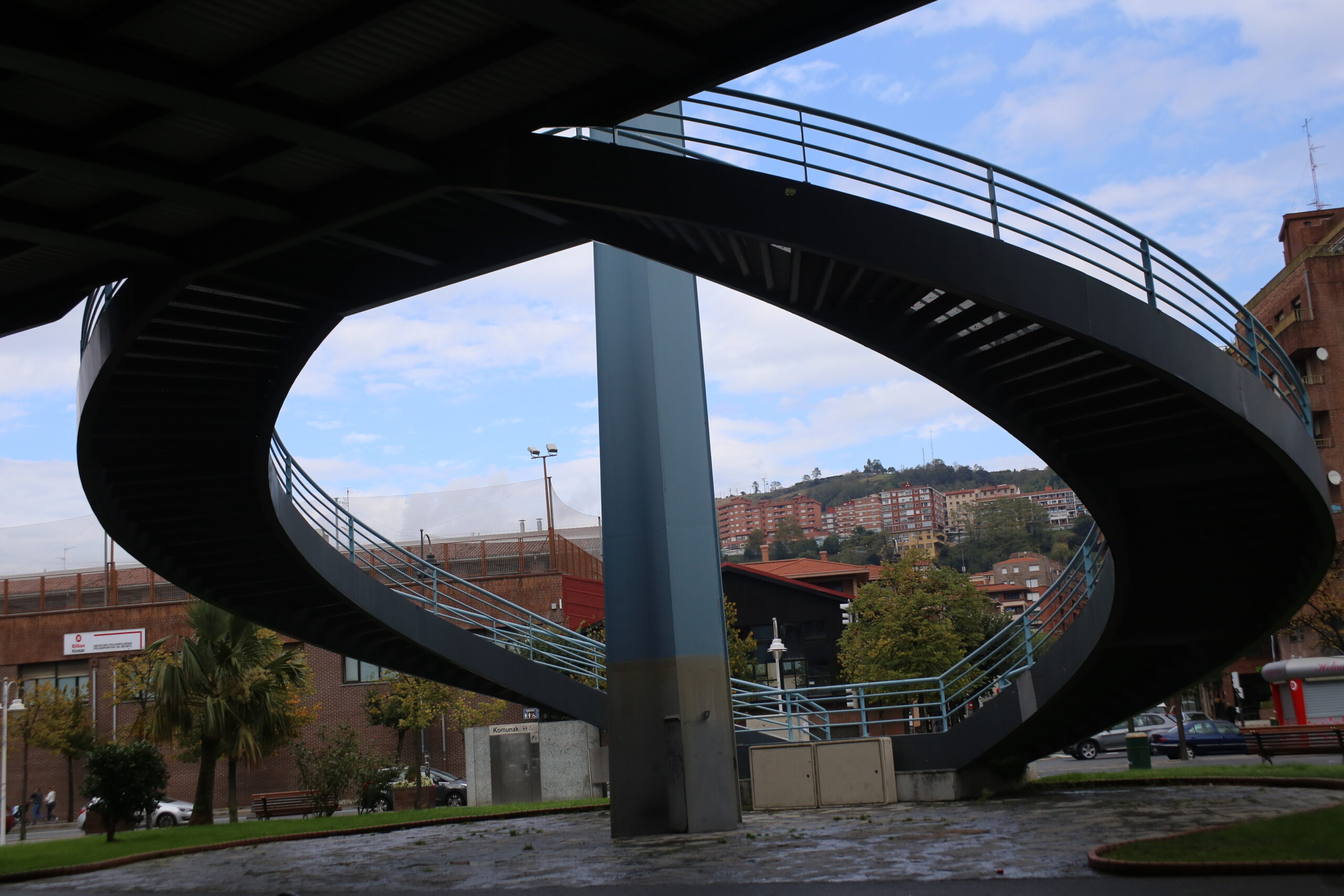
Walk through Bilbao’s neighborhoods today and the design ambition shows up in places that have nothing to do with tourism. Pedestrian bridges spiral and loop where a simple ramp would have done the job. Metro stations designed by Norman Foster feel more like glass pavilions than transit infrastructure. Even functional overpasses and footbridges in residential districts like Deusto carry the same architectural confidence as the marquee buildings downtown.
This is the part of Bilbao’s story that’s easy to miss on a quick visit. The city didn’t just build one iconic structure and stop. It kept applying the same standard to unglamorous, everyday infrastructure, on the theory that a city’s character is built as much from its footbridges and transit stops as from its museums.
What This Means for Travelers
For visitors, the payoff is a city that rewards wandering. The Guggenheim and the old town, or Casco Viejo, remain the anchor points, but some of the most interesting architectural moments turn up away from the main tourist path, in residential areas where a city had no particular reason to impress anyone. A footbridge connecting a sports complex to a riverside neighborhood, for instance, or a metro entrance that looks more like sculpture than utility.
The hillside neighborhoods overlooking the river are also worth the climb. They offer views back toward the city center and a sense of Bilbao’s layered geography, industrial waterfront below, dense residential blocks climbing the hills, green space threaded through both.
Practical Notes
Bilbao pairs well with a broader Basque Country itinerary, close enough to San Sebastián for a day trip, and increasingly connected by budget airlines to the rest of Europe. Spring and early autumn tend to offer the mildest weather, avoiding both the wetter winter months and the summer crowds that concentrate along the coast.
The city’s transformation is often cited as a model for post-industrial urban renewal, and travel writers usually reach for the shorthand “the Bilbao effect” to describe it. What’s less often said is that the effect wasn’t really about one museum. It was about a two-decade commitment to treating design as infrastructure, not decoration, in a city that had every reason to settle for less.