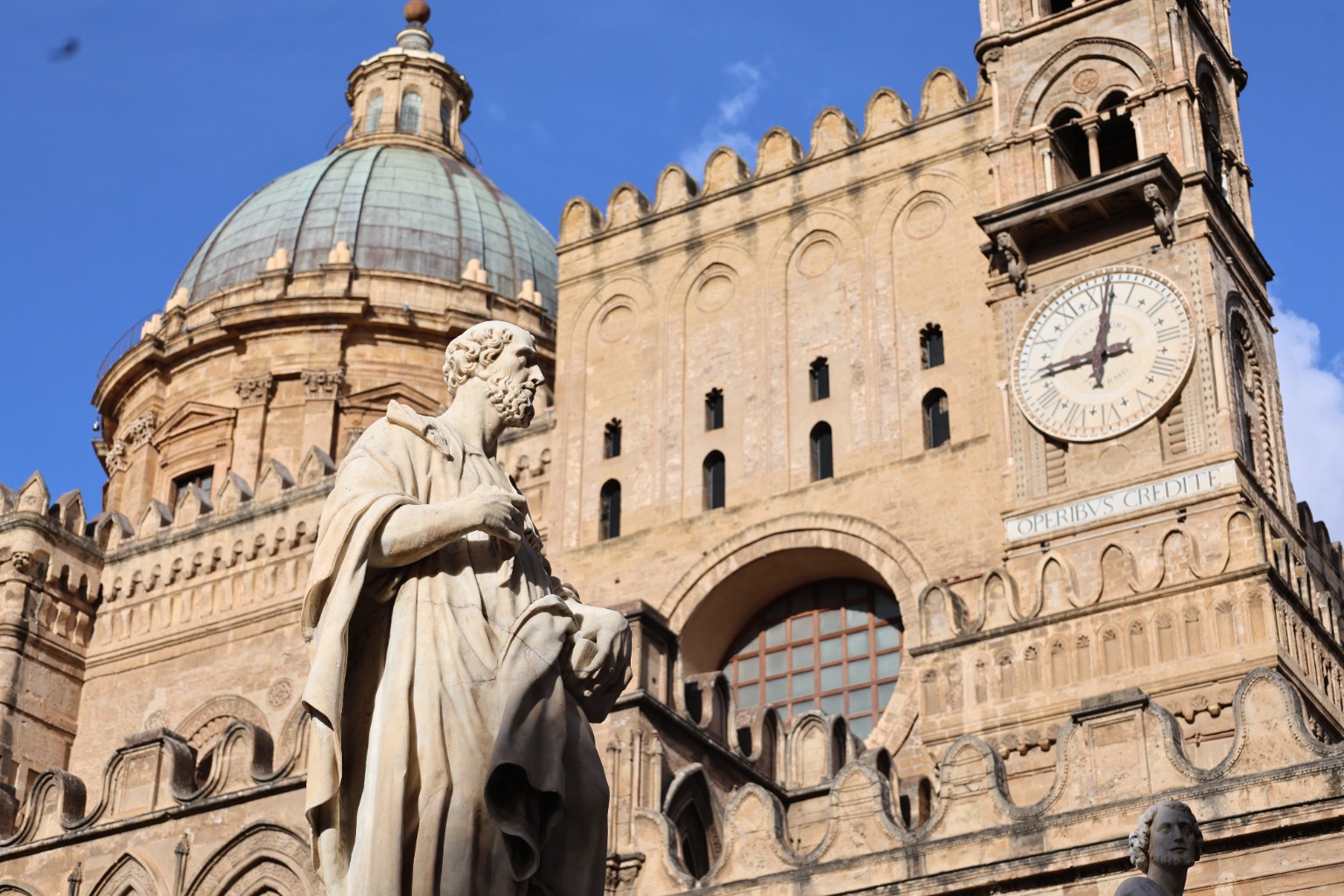
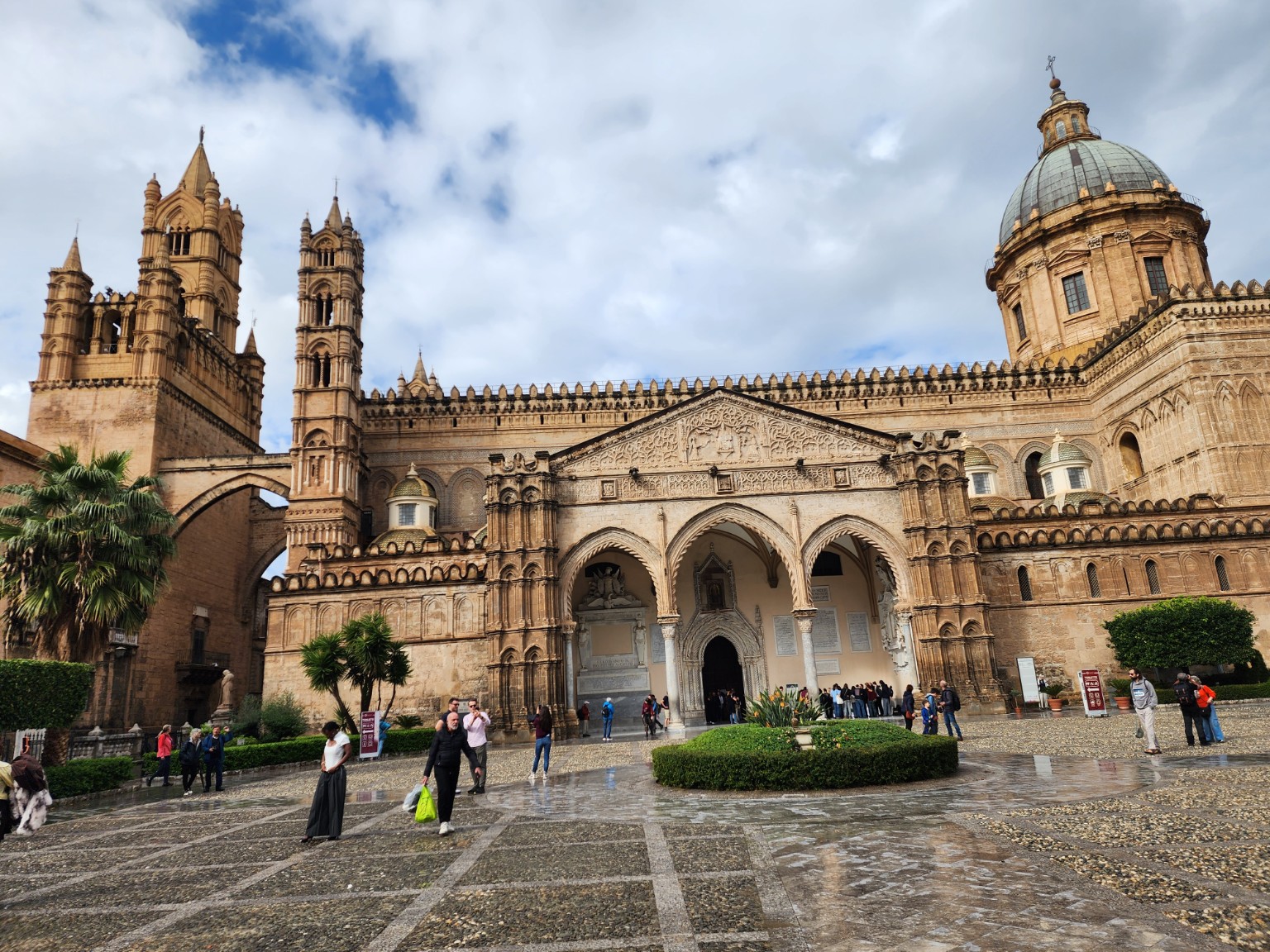
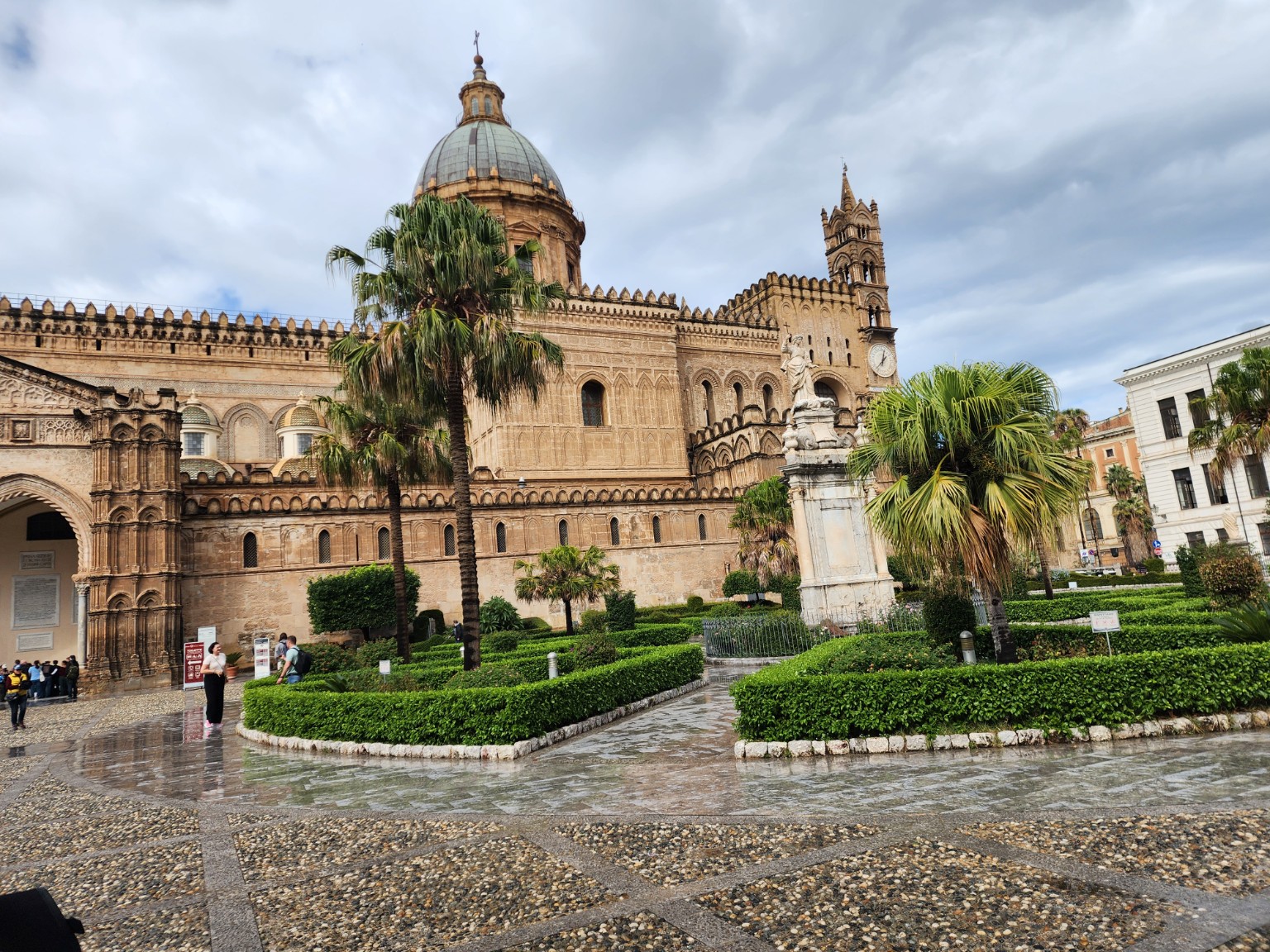
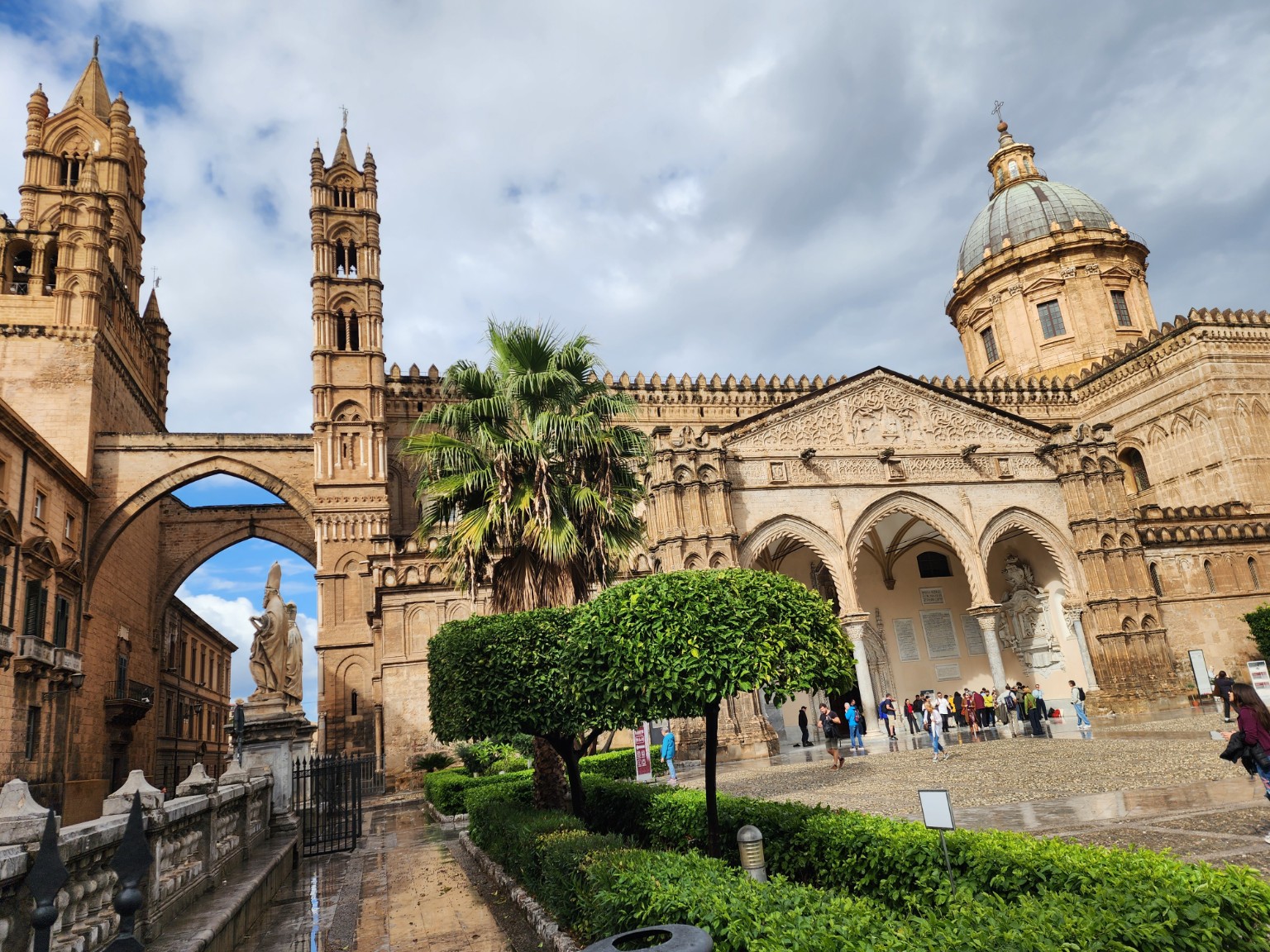
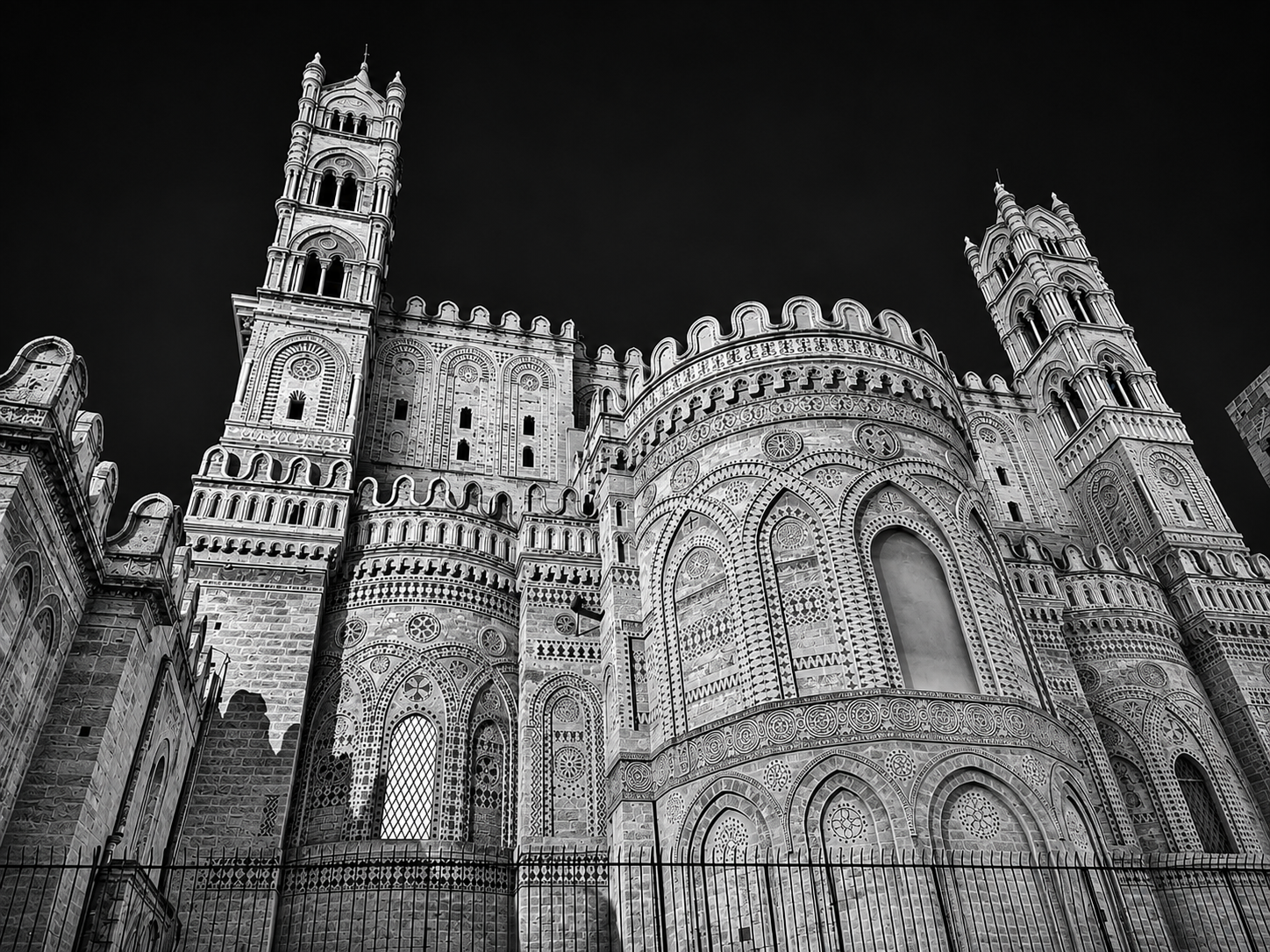
In Palermo I kept finding that the second view of a place was the one I wanted to remember. From the broad forecourt the cathedral is a long sweep of honey-colored stone, with palms and people giving some idea of its size. Move a little closer and a marble saint takes over the picture. Behind him, the dome, the clock and that very blue November sky all seem to be competing for the same bit of space. And then there’s the back of the cathedral, where you could spend half an hour looking at the pattern in a single curve of stone. I came back with photographs from a week in Sicily and ended up arranging them by the way one view leads to the next.
This walk starts in Palermo, where the streets keep interrupting the monuments in the best possible way. It takes a detour for the view from Monreale and follows the coast by train toward Cefalù. There’s time for the cathedral interiors, yes, and also for the things that are easy to walk straight past, like a market grill, a shop scale or the stone channels in a public washhouse.
I’d start at Palermo Cathedral and circle the building before deciding where to go inside. The approach through the garden puts clipped trees and open sky between you and the façade. From the entrance the stone arches and towers line up more formally. Through the foreground arch the same building suddenly feels much farther away. By night the eastern apses have a weight of their own. In monochrome, the rows of blind arches and the geometric inlay are what hold your eye, from the curved wall up to the small turrets at the roofline.
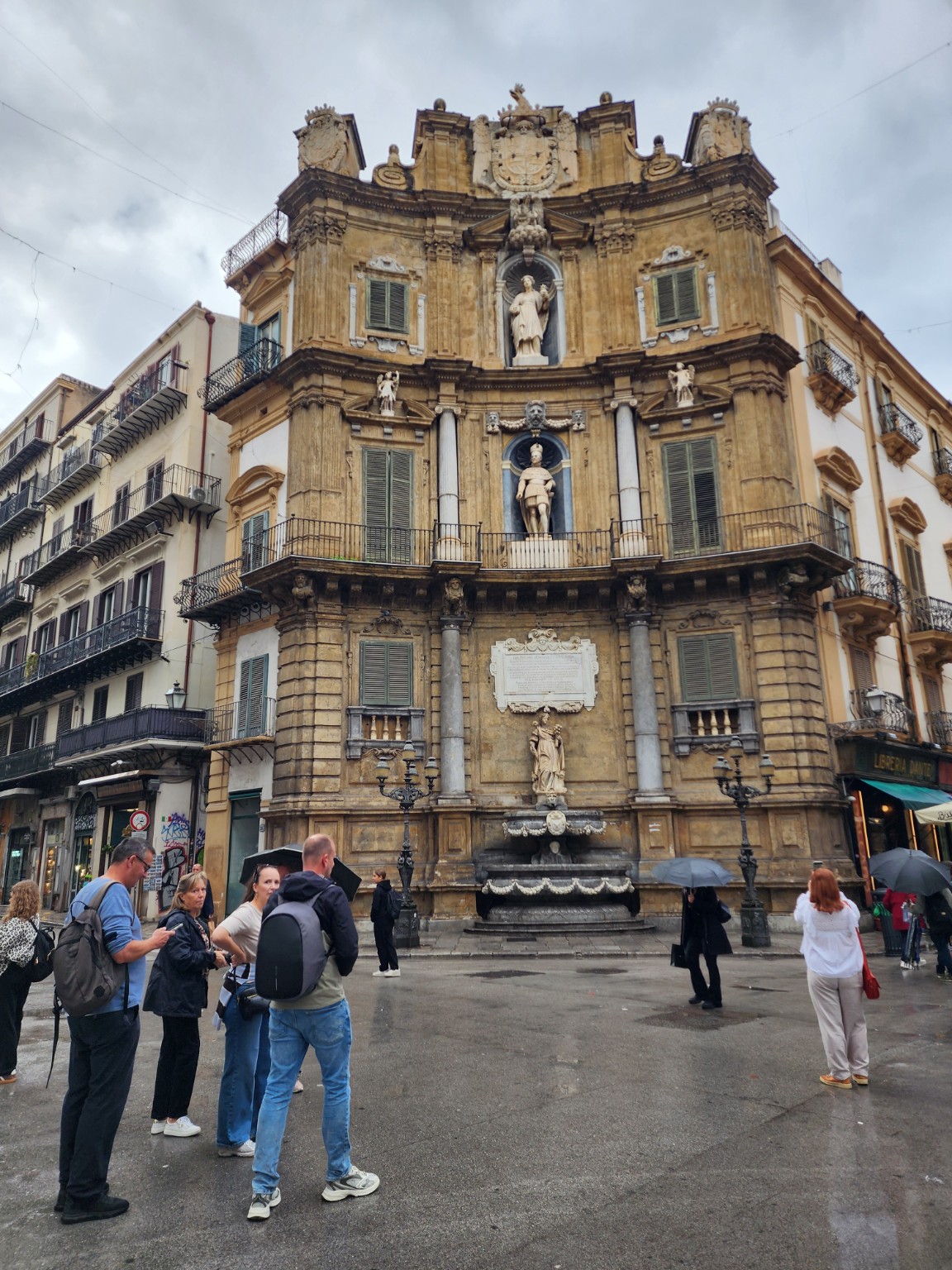
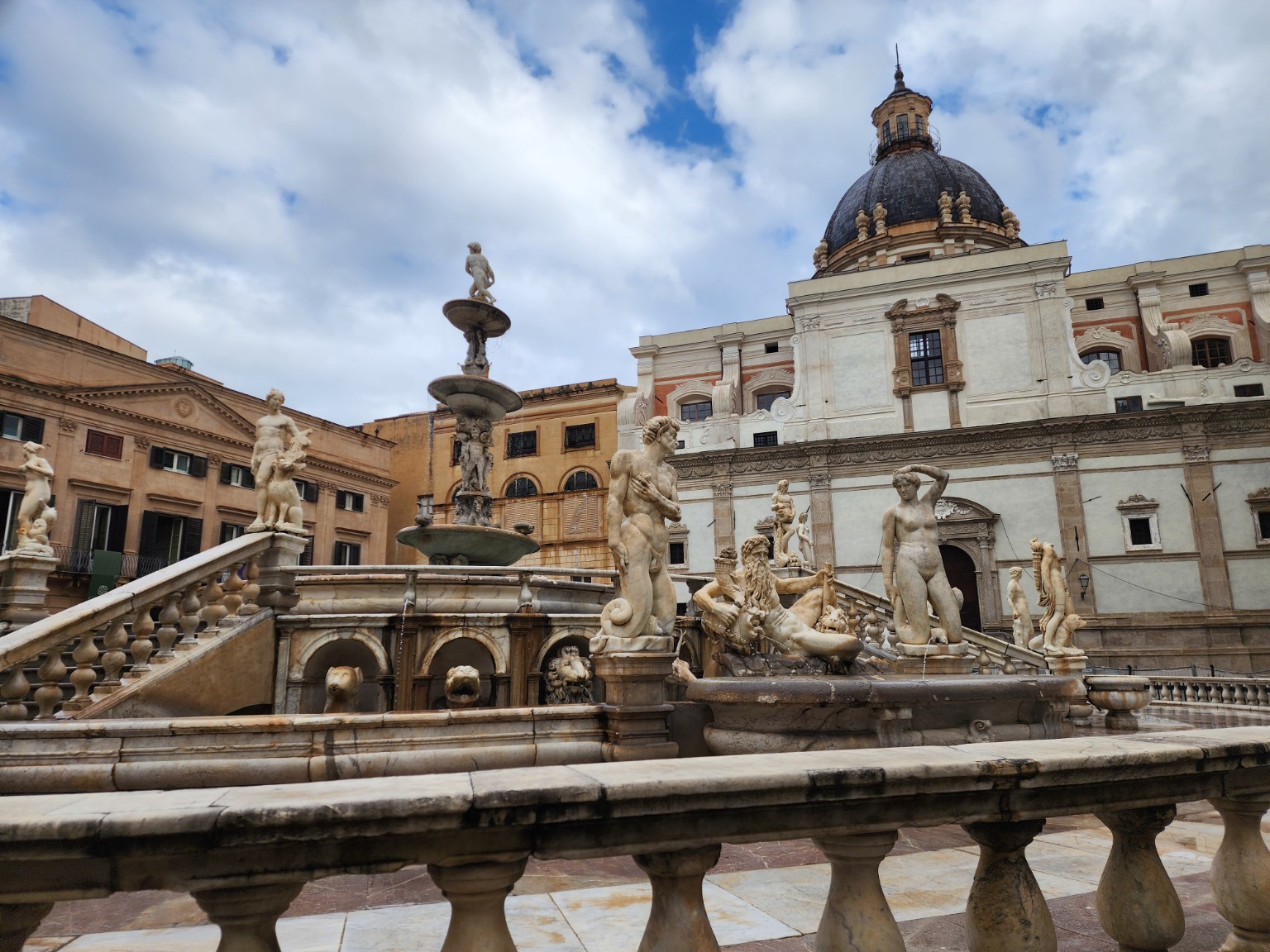
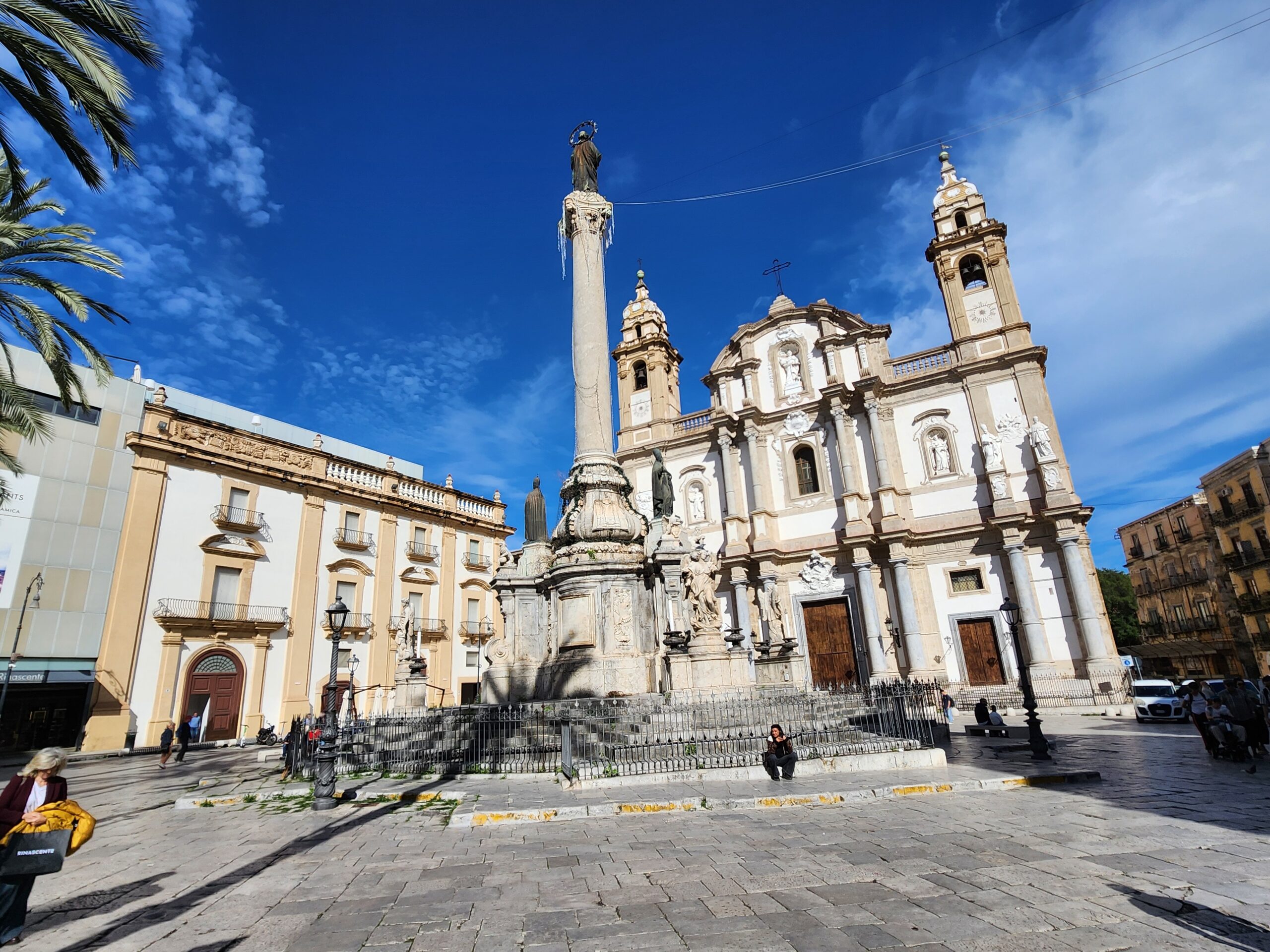
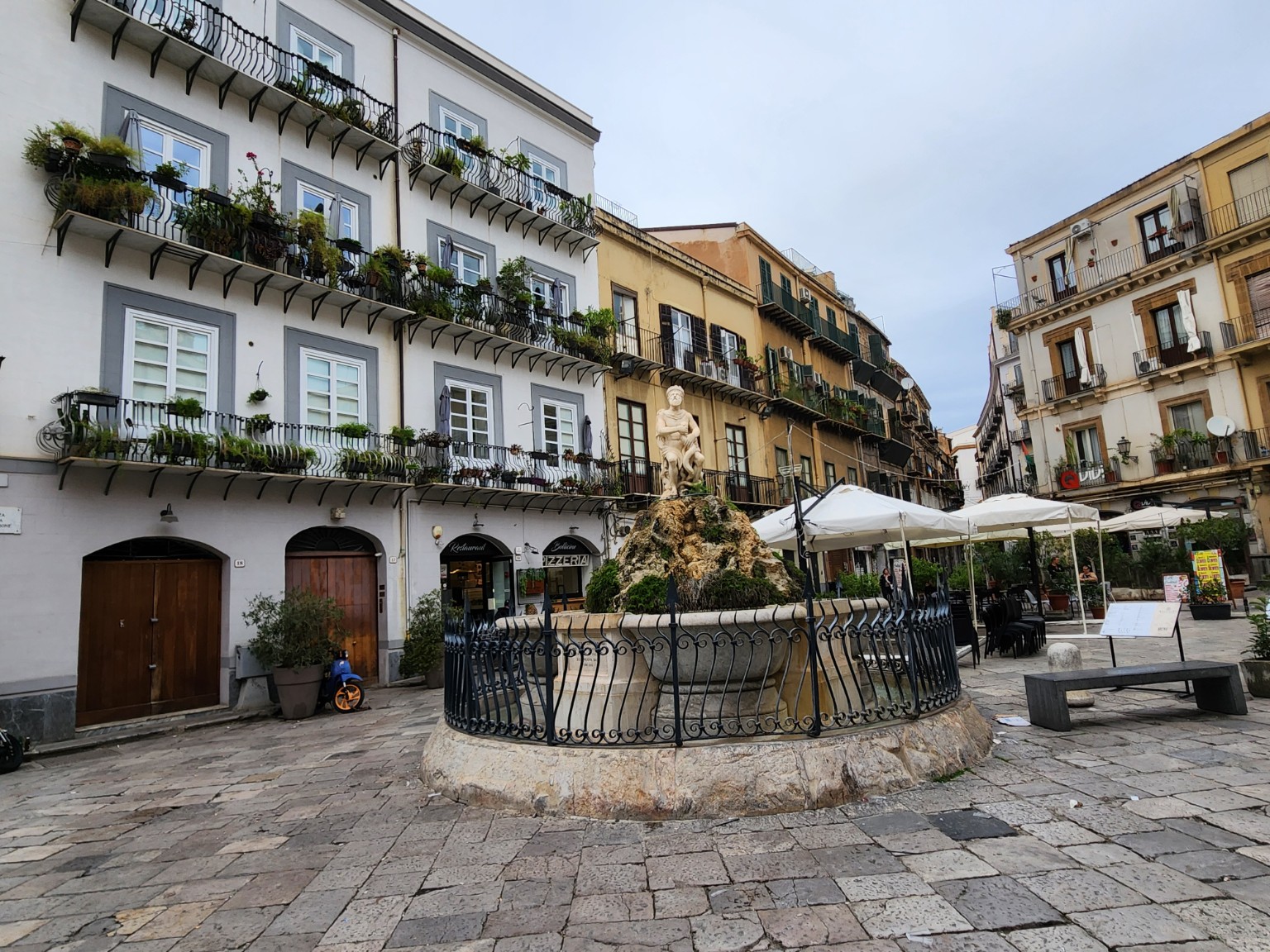
From the cathedral the old center is best covered on foot. Quattro Canti is a busy crossing, and the pleasure is in watching people move through the frame of that curved façade. Piazza Pretoria is a few steps away, but its stairs and balustrades change your pace. There are several levels to the fountain, and if you back up far enough the church dome joins the scene. Piazza San Domenico opens out around a tall column and a pale church front. Piazza Rivoluzione is smaller and more lived-in. The Genio sits among café tables and balconies, exactly the sort of square where it makes sense to sit down for a while.
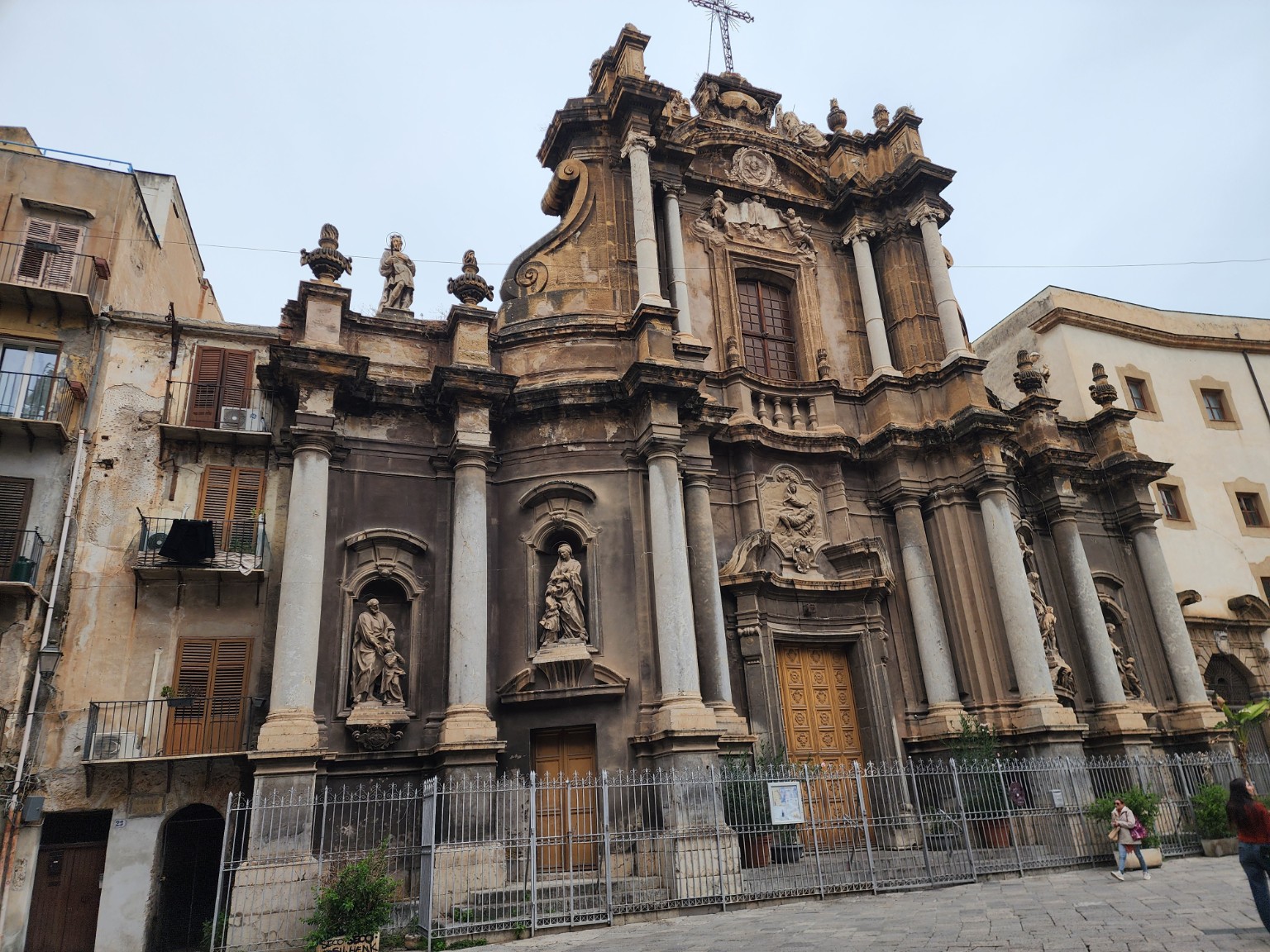
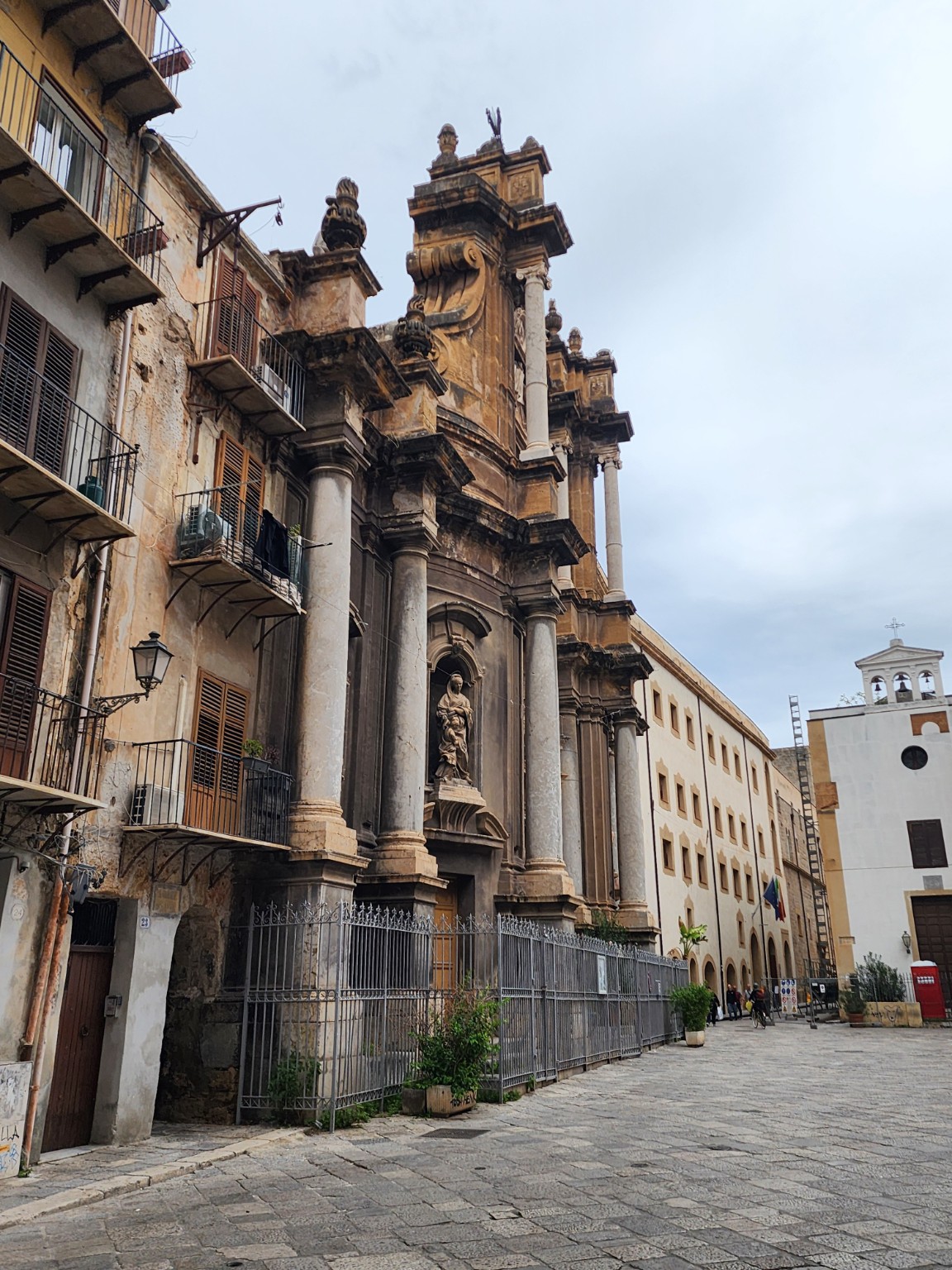
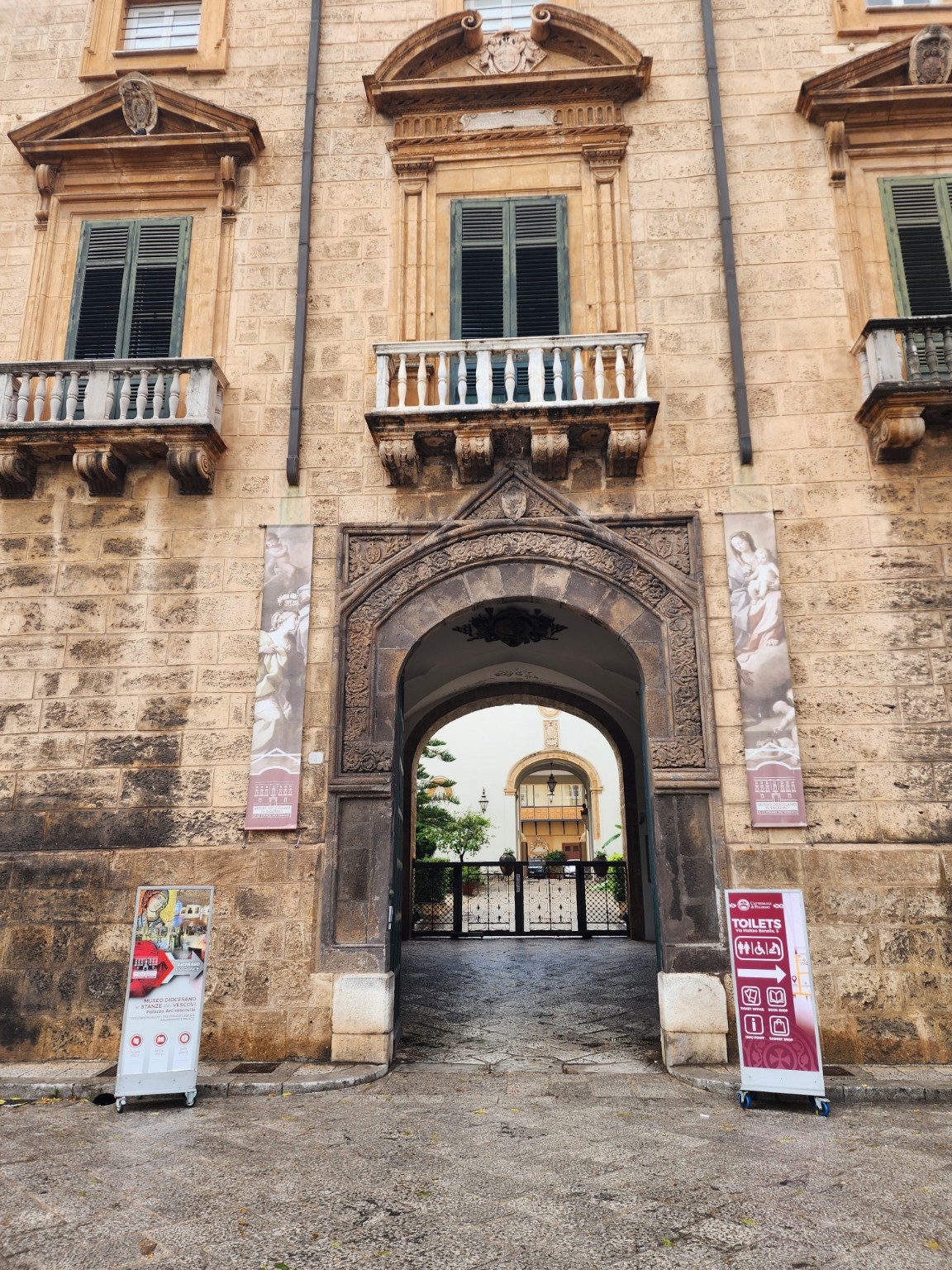
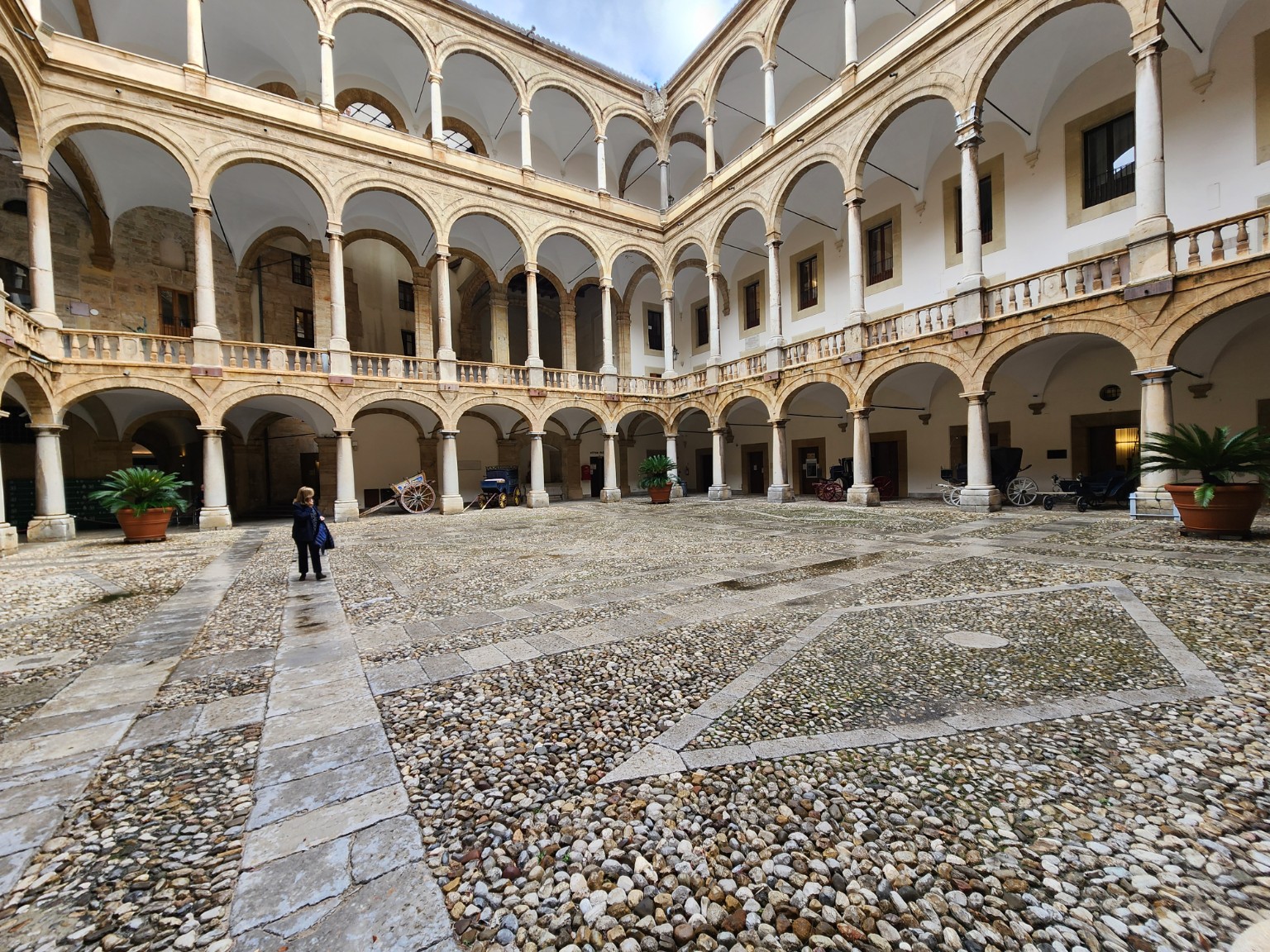
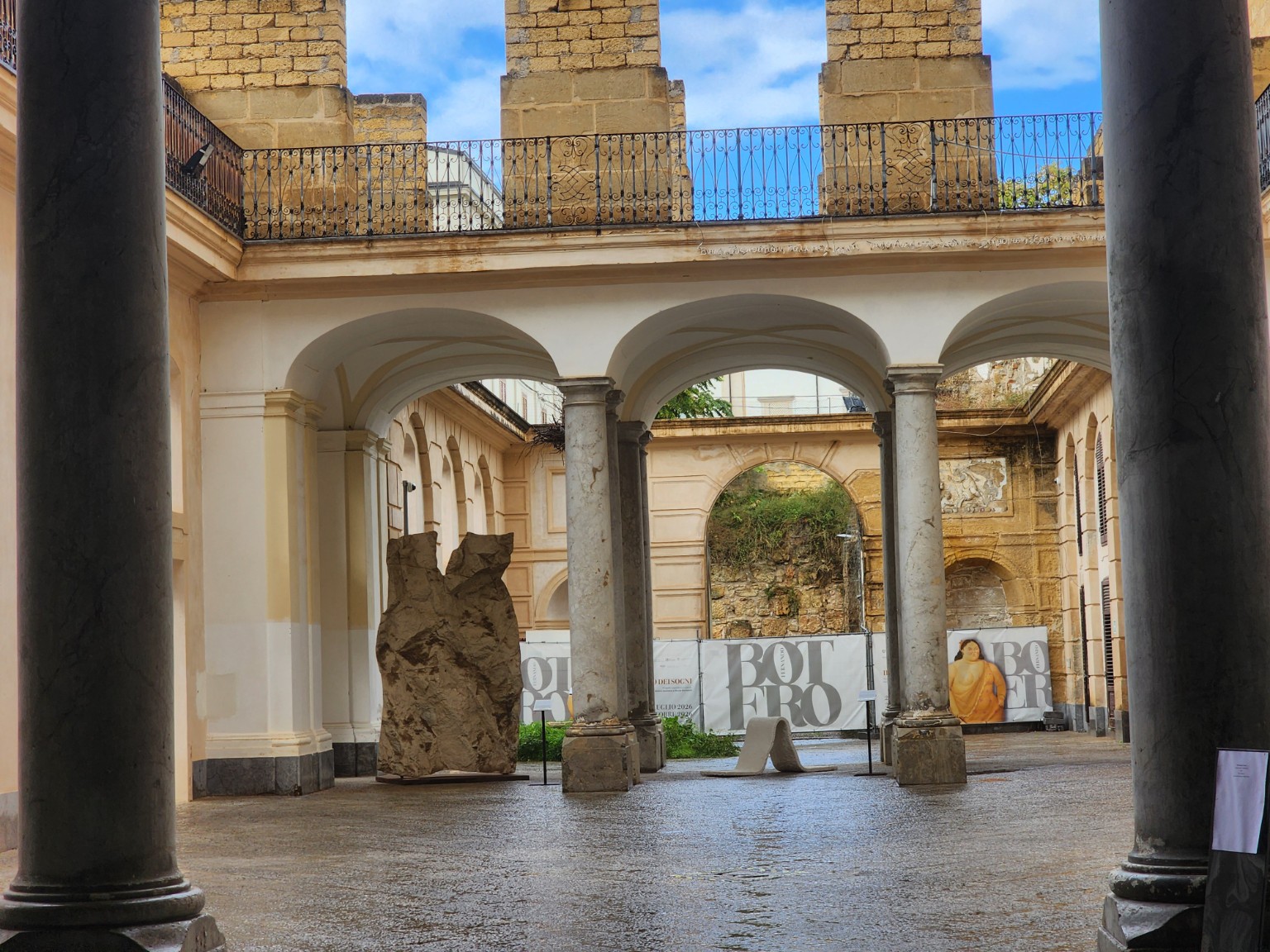
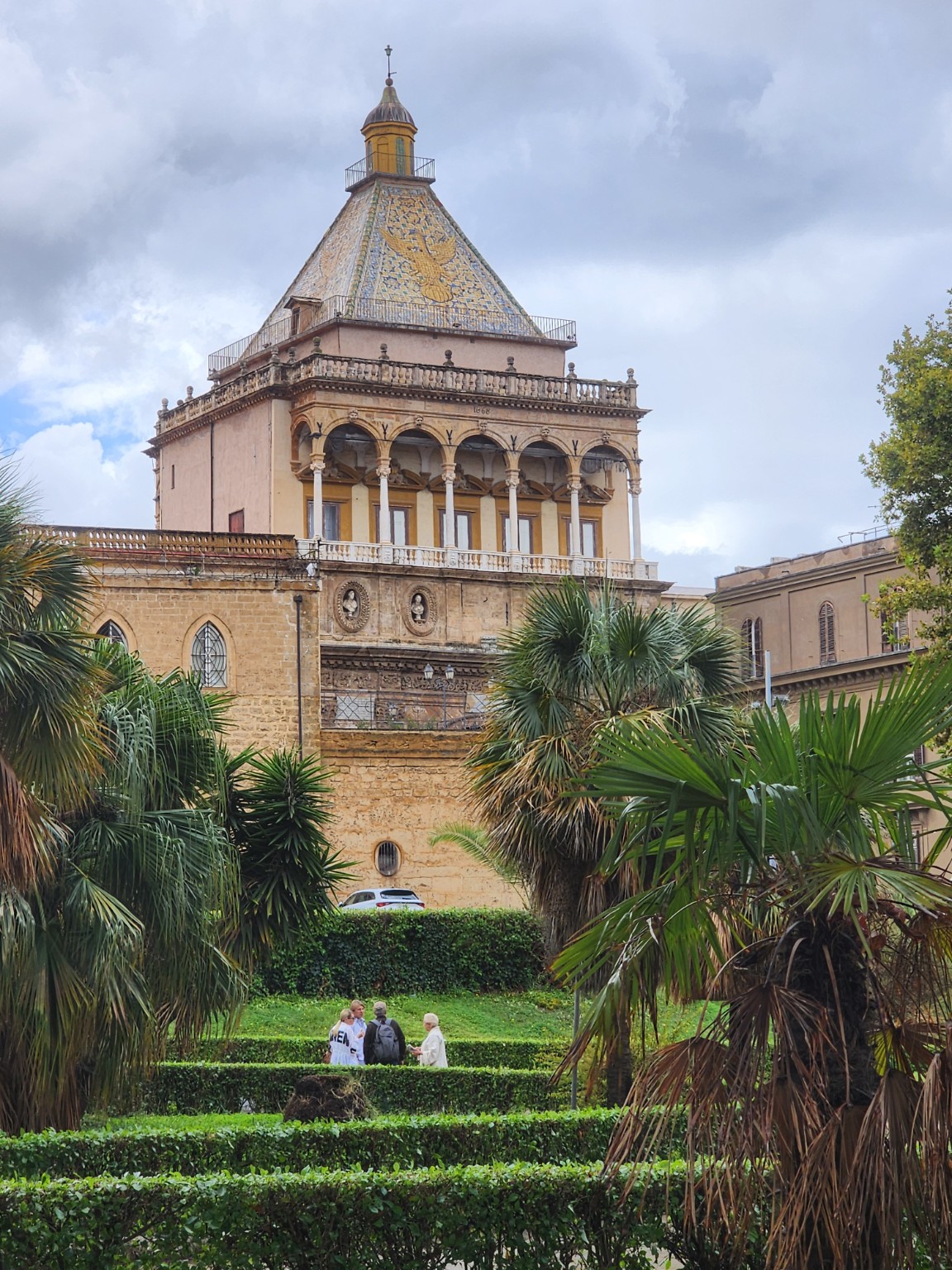
The church of Sant’Anna la Misericordia is worth a look from both ends of the street. Head-on, the columns, niches and figures pile up in the frame. From the side, the same façade belongs to a much narrower everyday street, complete with balconies and shutters. There’s a similar change of scale in Palermo’s courtyards. One photograph looks out from under the arcade past a contemporary sculpture; another gives the whole two-storey rhythm of the arches and the patterned paving. The tiled roof above the palms is the opposite sort of picture. You have to look up and let the garden hide much of the building.
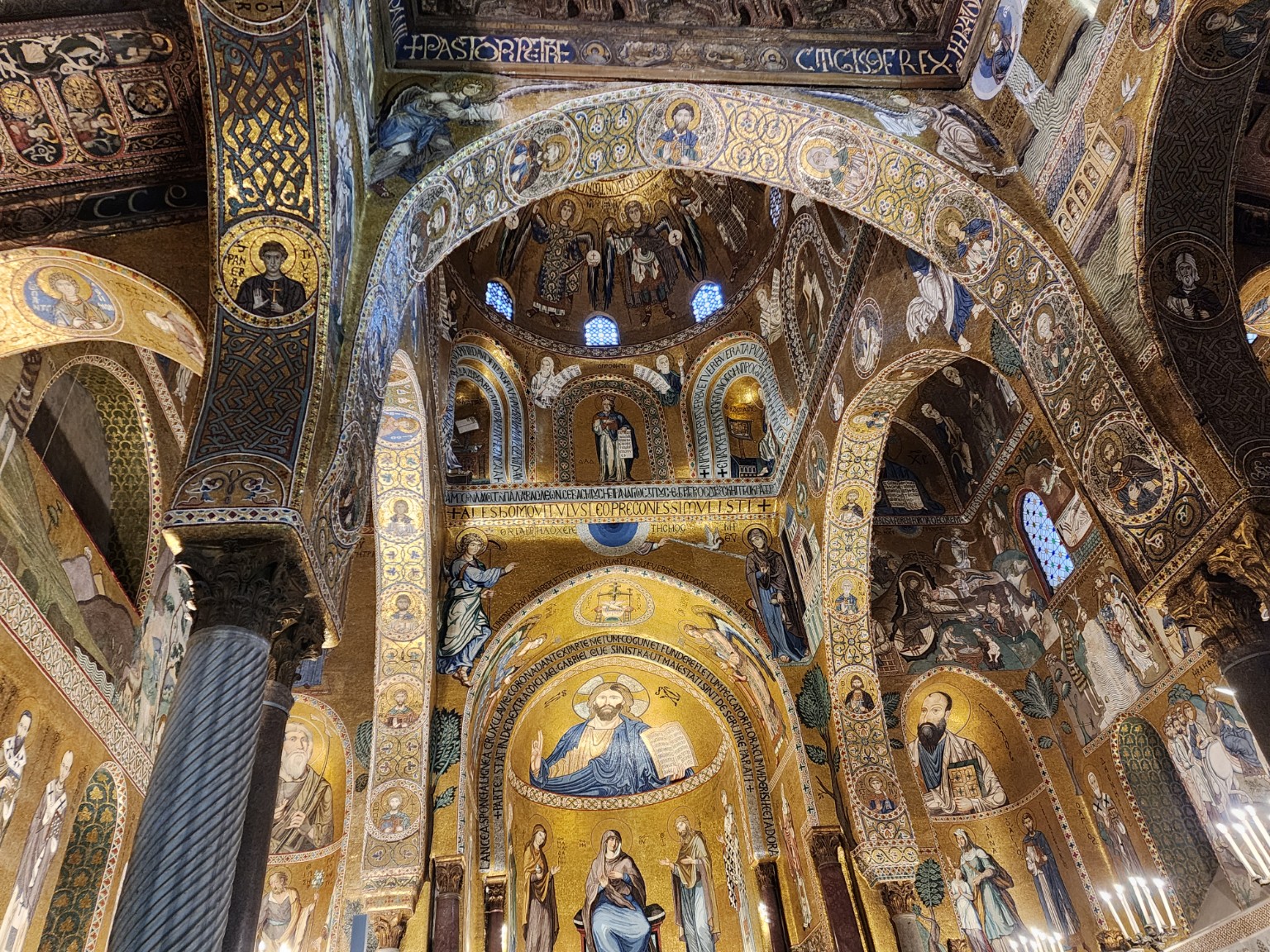
At the Palatine Chapel, the photograph I wanted was the one that could show how the mosaics follow the building. The gold runs into curved vaults and around arches, broken up by dark outlines and small fields of blue. Give yourself a moment in the chapel before reaching for a camera. The eye takes a little while to find its way through all that detail, which is a large part of the pleasure.
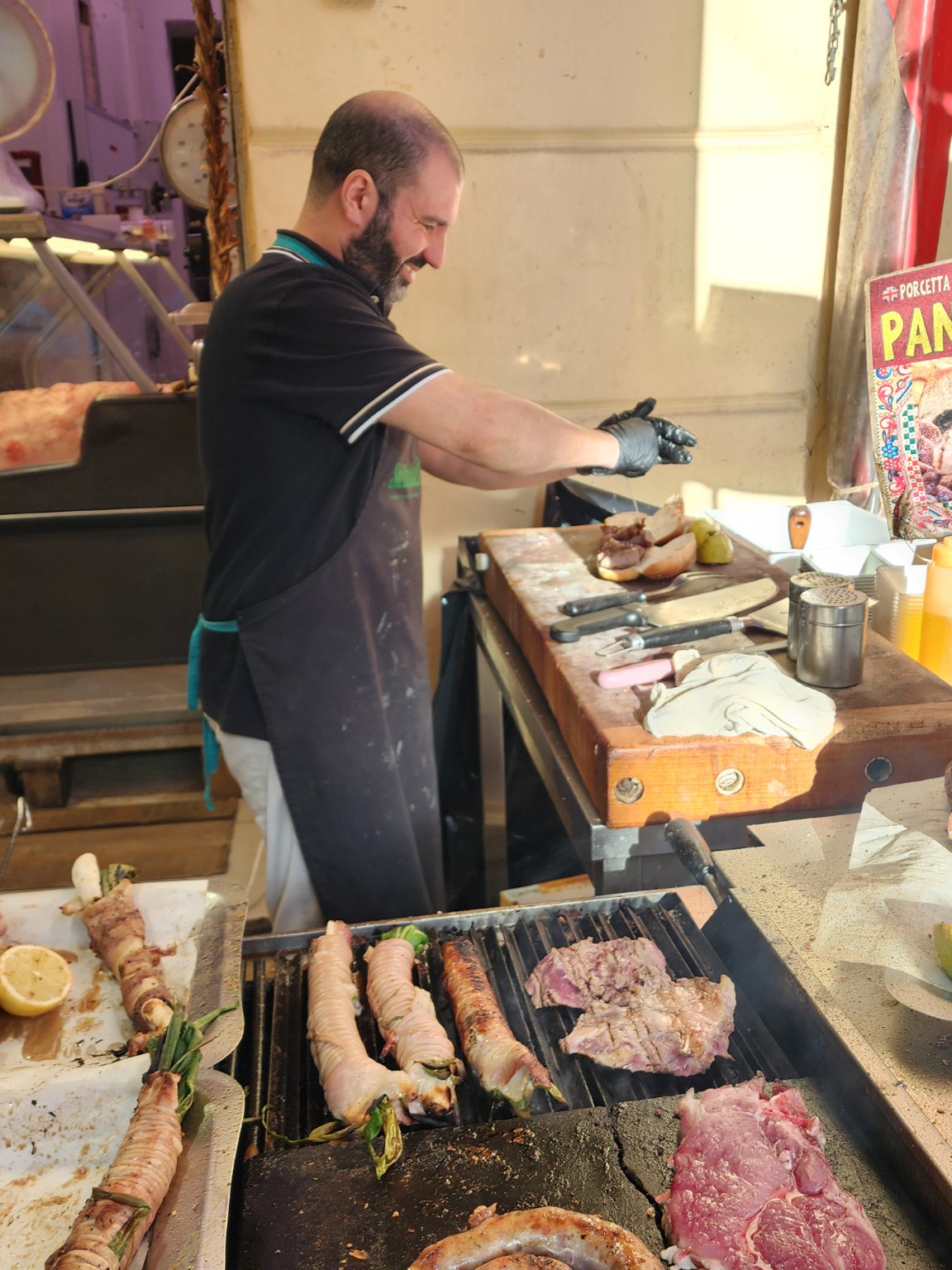
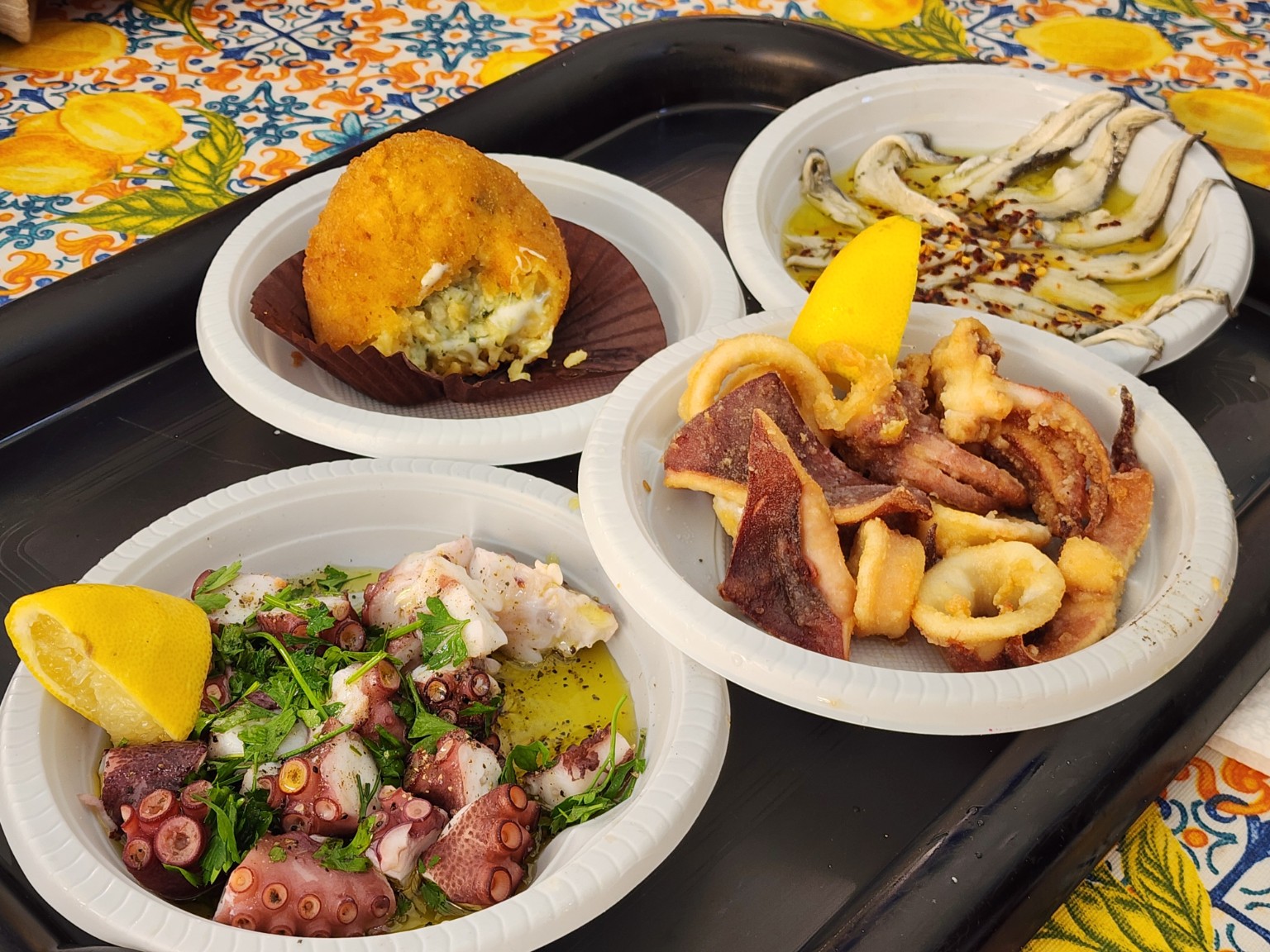
Ballarò has its own way of directing your attention. In the stall photograph the vendor and the grill almost fill the passage, with a line of skewers pulling the eye right into the working space. The picture from the table is busier in a different way. Octopus salad, fried calamari, anchovies and a golden arancina are close enough together that you can imagine someone reaching in before the photograph is finished. It’s an excellent place to start lunch and a difficult place to settle on lunch. I’d walk one pass through the market before ordering.
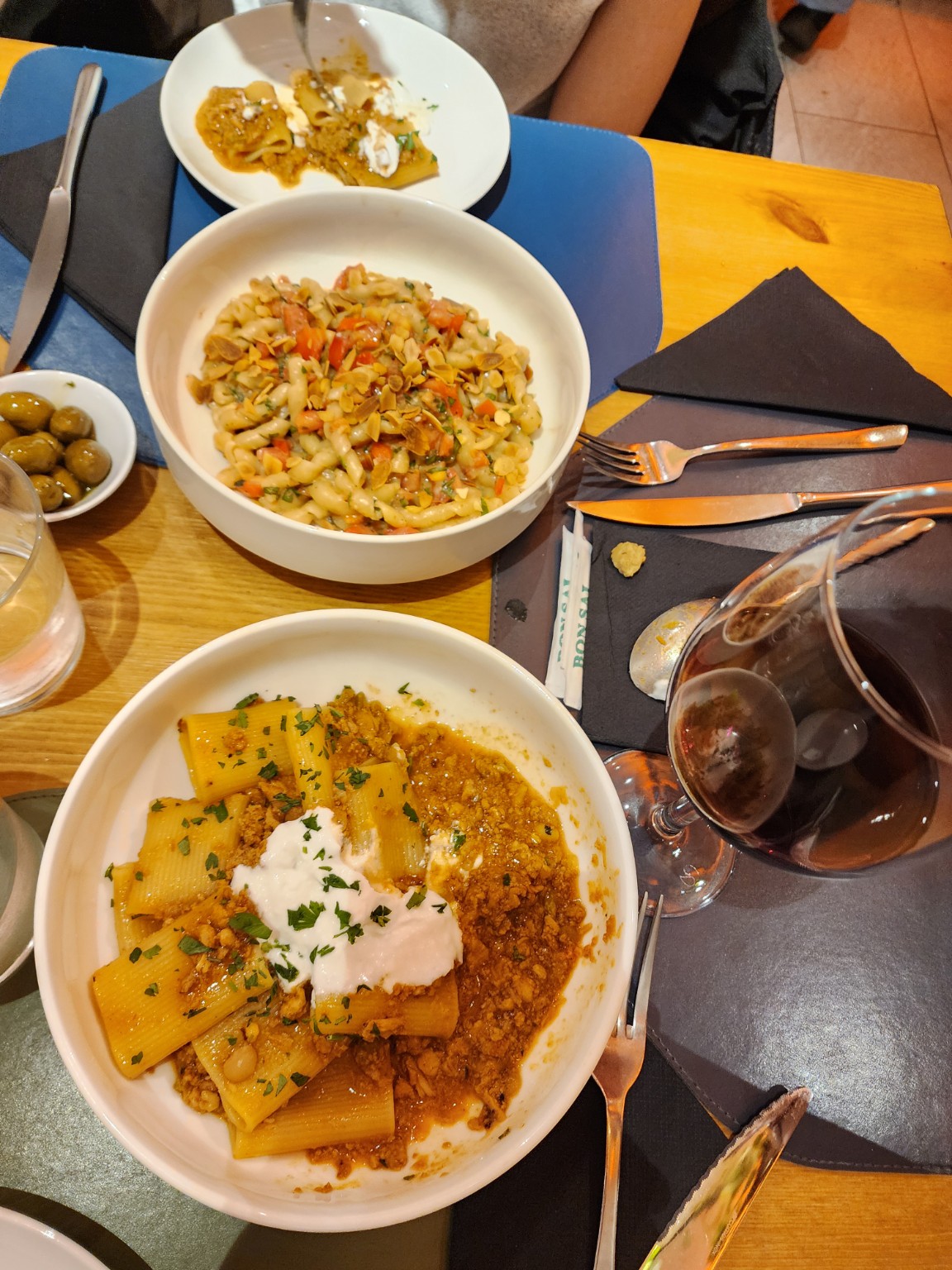
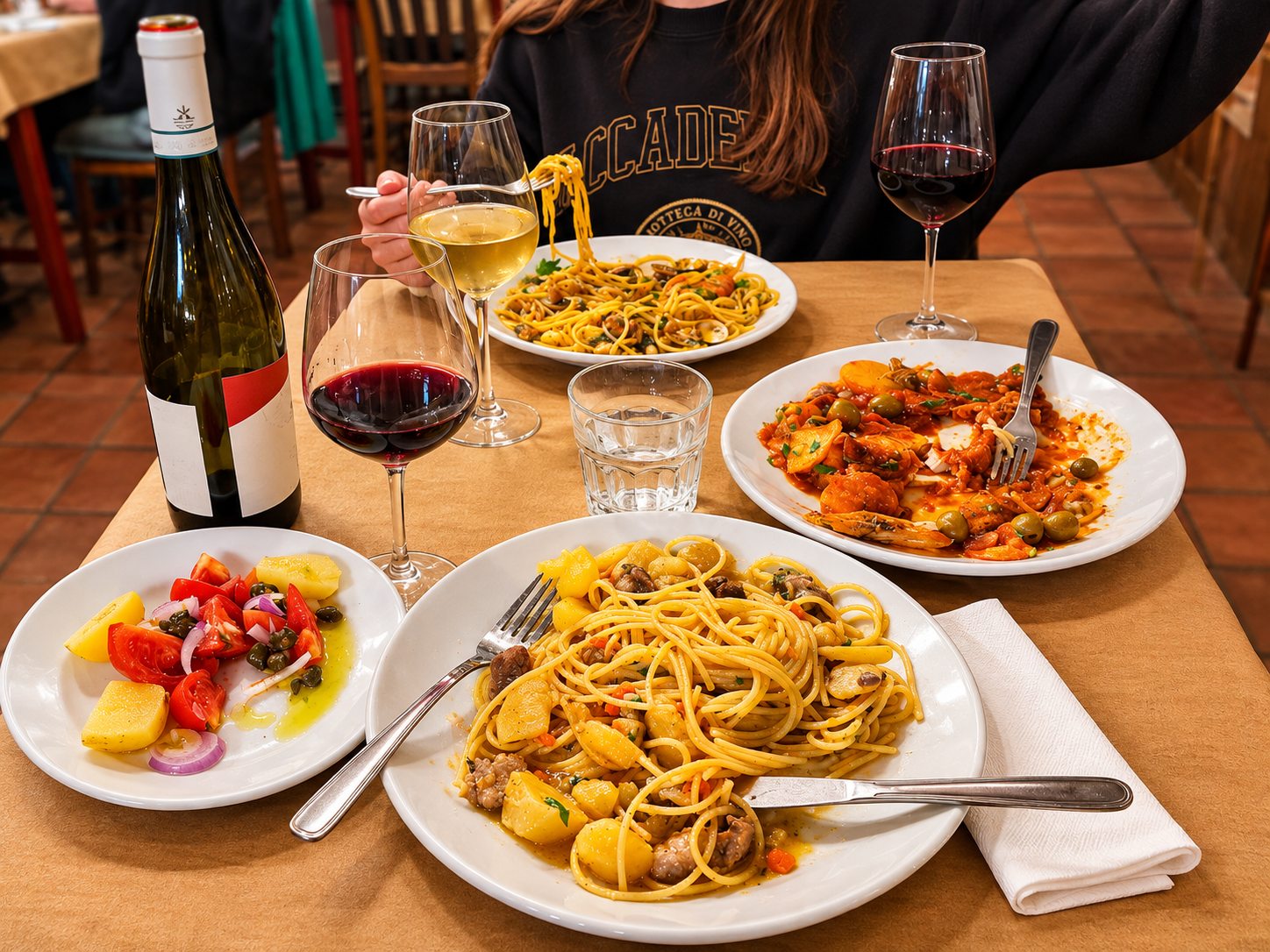
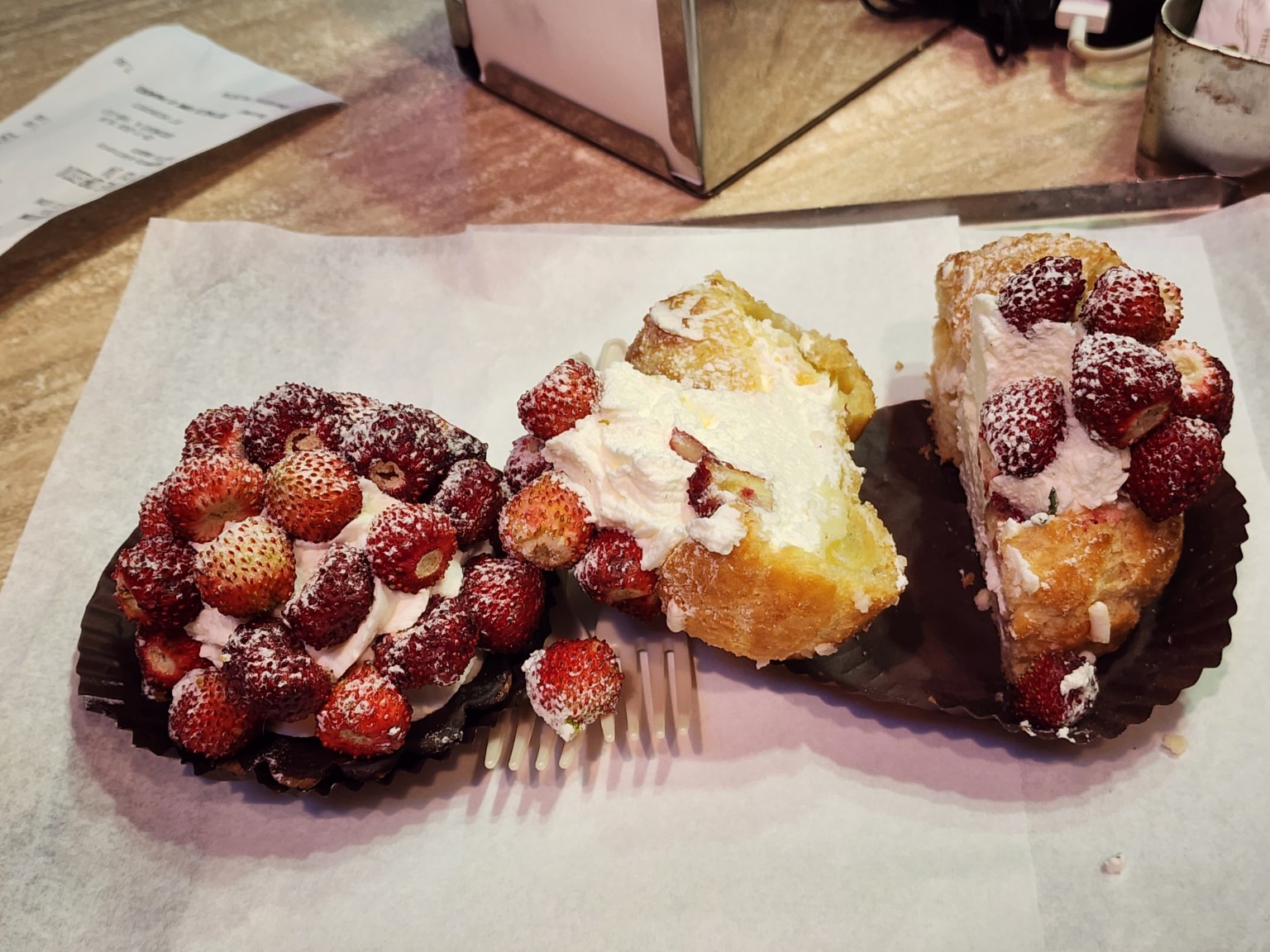
Later, a couple of bowls of pasta and a glass of red wine made as good a subject as anything I’d photographed outdoors. The potato and tomato salad in the next photograph looks almost like an afterthought at the edge of the table, but that’s precisely what I like about it. It belongs with the pasta and the bread and the glasses already in use. The strawberries and cream, meanwhile, are the sort of bakery display that puts an end to any plans for a quick coffee.
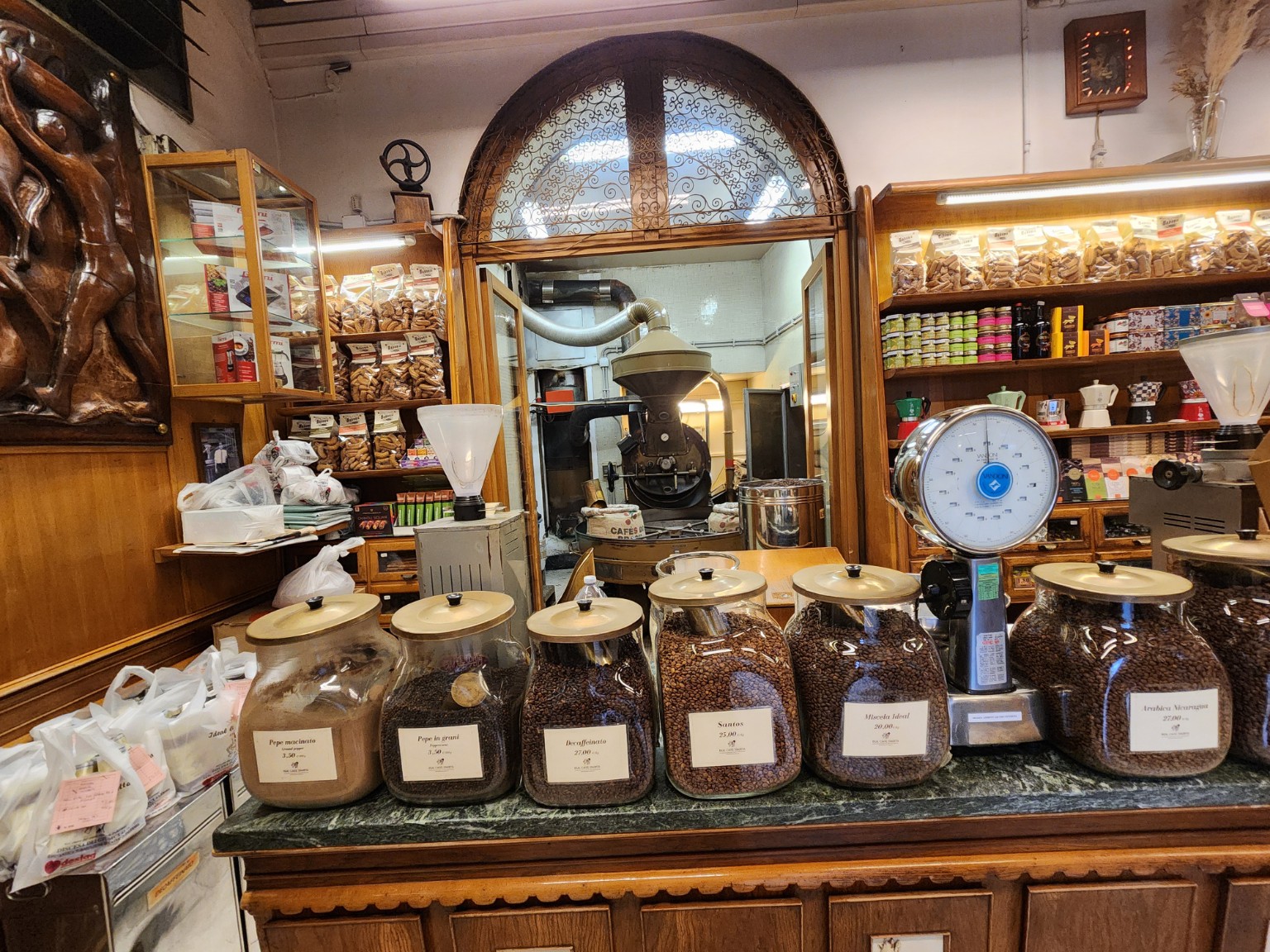
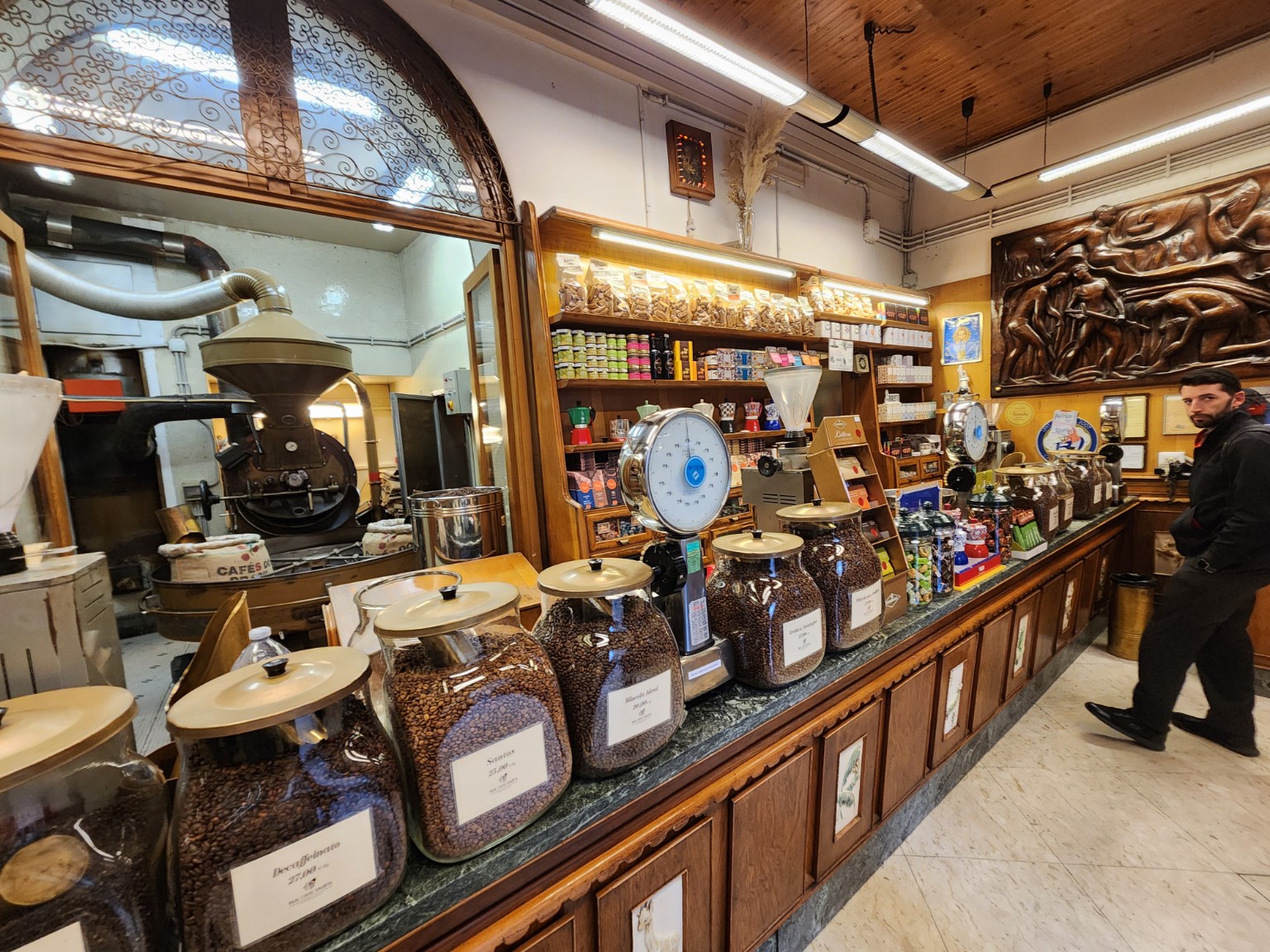
The coffee photographs were taken at Ideal Caffè Stagnitta. In the tighter frame the bean jars make a row across the marble, with the dial scale and the old roasting equipment behind. From the side you can see how long the counter is and how much else is packed into the shop. The warm wood, the glazed arch and the shelves of packets are all part of the room, and I’m glad I kept the wider view. It gives the close-up somewhere to live.
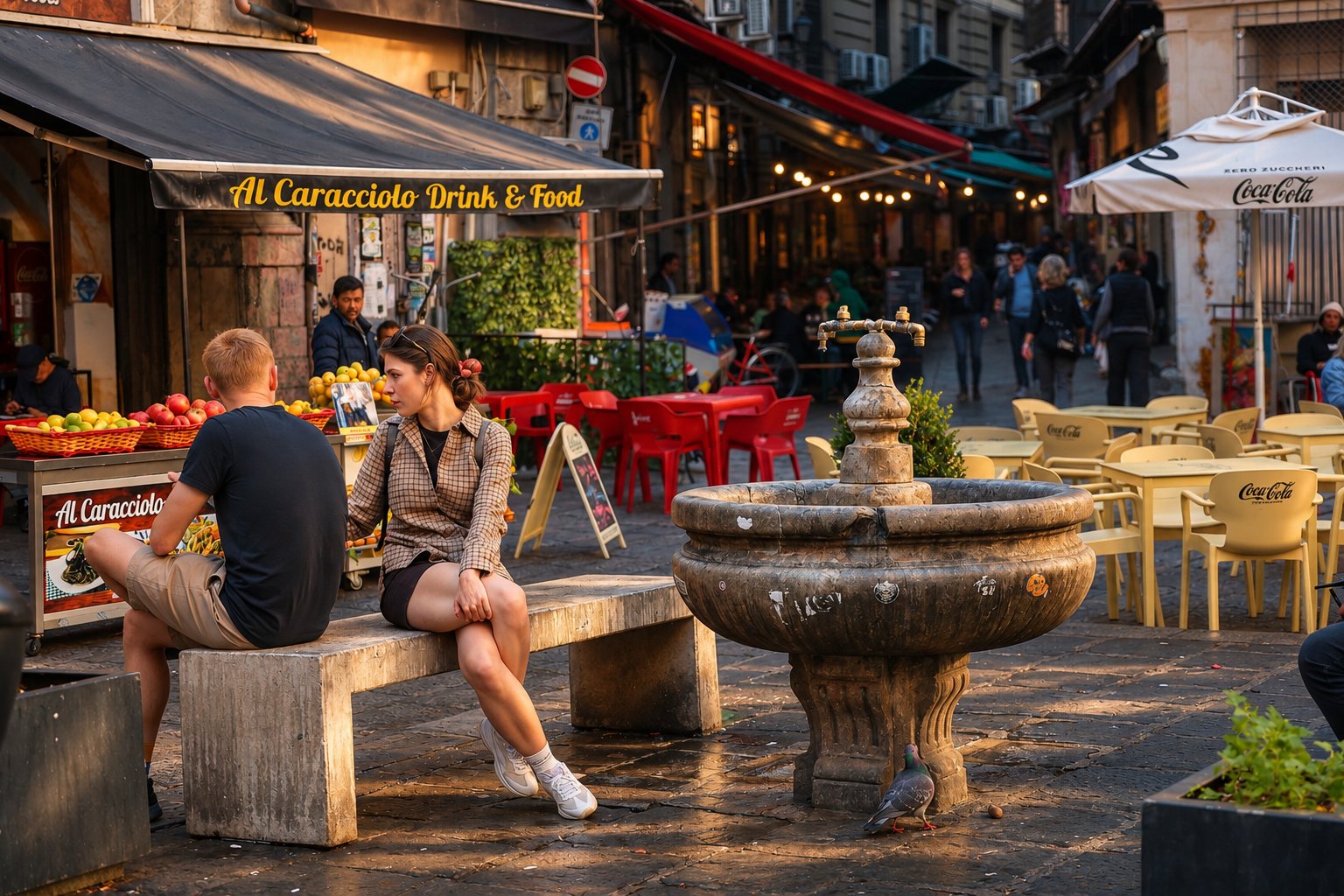
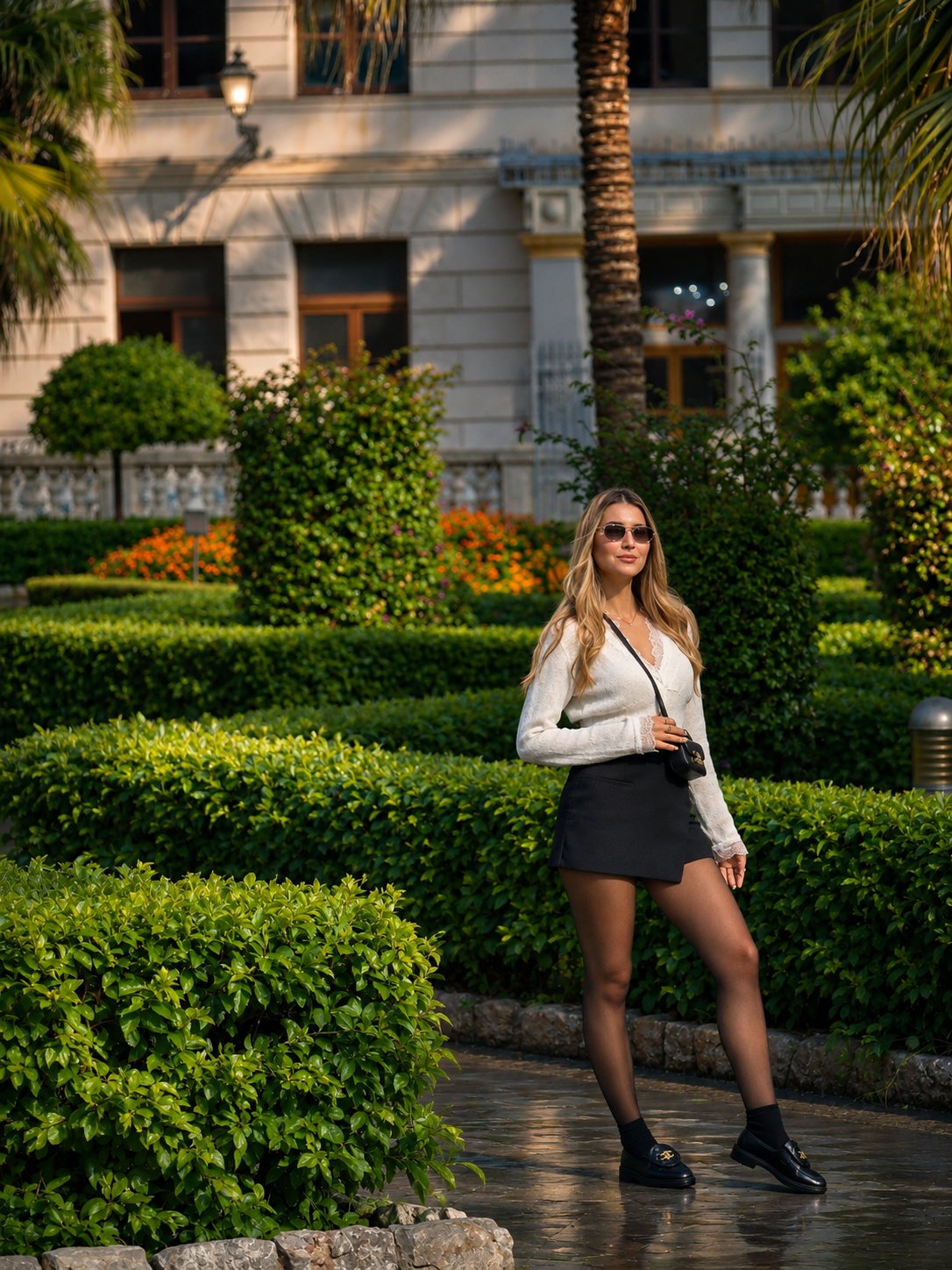
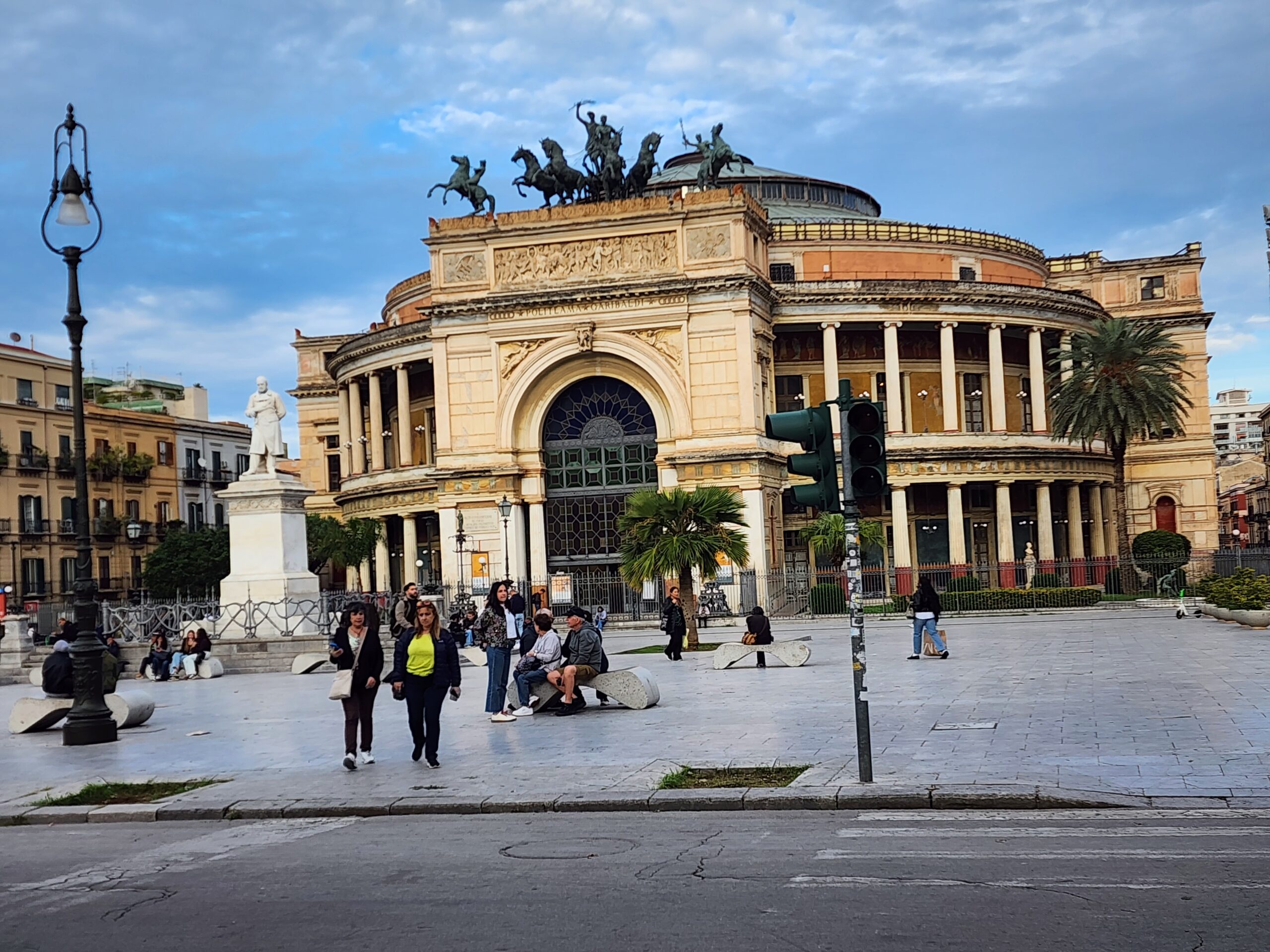
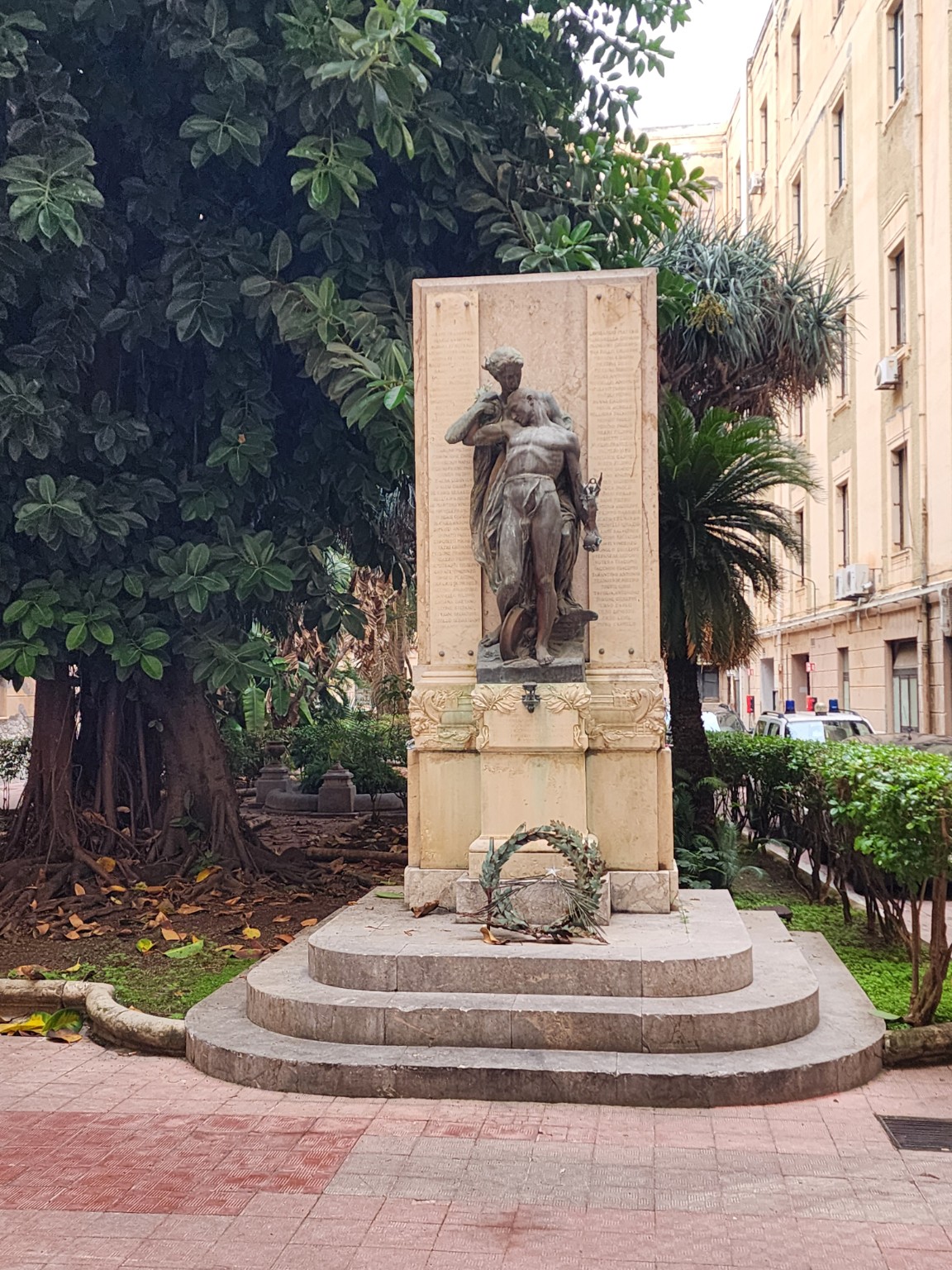
Some of my favorite Palermo pictures have people in them. Two sit on the lip of the fountain near Al Caracciolo, with the fruit and café tables carrying on behind them. In the garden portrait, clipped hedges and tall palms leave a small opening for a figure in sunlight. There’s a much larger stage in front of Teatro Politeama, where the people crossing the square give the entrance arch and rooftop sculpture their scale. The Guardia di Finanza memorial brings the pace down again. Here the steps, shaded planting and bronze relief make you stop and look closely.
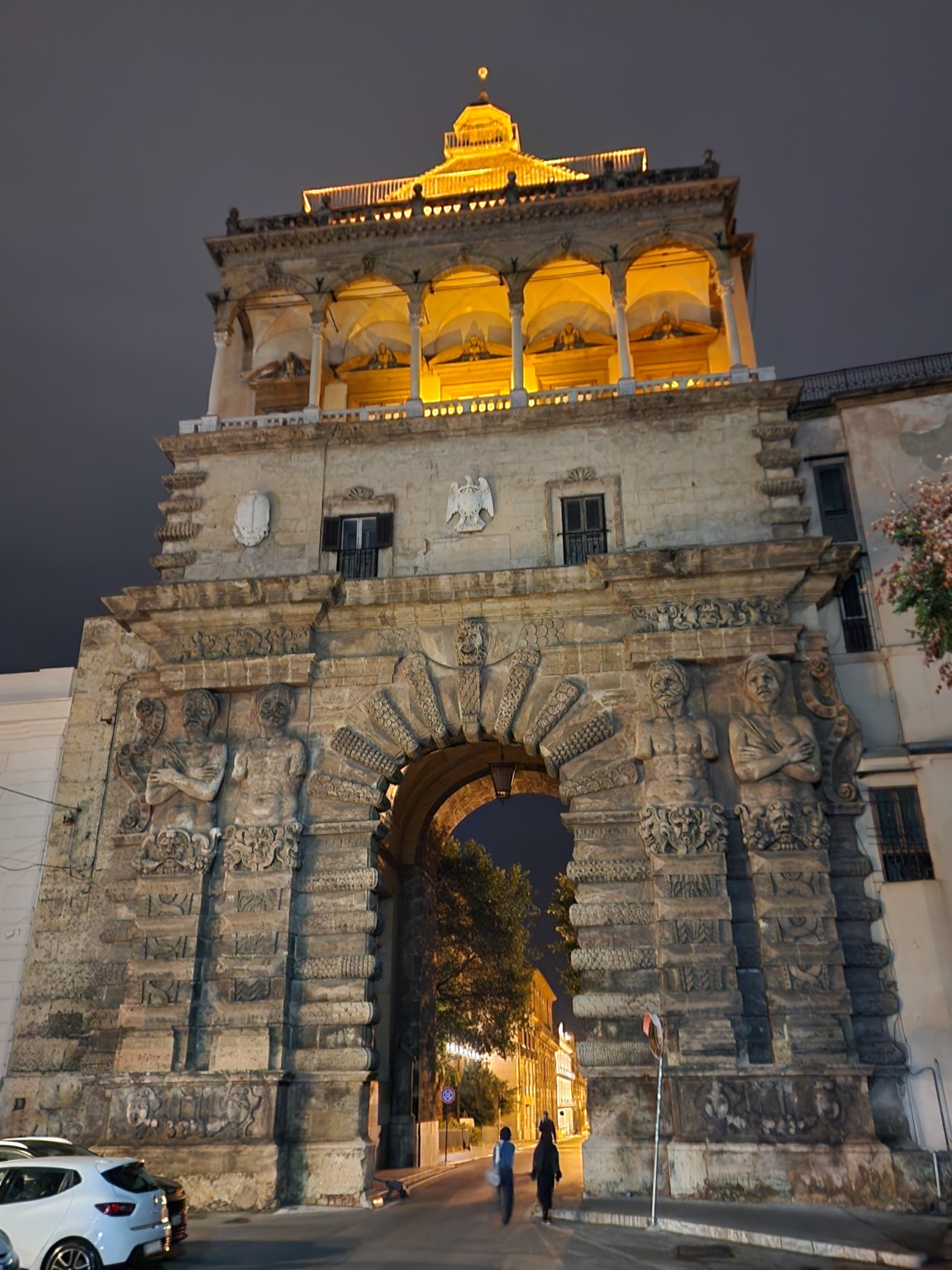
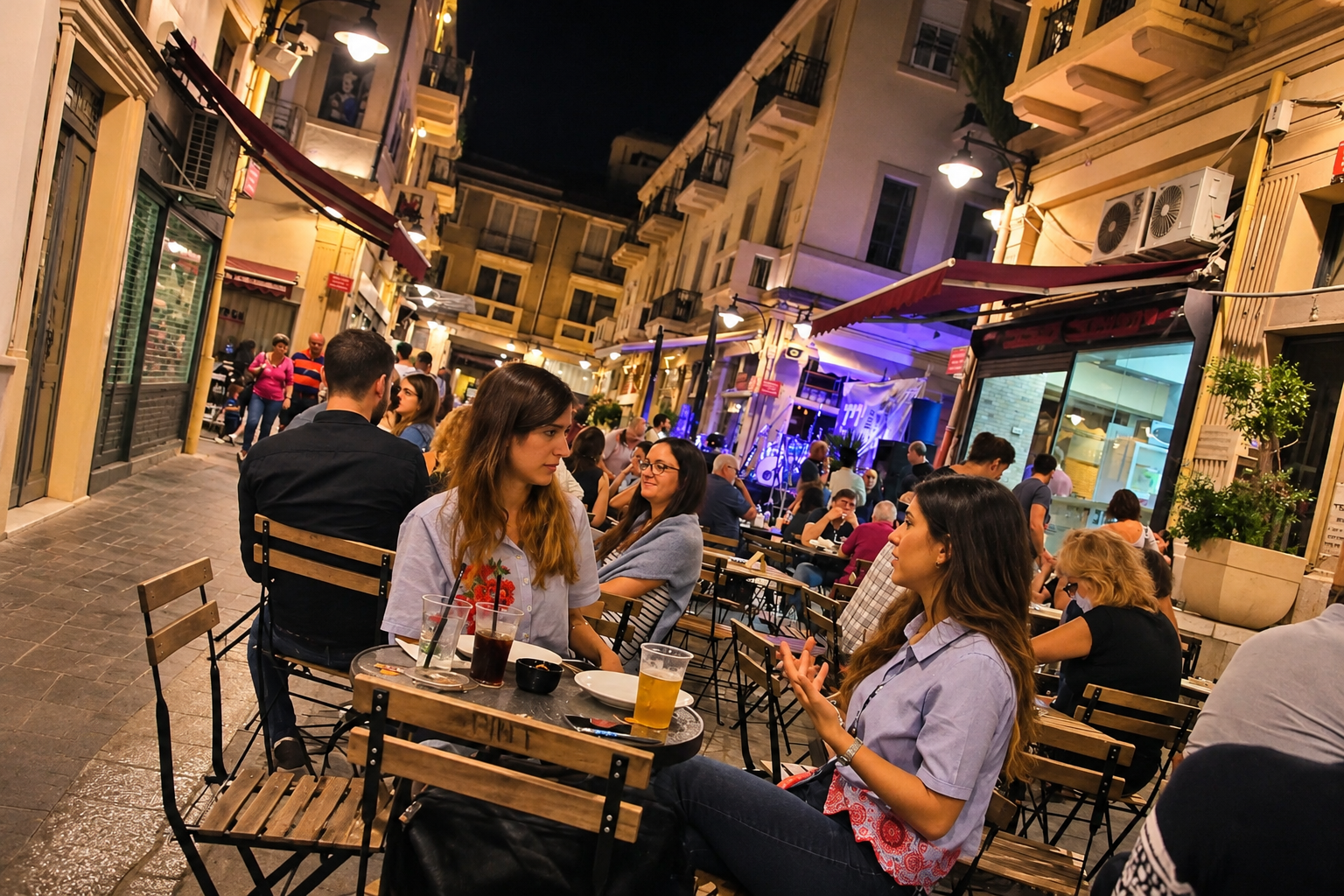
After dusk I’d make time for Porta Nuova. The figures on the gate catch the light at different angles, and the small band of gold under the roof is the part I keep coming back to. The café photograph beside it is a more informal evening scene, with a lane of tables, warm wall lights and a patch of purple around the musicians. One frame is almost all stone and height. The other is close enough to hear the conversations.
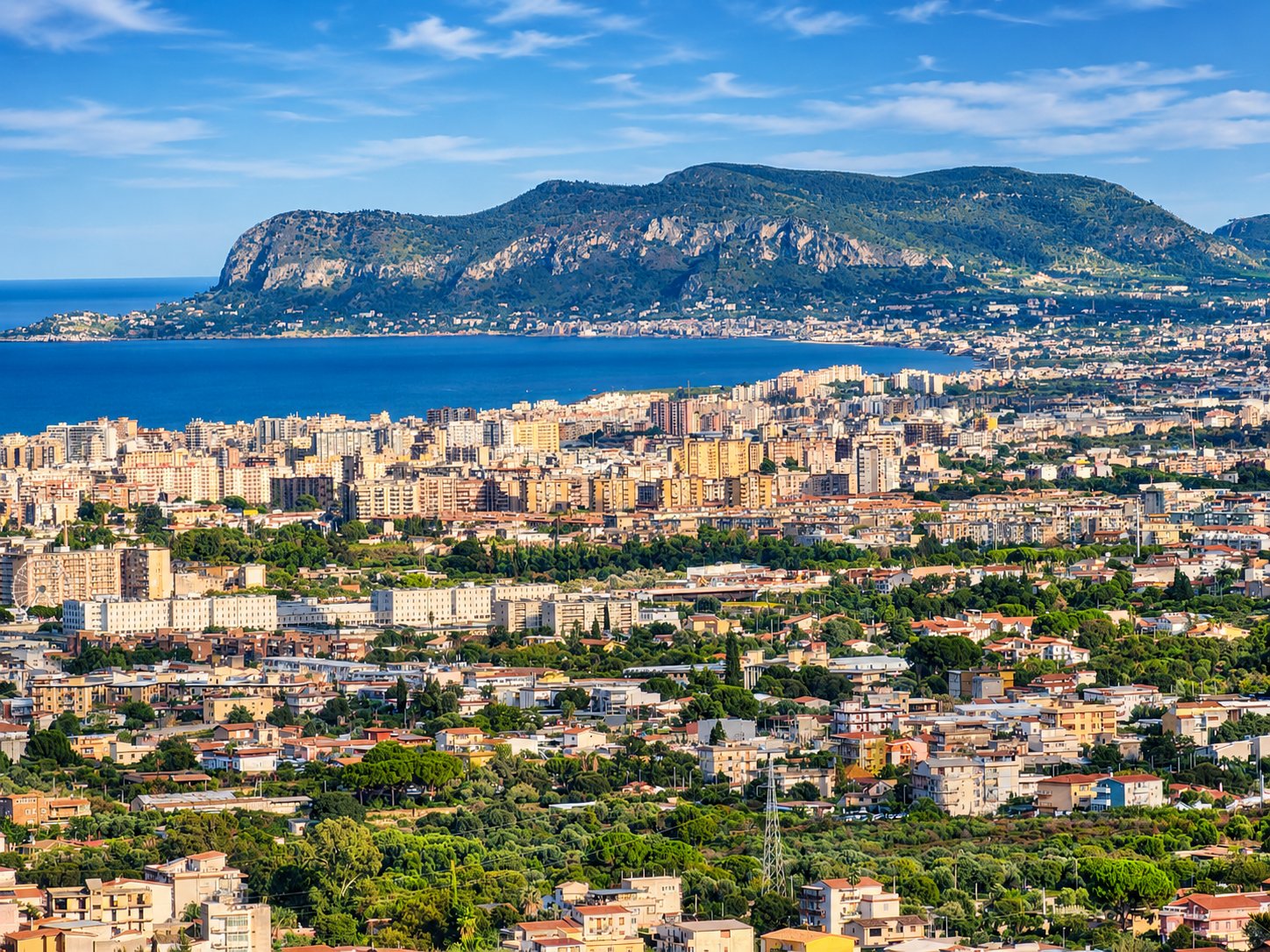
Monreale brings the whole landscape into view. From the hillside, Palermo spreads in pale blocks to the water and Monte Pellegrino sits across the blue behind it. The view explains something the narrow city streets keep hidden from you, which is just how close the mountains and sea are. If the light is clear, give the panorama a little time before turning back toward the cathedral.
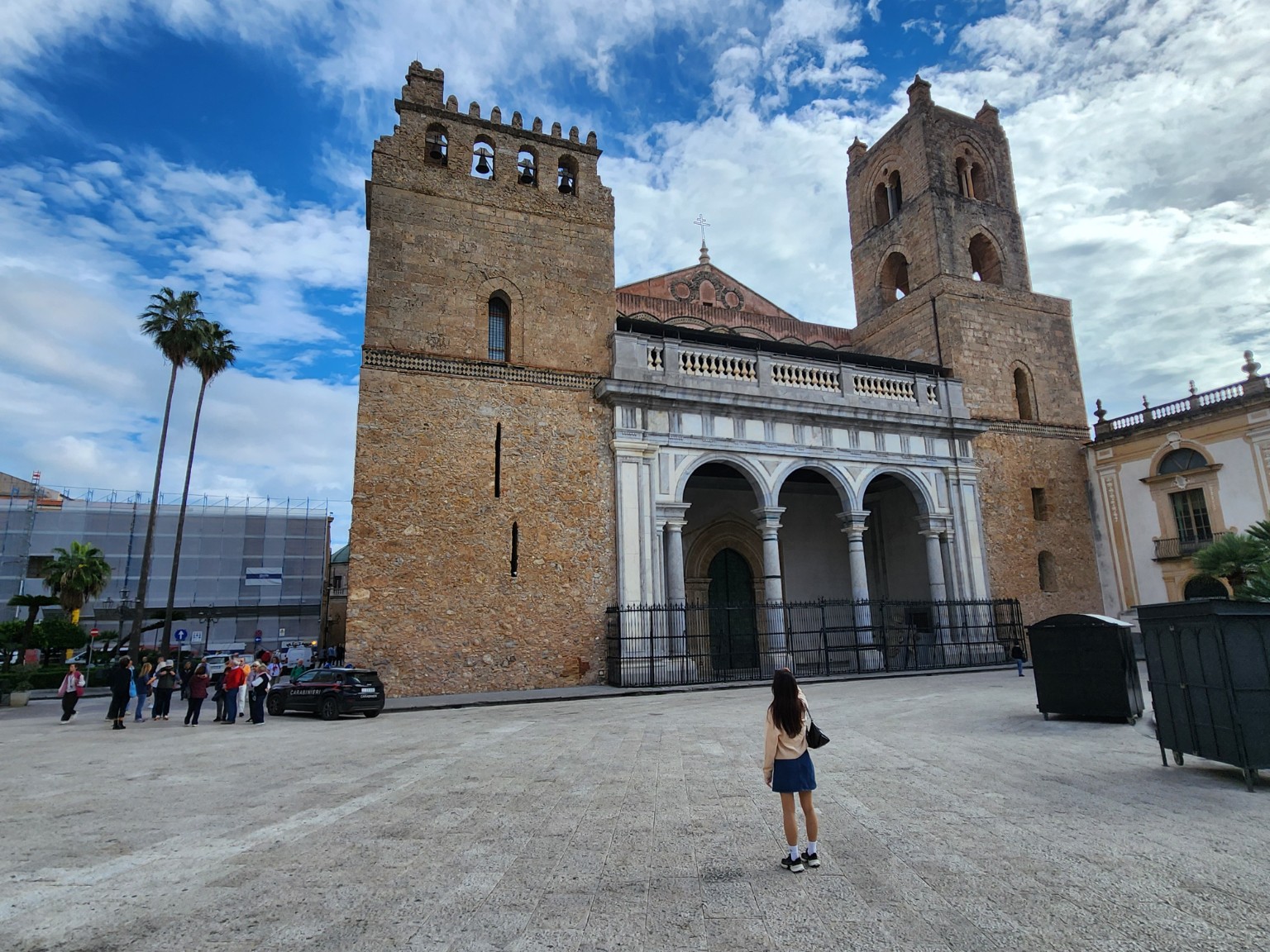
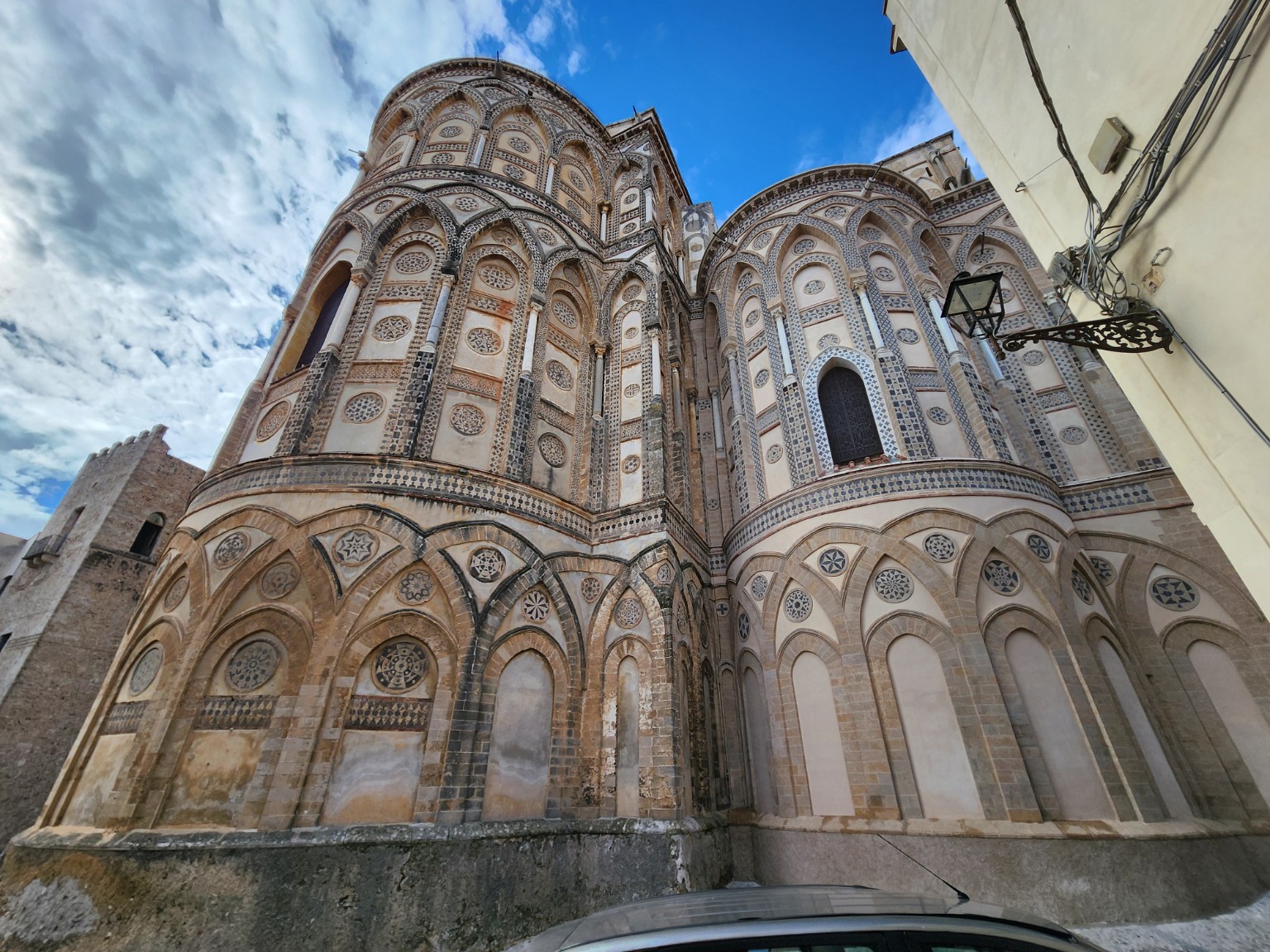
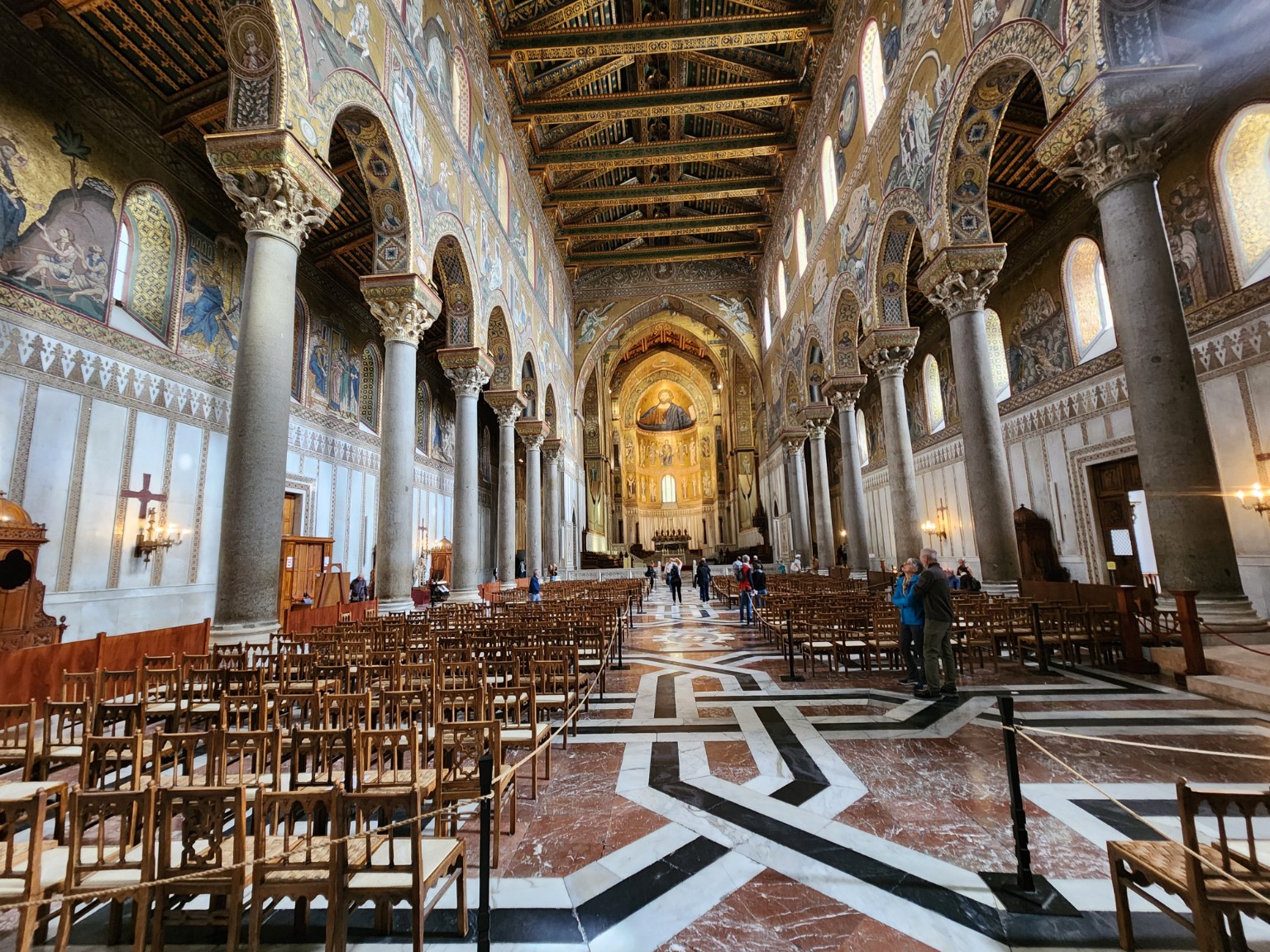
At Monreale Cathedral the west front is unexpectedly spare from the square, with the portico between two square towers. Walk around to the east end and the Norman stonework grows much more intricate, bands of patterned masonry following the curve of each apse. Inside, the floor draws you toward the gold mosaics and the figure of Christ above the far end of the nave. The three views belong together. They give you the approach, the exterior detail and then the long interior, which is the one that took me a while to leave.
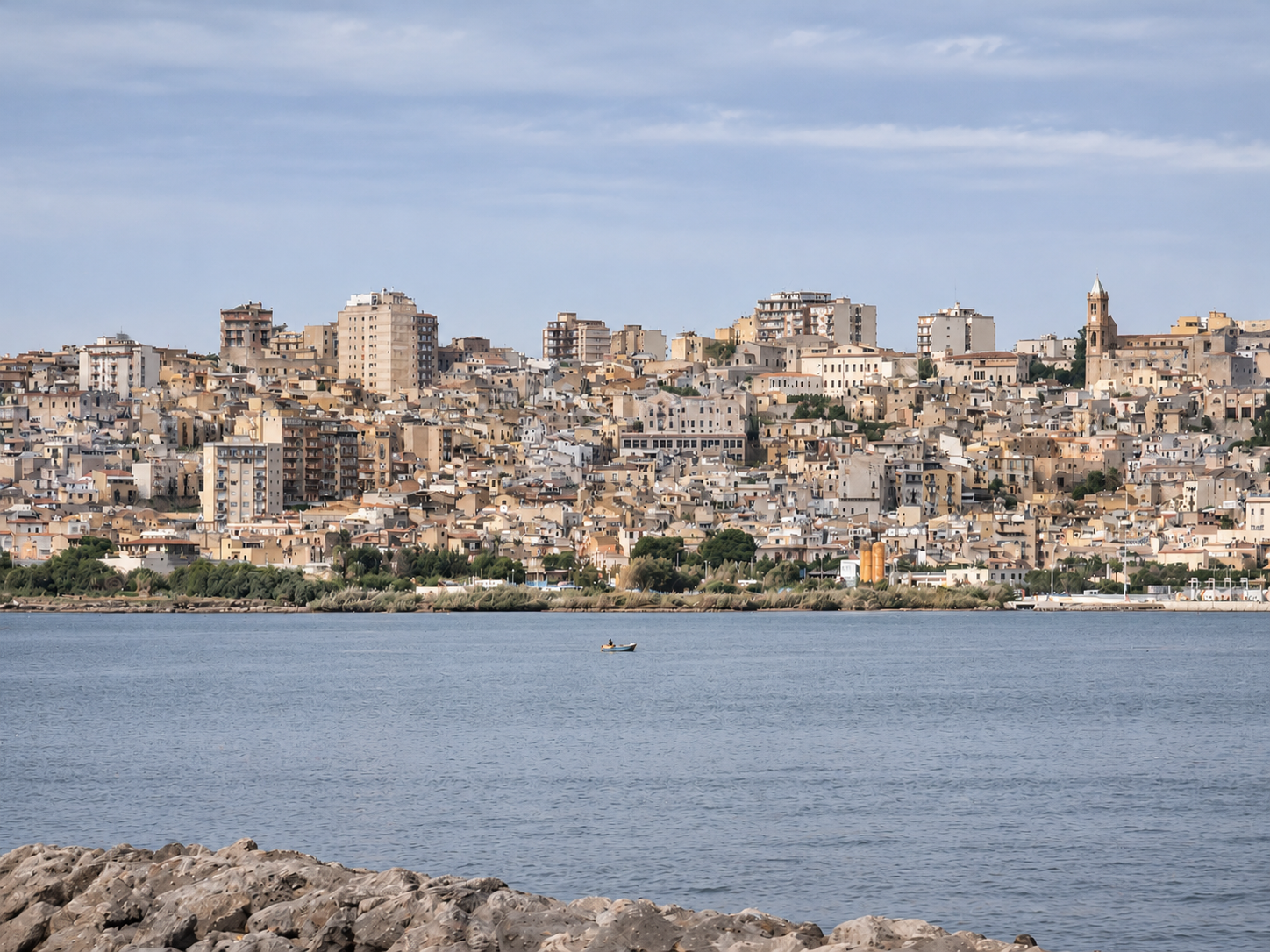
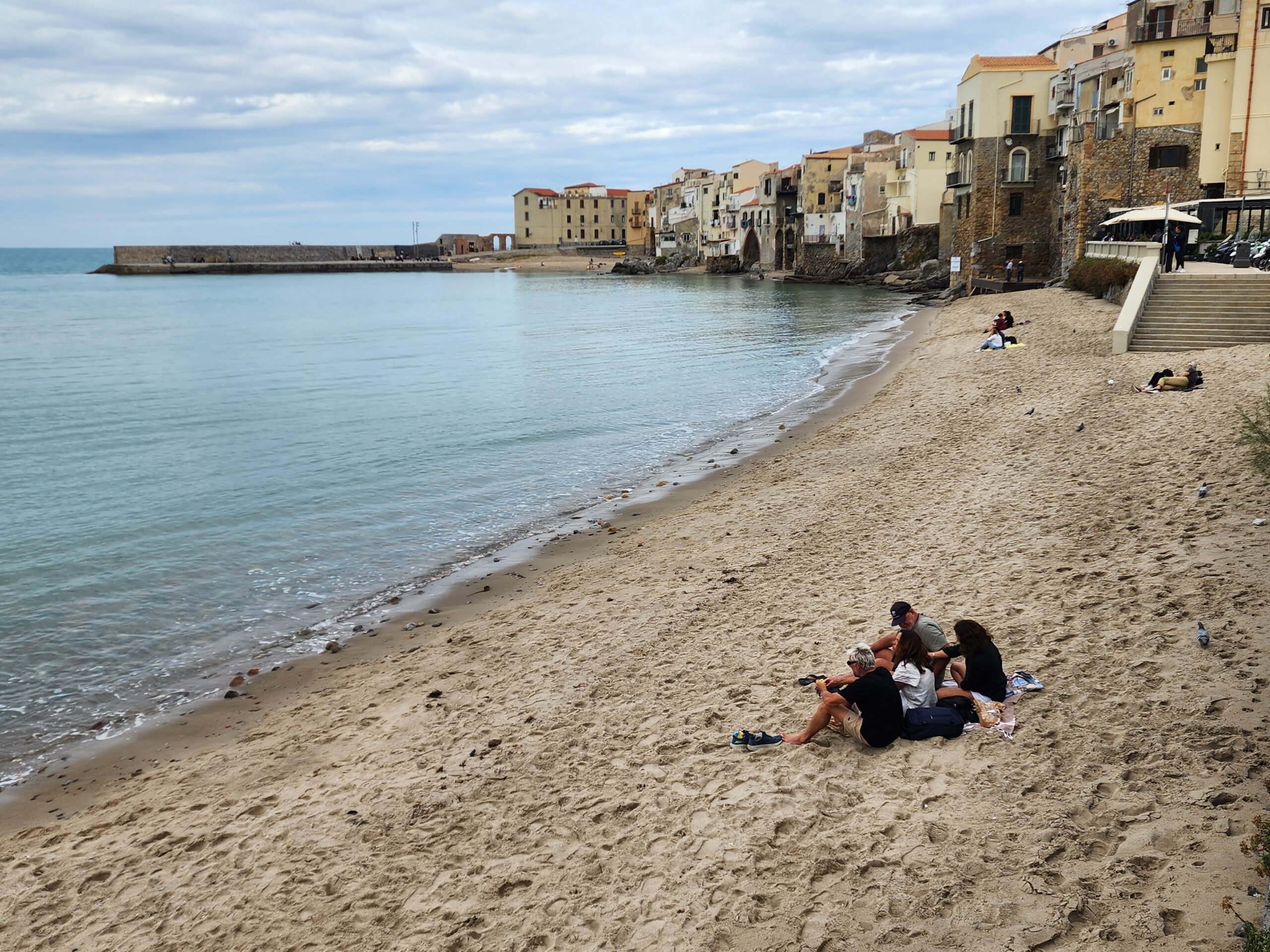
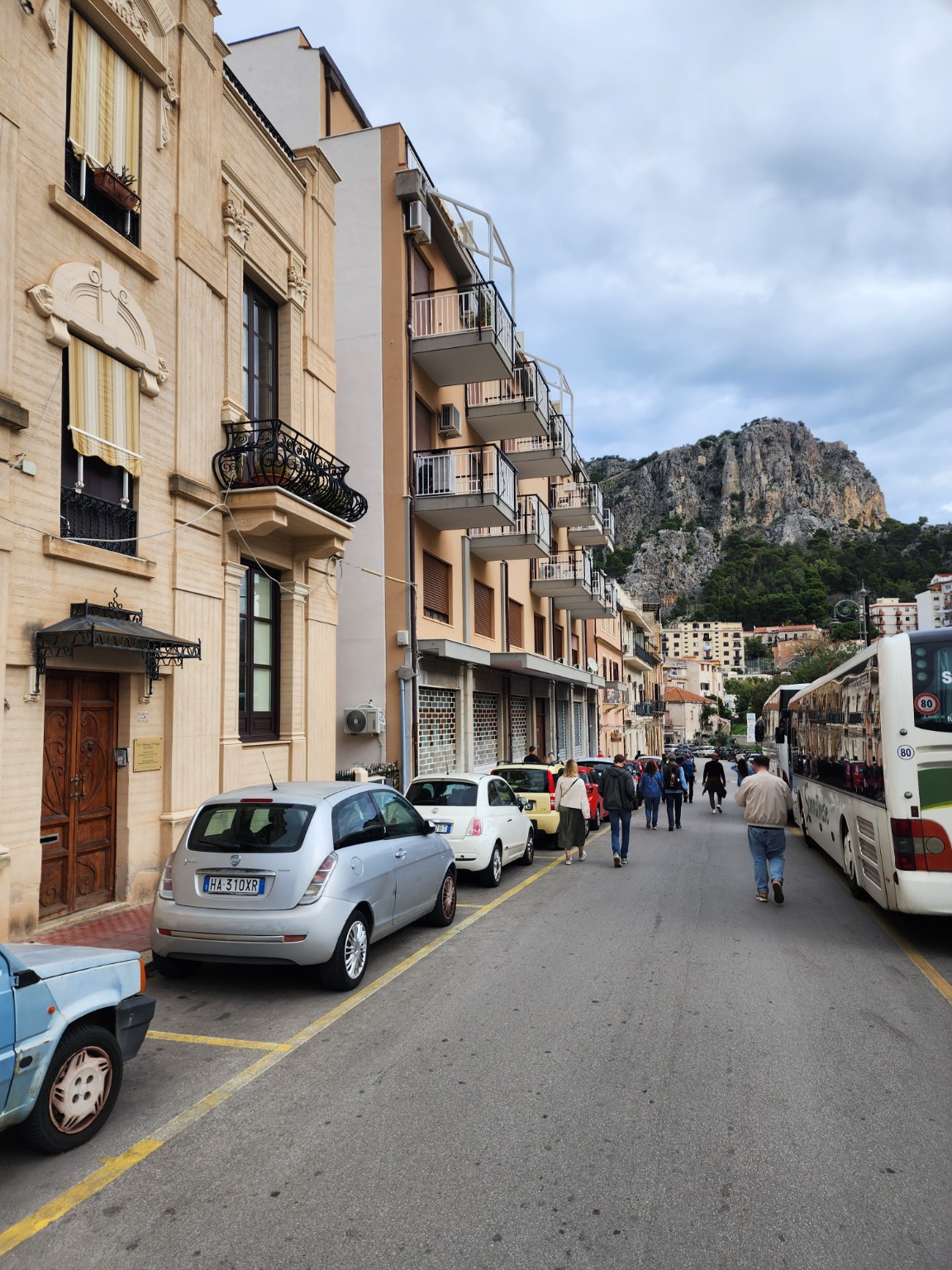
On the railway east of Palermo, the view near Bagheria came up quickly. There’s a low strip of foreground, a broad band of water and then a crowd of pale buildings climbing the opposite hillside. A train window gives you a few seconds to see all of it. The beach in Cefalù offers the luxury of standing still. Looking back along the bay, you can trace the line of the old buildings right down to the water; a few streets in, La Rocca takes over from the sea as the thing you keep seeing at the end of a lane.
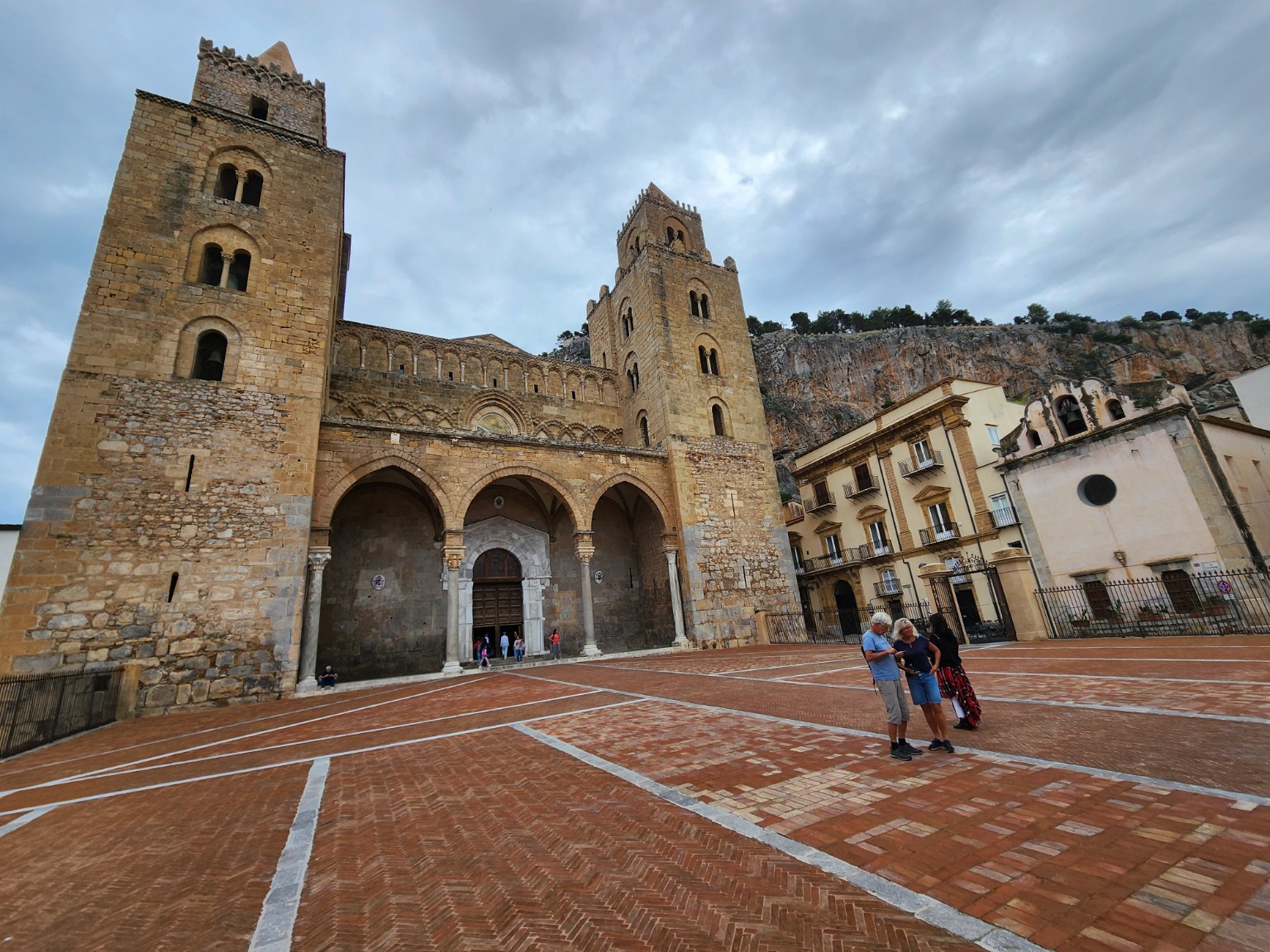
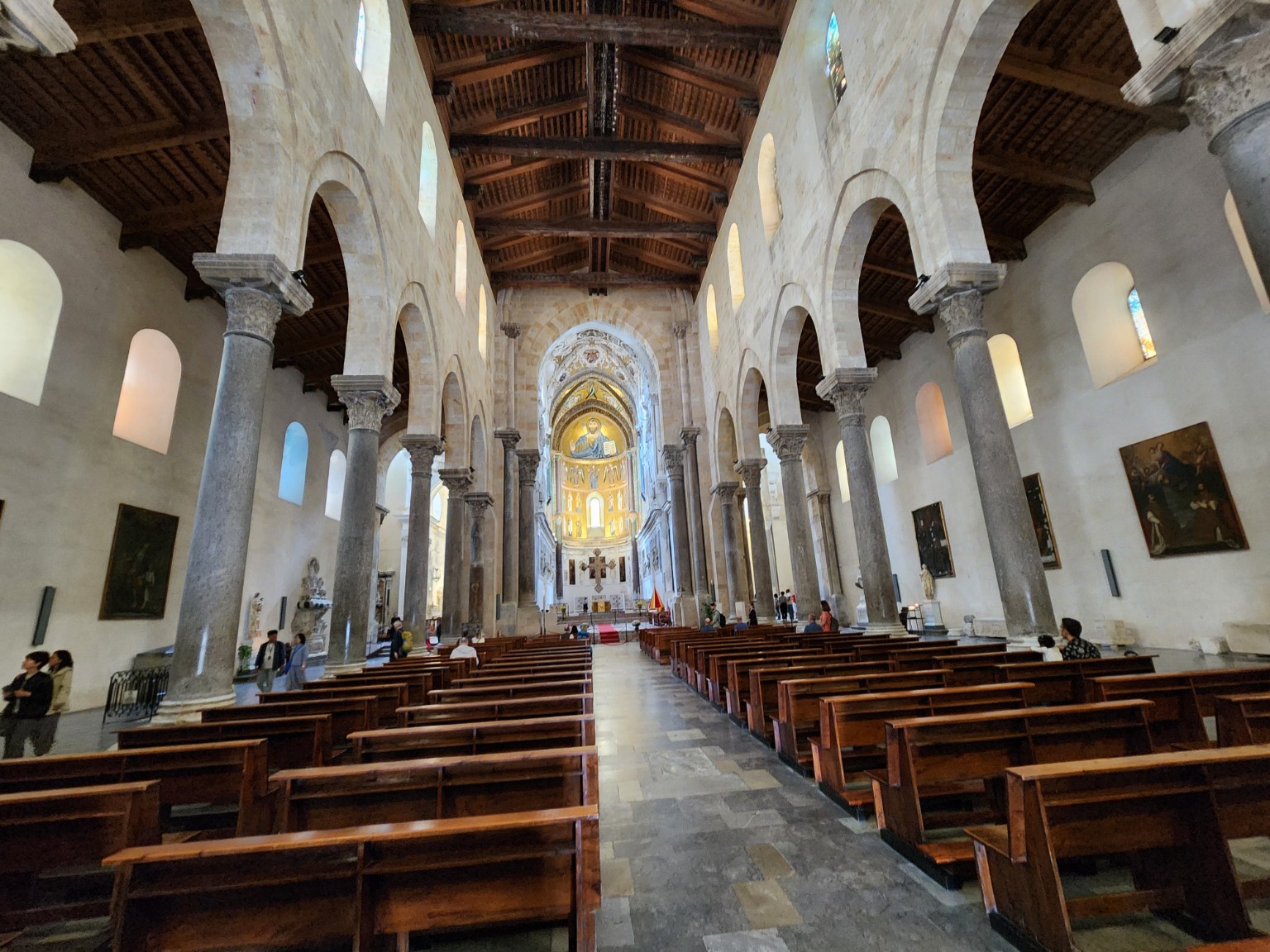
Cefalù Cathedral is best approached through Piazza del Duomo, where the paving climbs toward the twin towers and La Rocca peeks out behind the roofs. Inside the nave, the timber roof and rows of dark pews keep most of the frame quiet. That makes the little area of gold in the distance all the more arresting. I like that the two photographs tell you almost nothing about each other at first glance. Make time for both views.
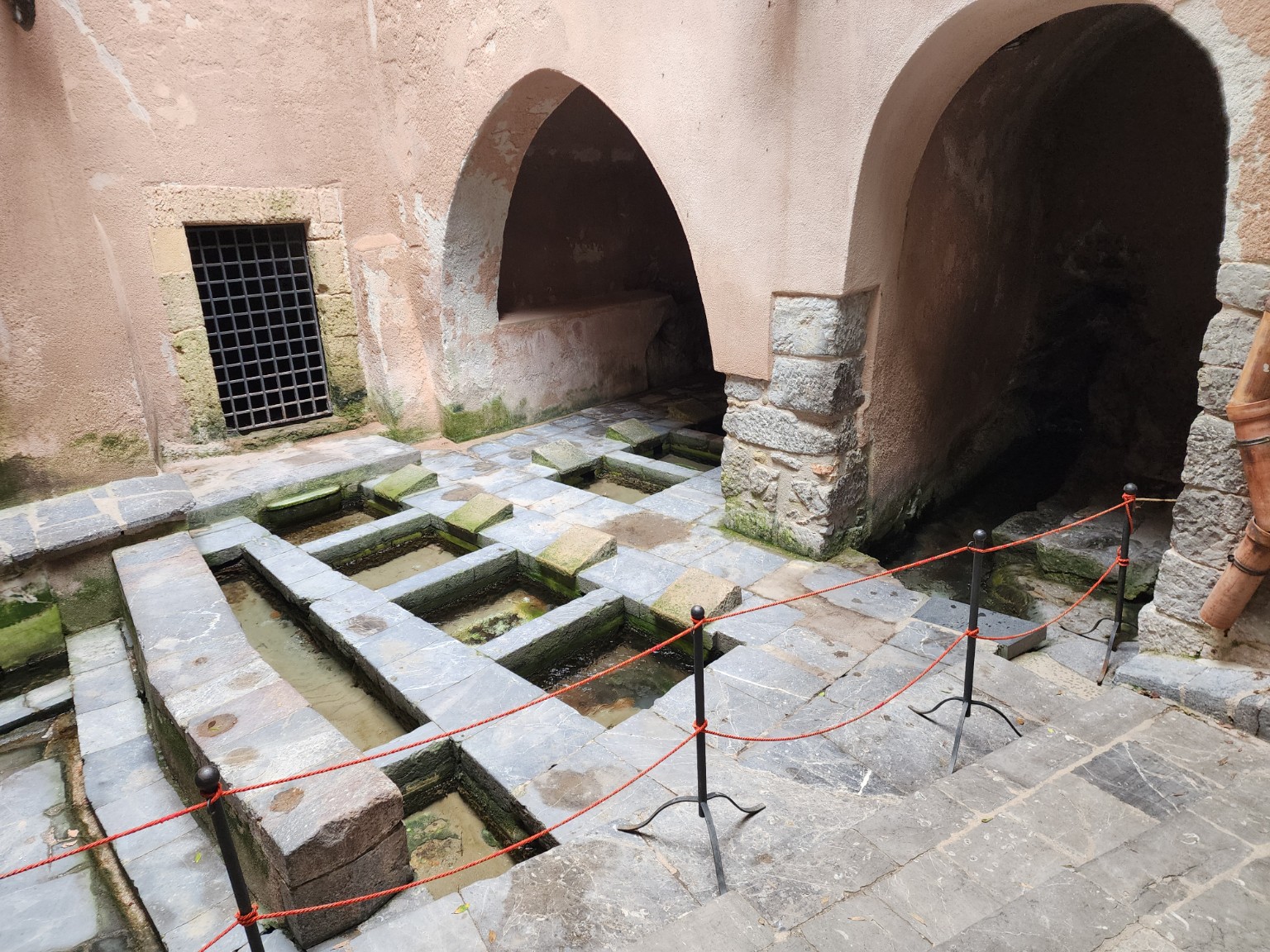
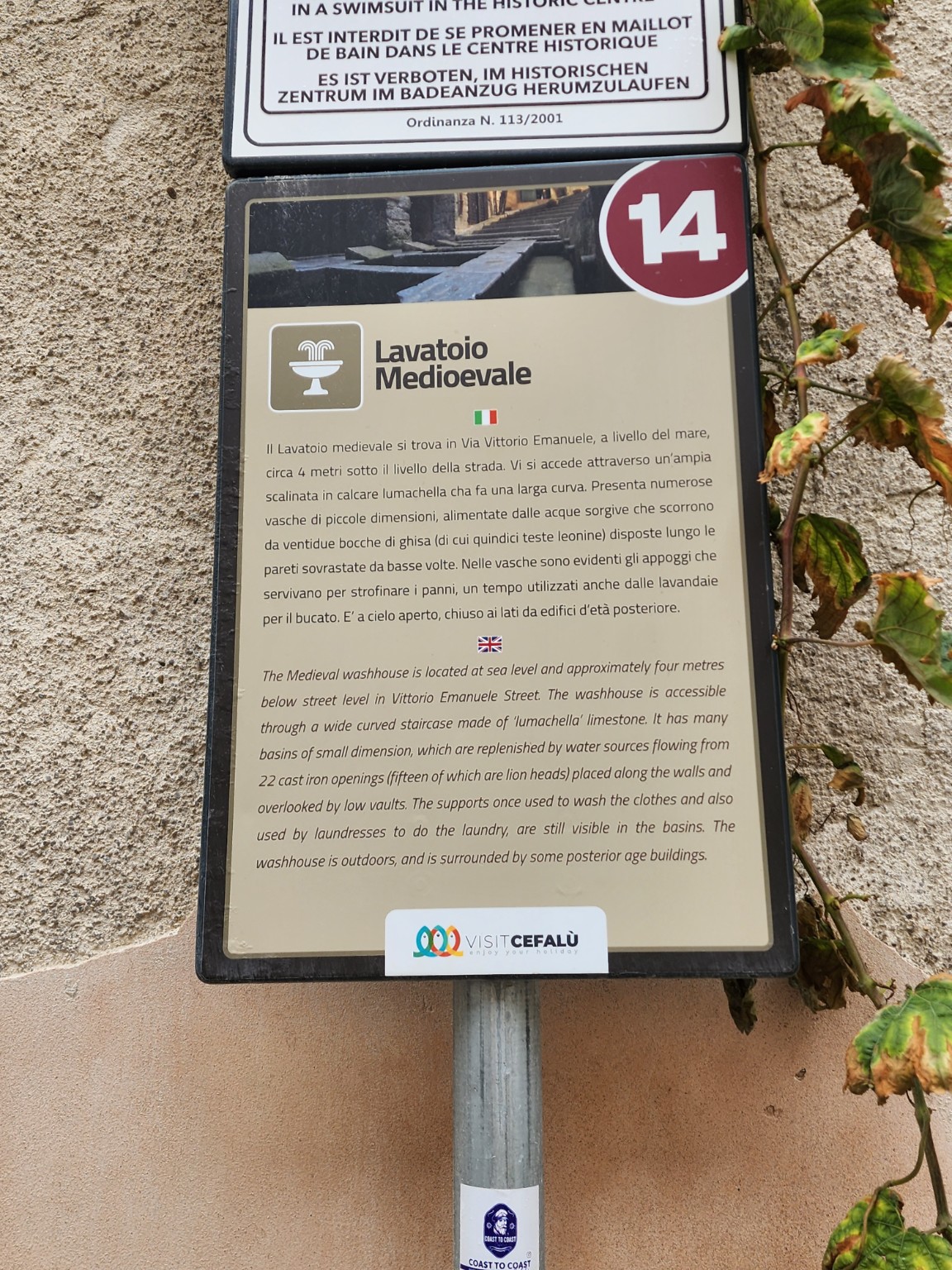
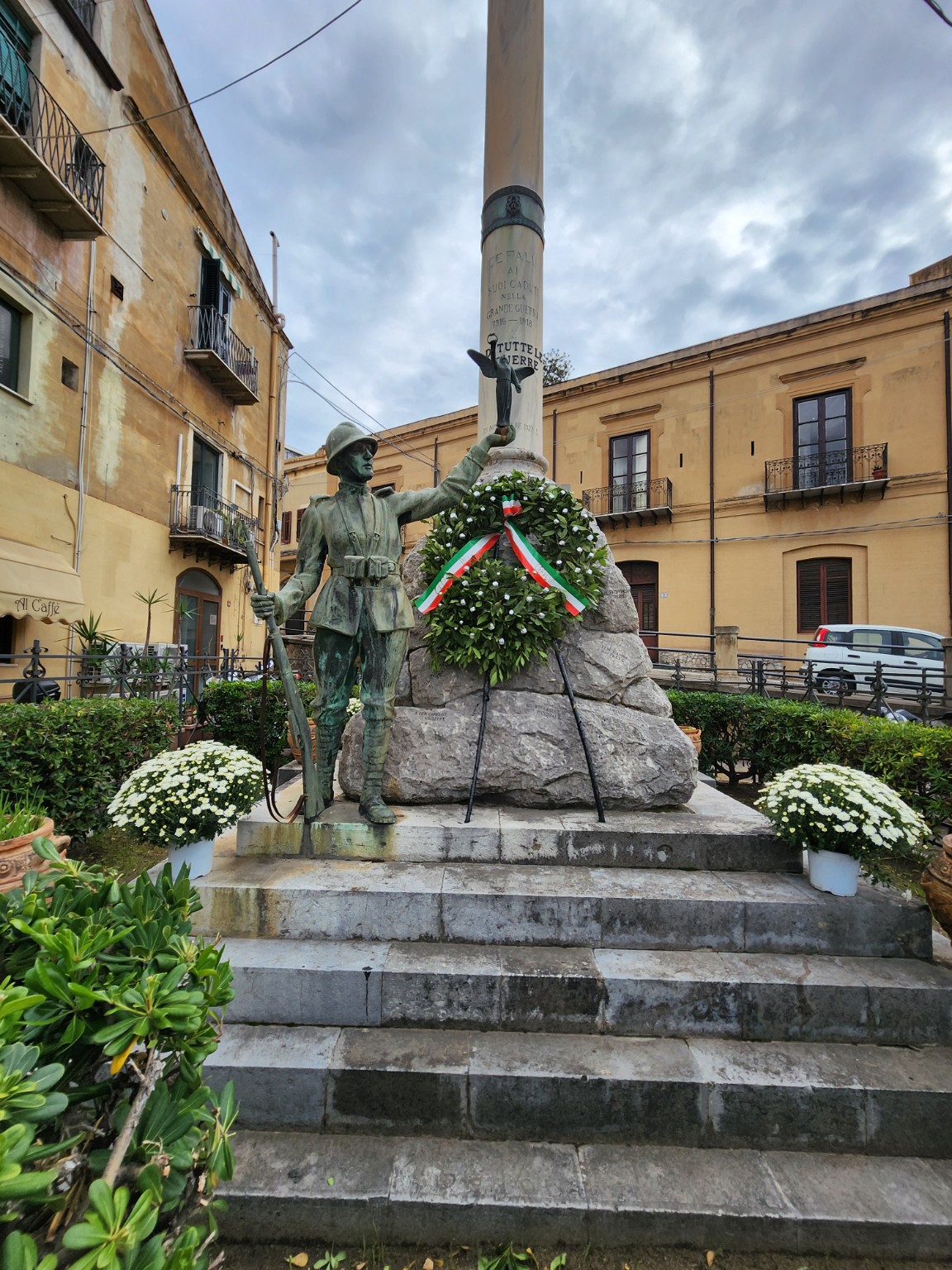
The medieval washhouse makes a good last stop. You go down from the street to stone basins and channels set below arches, where the old workings are easy to miss until your eye adjusts. The bilingual sign is worth a photograph of its own. It names the Lavatoio Medievale and explains how water fed the basins and where people scrubbed the clothes. The Great War memorial is another quieter corner of town, with a bronze soldier above the steps and a wreath at his feet. I’d finish back by the water, if there’s daylight left. There’s plenty to see inland, but it was that slow bend of the coast that stayed with me on the train back.