The last vaporetto of the evening pulls away from the Rialto stop and takes most of the noise with it. What is left on the water is a different city from the one that was here at two in the afternoon, and getting into it costs nothing at all, which is not something that can be said of the daytime version.
Venice has spent three years charging day visitors to enter the historic centre on its busiest dates. The 2026 run covered sixty days between early April and the end of July, applied between half past eight in the morning and four in the afternoon, and cost five euros to anyone who booked at least four days ahead or ten to anyone who left it late. The trial ended on 26 July, and at the time of writing there is no charge in force while the city decides what to do next. But the shape of the thing is instructive whatever happens in 2027: the window it covers is the daylight window. Whatever Venice thinks its congestion problem is, it does not think it happens after four o’clock.
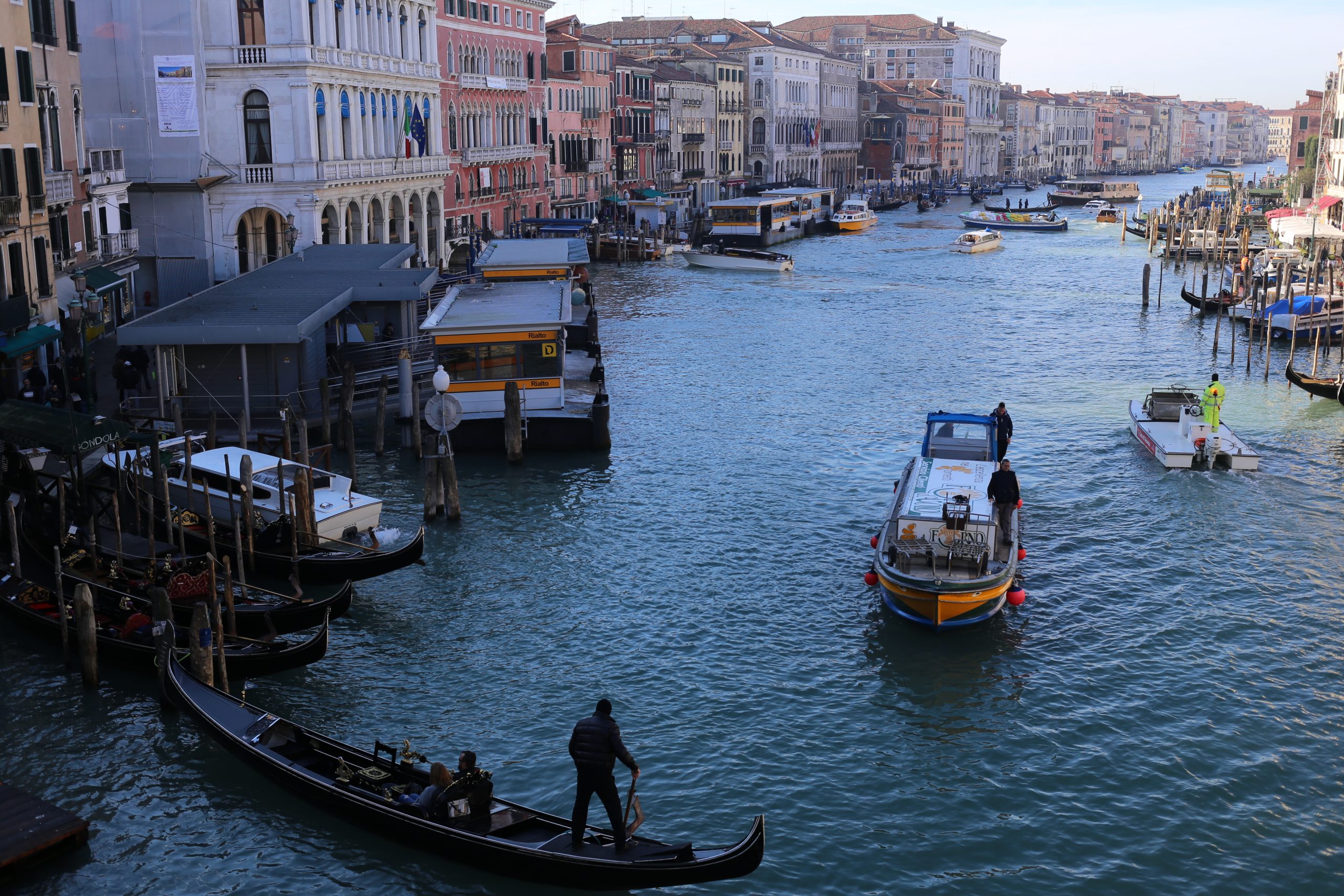
It does not. The day-trip economy runs on coaches and cruise calls and regional trains, and all of them have to leave. By eight in the evening the Rialto is passable at walking pace. By ten it is quiet enough to hear the water slapping the quay walls. The people still out are the ones staying somewhere, plus the residents of a centre that now holds fewer than fifty thousand of them, doing the ordinary business of a Sunday evening.
What changes after dark
The bridge is the most photographed structure in the city and in daylight it is an obstacle course. At night it is a stone arch with lit shopfronts along its spine and nobody queueing to get onto it. The view from the pontoons on either bank, which is the one everybody wants, is available without negotiation.
The canal itself becomes legible. During the day the surface is churned into chop by taxis, delivery barges, and the vaporetti working every few minutes. Once that traffic thins, the water settles enough to carry reflections, and the palace fronts double themselves in it. This is the effect every painting of Venice promises and the daytime city almost never delivers.
Prices move too. Restaurants in the streets behind the Rialto market shift from turning tables at speed to a slower evening service. The bacari, the small wine bars that serve cicheti at the counter, are a genuinely local institution in the late evening rather than a queue of people photographing their ombra.
Practical notes
Night vaporetti run on reduced frequency, roughly every twenty minutes on the main lines, so check the last departure for wherever you are sleeping. The walk back through the sestieri is pleasant and the signage is worse than useless after dark, so download an offline map rather than trusting the yellow wall signs, which point to San Marco, the Rialto, and the station and nowhere else.
Bring a jacket in any season. The lagoon drops temperature quickly once the sun goes and the humidity carries the cold.
Tripods are a problem. The good vantage points are working pontoons and quay edges, and setting up in one will get you moved along. Brace against a mooring pile instead.
The real argument for staying overnight rather than passing through is not the fee, which is trivial next to the cost of a hotel bed in the centre. It is that the overnight visitor gets a version of the city the day visitor has never seen and does not know exists.