Nestled in the lush, rolling landscapes of northern Spain, Vitoria-Gasteiz stands as a gem in the Basque Country, a region renowned for its unique cultural identity, rich history, and stunning natural beauty. Serving as the capital of the autonomous community of the Basque Country, Vitoria-Gasteiz is not only an administrative center but also a cultural and historical beacon that invites exploration and discovery.
Vitoria-Gasteiz, with its origins dating back to the Middle Ages, has a rich and complex history. Founded in 1181 by King Sancho VI of Navarre, the city quickly became a significant strategic and commercial hub. Over the centuries, it has witnessed numerous pivotal events, including the famed Battle of Vitoria in 1813, which played a crucial role in the Peninsular War against Napoleon’s forces. This rich historical tapestry is evident in the city’s well-preserved medieval quarter, a labyrinth of narrow streets, ancient buildings, and historical landmarks that transport visitors back in time.
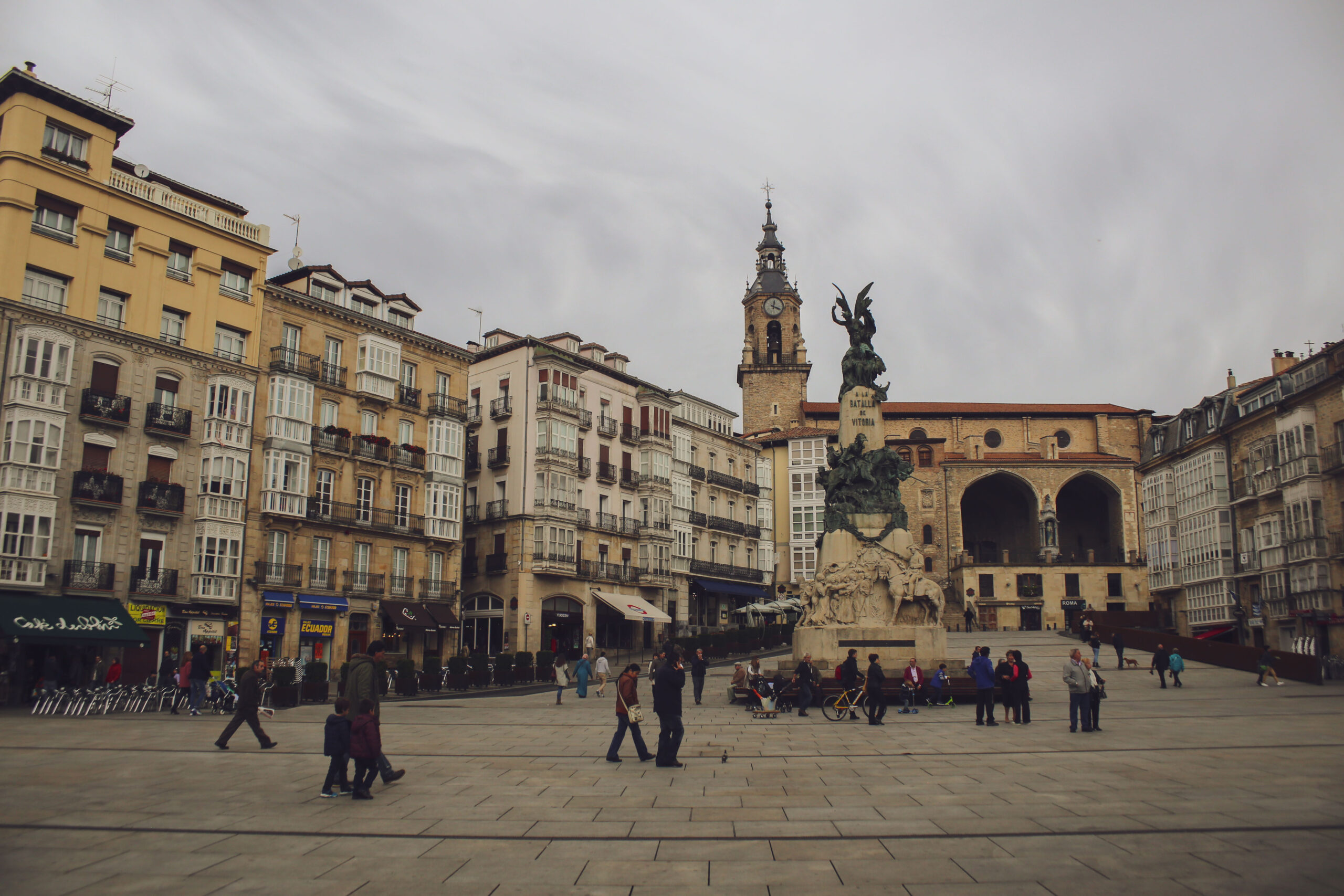
The cultural vibrancy of Vitoria-Gasteiz is palpable as you wander through its streets. The city boasts a blend of Gothic, Renaissance, and modernist architecture. Key landmarks include the Cathedral of Santa María, a Gothic masterpiece that has inspired writers like Ken Follett, and the Renaissance-inspired Plaza de la Virgen Blanca. This central square is a microcosm of the city’s architectural elegance and lively social life, making it an ideal starting point for any exploration.
Nestled in the heart of Vitoria-Gasteiz, the charming Plaza de la Virgen Blanca offers a captivating glimpse into the rich cultural tapestry of this historic city. As the central square, it serves as a bustling hub for both locals and tourists, encapsulating the vibrant spirit of Vitoria-Gasteiz. In the foreground, the majestic Monument to the Battle of Vitoria stands tall, commemorating the decisive 1813 battle during the Peninsular War. The statue’s intricate details depict the valor and triumph of the forces that fought, adding a layer of historical depth to the plaza. Surrounding the monument, the plaza is alive with activity as people stroll, gather, and converse, creating a lively atmosphere that is both inviting and engaging.
The architecture framing the square is a picturesque blend of traditional and modern styles. Tall, elegant buildings with classic facades and large windows showcase the city’s architectural heritage. The yellow and beige hues of these structures are softened by the afternoon light, lending a warm and welcoming feel to the area. The beautiful arched balconies and ornate details of the buildings reflect the historical significance and timeless beauty of Vitoria-Gasteiz. To the right, the impressive Church of San Miguel looms with its stately clock tower, adding a touch of grandeur to the scene. The church’s Gothic architecture, with its pointed arches and detailed stonework, is a testament to the city’s rich religious history and architectural prowess. The open spaces beneath the arches offer a perfect spot for visitors to pause and appreciate the serene yet grand ambiance of the plaza.
The plaza is not just a historical site but also a social hub. People of all ages, from children playing to adults enjoying leisurely walks, bring the square to life. The cafes and shops lining the plaza’s perimeter invite visitors to indulge in local cuisine and shopping, enhancing the cultural experience. The presence of bicycles and pedestrians emphasizes the city’s commitment to a sustainable and pedestrian-friendly environment. Visiting Plaza de la Virgen Blanca is like stepping into a living postcard of Vitoria-Gasteiz. The harmonious blend of historical monuments, architectural beauty, and vibrant social life makes it a must-visit destination. Whether you are a history buff, an architecture enthusiast, or simply someone looking to soak in the local culture, this plaza offers something for everyone.
Vitoria-Gasteiz is often celebrated for its green credentials and commitment to sustainability. In 2012, it was awarded the title of European Green Capital, a testament to its extensive network of parks, green spaces, and environmentally friendly urban planning. The city’s Green Belt, a ring of parks and natural areas surrounding the urban core, offers residents and visitors a tranquil escape into nature, fostering a deep connection with the environment. No visit to Vitoria-Gasteiz would be complete without indulging in the region’s culinary delights. The Basque Country is famous for its gastronomic excellence, and Vitoria-Gasteiz is no exception. The city is home to numerous pintxos bars, where you can savor these small, flavorful bites that are a staple of Basque cuisine. From traditional Basque dishes to innovative culinary creations, the local food scene offers a feast for the senses.
Vitoria-Gasteiz’s location makes it an ideal base for exploring the wider Basque Country. Just a short drive away, you can discover the coastal beauty of Bilbao and San Sebastián, each offering its own unique charm and attractions. Bilbao, with its iconic Guggenheim Museum, blends modern art and architecture with Basque tradition, while San Sebastián is renowned for its stunning beaches and world-class dining. The strategic location of Vitoria-Gasteiz also provides easy access to other parts of northern Spain. The lush landscapes of La Rioja, famous for its vineyards and wine production, are within reach, offering a perfect excursion for wine enthusiasts. Additionally, the proximity to the Pyrenees makes it a great starting point for those seeking outdoor adventures, from hiking and skiing to exploring picturesque mountain villages.
Visiting Vitoria-Gasteiz is an opportunity to immerse yourself in the rich cultural tapestry of the Basque Country. Whether you’re strolling through the medieval streets, relaxing in one of the city’s many green spaces, or savoring the local cuisine, the city’s charm and vitality are sure to leave a lasting impression. As you explore Vitoria-Gasteiz and its surroundings, you’ll discover a region that seamlessly blends history, culture, and natural beauty, inviting you to experience the very best of northern Spain.