Nestled in the heart of Brittany, Vitré is a captivating town that effortlessly blends medieval history with the vibrant charm of modern France. The image above perfectly encapsulates the essence of this enchanting locale, featuring the imposing Château de Vitré, a magnificent stone fortress that dominates the town’s skyline.
The history of Vitré dates back to the early medieval period, with its origins rooted in the 11th century when the first fortifications were built to protect against Norman invasions. The Château de Vitré, prominently featured in the image, stands as a testament to this rich history. Constructed in the 11th century by the Lords of Vitré, the castle has undergone numerous modifications and expansions over the centuries, evolving into the formidable fortress that we see today. Its sturdy stone walls, conical towers, and strategic location made it a key stronghold during the medieval period.
In this captivating image, the viewer is treated to a stunning view of the Château de Vitré, framed by the archway of one of its entrances. The arched stone doorway provides a perfect natural frame, drawing the eye directly to the historic architecture beyond. The scene within the arch reveals the château’s distinct medieval features, with its tall, conical-roofed towers and robust stone walls.
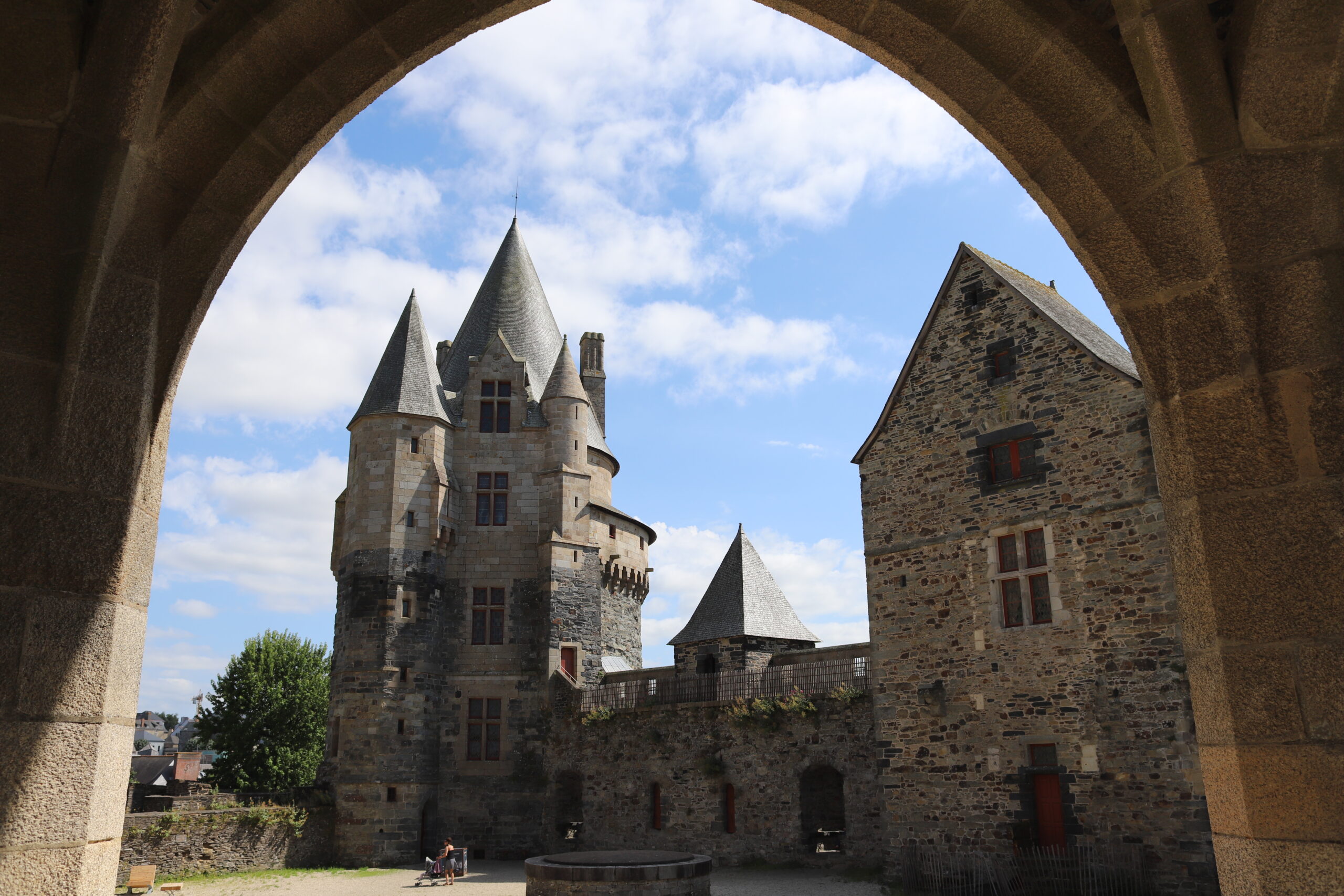
The central tower is particularly striking, with its pointed roofs and narrow windows, embodying the quintessential design of a medieval fortress. The stonework shows varying shades of gray, beige, and brown, reflecting the castle’s age and the different construction periods it has undergone. To the right, another stone building complements the central tower, with similar architectural elements including small, rectangular windows and a steeply pitched roof.
The courtyard below is quiet and serene, with a couple of benches placed against the stone wall. A lone figure sits on one of these benches, adding a human element to the scene and offering a sense of scale to the grand structures. The sunlight bathes the courtyard in a warm glow, highlighting the textures of the stone and the greenery peeking over the walls.
The sky above is a bright blue, dotted with fluffy white clouds, providing a beautiful contrast to the stone hues of the château. The overall composition of the image, with its framing arch, historic buildings, and serene courtyard, transports the viewer to a bygone era, evoking the rich history and timeless beauty of Vitré’s medieval heritage.
During the Middle Ages, Vitré was a bustling market town and an important center of commerce. Its prosperity was largely due to its strategic position on the trade routes between Brittany and the rest of France. The town’s wealth attracted many craftsmen, merchants, and nobility, contributing to its growth and architectural development. The Château de Vitré played a central role in the town’s defense and administration, serving as the residence of the local lords and a symbol of their power.
In the 16th century, the town’s importance grew further when it became part of the Duchy of Brittany. The château underwent significant renovations during this period, reflecting the changing architectural styles and advancements in military technology. The introduction of artillery and other modern weaponry necessitated the strengthening of the castle’s defenses, leading to the construction of thicker walls and additional towers.
The image captures the well-preserved medieval architecture of the Château de Vitré, with its distinctive turrets and fortified walls. The castle’s strategic position on a rocky promontory overlooking the Vilaine River made it an impregnable fortress. French flags flutter atop the turrets, adding a dash of color against the clear blue sky, symbolizing the town’s historical significance and enduring legacy.
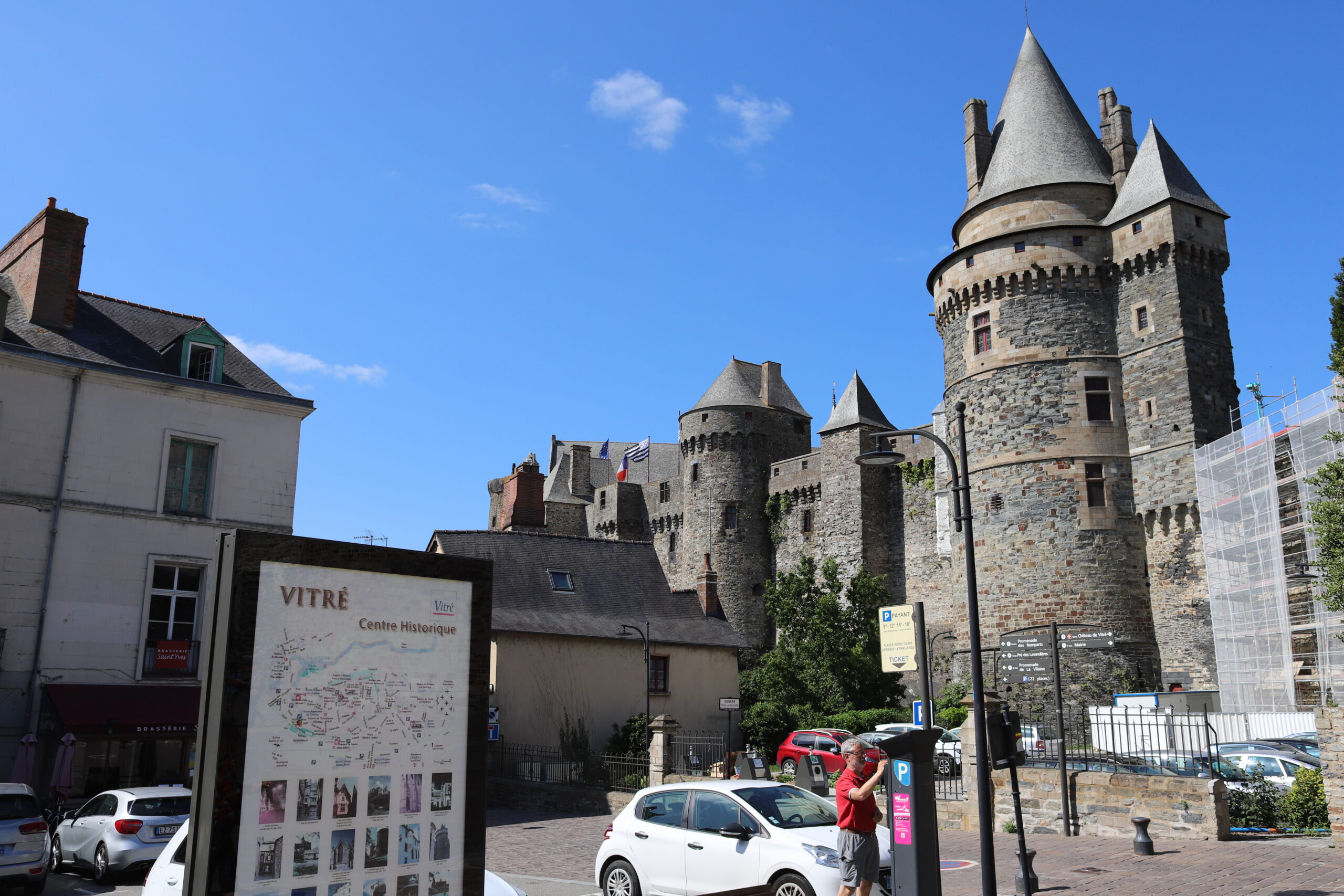
In the foreground, a map of Vitré’s historic center provides a guide for visitors eager to explore the town’s many treasures. The map showcases various points of interest, ensuring that you don’t miss any of the hidden gems scattered throughout the cobbled streets. Nearby, a man is captured mid-photograph, perhaps entranced by the same medieval allure that draws countless visitors to Vitré each year. His red shirt stands out against the muted tones of the ancient stone, adding a modern splash to the scene.
The juxtaposition of old and new is further highlighted by the presence of modern cars parked along the street, a reminder of the seamless integration of history and contemporary life in Vitré. The white building to the left, with its green-trimmed windows and sloping roof, contrasts with the rugged medieval architecture, yet complements the overall aesthetic of this picturesque town.
Walking through Vitré, one can’t help but be transported back in time, imagining the bustling markets, the clang of blacksmiths’ hammers, and the daily lives of those who once inhabited these stone walls. Yet, the town is very much alive today, offering a rich tapestry of experiences for modern travelers. From quaint cafes and brasseries to artisan shops and historical tours, Vitré invites you to immerse yourself in its unique blend of history and hospitality.
Whether you’re an avid history buff, a photography enthusiast, or simply seeking a charming destination off the beaten path, Vitré is a place that promises to captivate and inspire. Plan your visit to this remarkable town and let its historic beauty and modern vibrancy leave an indelible mark on your travel memories.