• Skip to main content
  • Skip to secondary menu
  • Skip to footer

Virtual Travel Guide

Top Travel Destinations in Digital Media

  • Sponsored Post
  • About
    • GDPR Compliance Statement
  • Contact

Monumento ai Caduti della Guardia di Finanza in Sicilia, Palermo’s Hidden Memorial on Via Cavour

November 5, 2026 By admin

Palermo is full of monuments that appear in every travel guide, but some of its most affecting memorials stand away from the usual tourist routes. One of them is the Monumento ai Caduti della Guardia di Finanza in Sicilia, situated in the internal garden of the Guardia di Finanza Regional Command headquarters at Via Cavour 2.
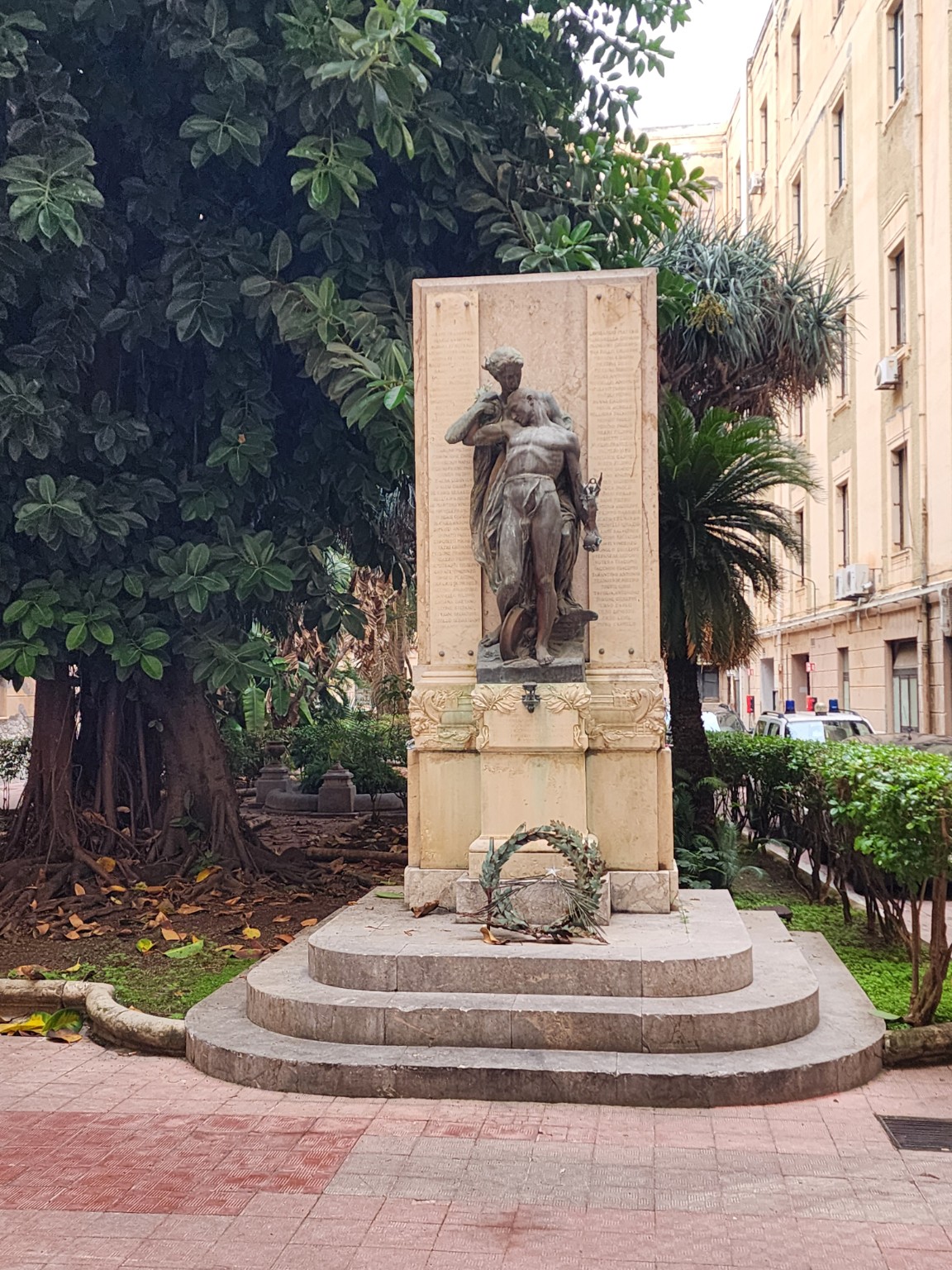
Monumento ai Caduti della Guardia di Finanza in Sicilia in the garden of the Regional Command in Palermo
The memorial at Via Cavour 2, Palermo, photographed in November 2026.

The monument commemorates members of the Guardia di Finanza associated with Sicily who died in service. The Guardia di Finanza is Italy’s military-organized financial police force, responsible for combating financial and economic crime and carrying out other law-enforcement duties. Its remembrance of fallen personnel is part of a broader tradition of institutional service and sacrifice.

The memorial itself is built as a tall, pale stone stele on a stepped base. Its most arresting feature is a dark bronze high-relief sculpture: a dying or fallen serviceman is held by an allegorical figure. The human forms lean into one another, creating an image of vulnerability, support and loss rather than a triumphant military pose. Behind them, two narrow inscribed panels form a roll of honor, recording the names of Guardia di Finanza personnel from Sicily who fell in service.

At the foot of the stonework lies a commemorative wreath, its leaves faded and scattered. The wreath gives the photograph an especially quiet character. It is a reminder that this is not simply an old sculpture but a place where remembrance is expressed through recurring gestures.

The setting makes the monument memorable. A huge mature tree fills the left side of the scene, its broad leaves forming a dark canopy and its thick, exposed roots pushing across the garden soil. Palms and other subtropical plants rise behind the memorial. On the right, the warm cream façades of Palermo’s buildings frame the courtyard, while parked vehicles and ordinary street details bring the scene back to the present. The contrast between the solemn bronze figures, the pale masonry and the exuberant greenery is particularly striking.

Via Cavour is one of central Palermo’s important streets, yet the memorial is easy to overlook because it stands within the headquarters grounds rather than on a conventional sightseeing square. Visitors should not assume the internal garden is freely accessible: this is an operational law-enforcement property, and entry may be restricted or subject to permission. It is best understood as a point of historical interest to seek out only where public visibility or authorized access permits.

What makes the monument worth remembering is its specificity. The inscribed names turn an abstract idea of duty into a record of individual lives. The bronze composition gives that record an emotional center, while the garden surrounds it with the ordinary, continuing life of Palermo. In a city celebrated for its palaces, churches and markets, this quieter memorial offers a different encounter with Sicilian history.

Location: Monumento ai Caduti della Guardia di Finanza in Sicilia, Comando Regionale Sicilia della Guardia di Finanza, Via Cavour 2, Palermo, Sicily, Italy. The memorial is inside the headquarters’ internal garden; public access should be confirmed in advance.

Filed Under: News

Footer

Recent Posts

  • Why Quimper Is Worth a Visit
  • Quimper Along the Steïr River, Half-Timbered Houses and Medieval Bridges
  • Campo San Bartolomeo at Night, Venice’s Living Stage Near Rialto
  • The Art of Doing Nothing at a French Café
  • Pena Palace, Sintra, Portugal’s Extraordinary Hilltop Fantasy
  • Cefalù, A Colorful Stairway Through the Old Town
  • Bilbao in the Rain, A Different Kind of Urban Beauty
  • Mont Saint-Michel, Normandy’s Medieval Island Rising Above the Tidal Sands
  • Quattro Canti, Palermo’s Magnificent Baroque Crossroads and Theatre of the Sun
  • The Garden Court of the Frick Collection, A Hidden Architectural Treasure in New York City

Part of the Market Research Media network. All publications.

Travel Marketing

  • Travel Marketing
  • Timey.org
  • Ancient Rome
What Makes a City Vibrant
For digital nomads with wanderlust
Why Lisbon Cafés Are Putting Up No Laptops Signs: Coffee, Instagram, and the Remote Work Terrace
Best Nightlife Cities in 2026, From Bangkok to Palermo
Vienna, Bratislava and Prague in Seven Days by Train
Why I Always Visit the Food Market First in a New City
The Silk Road Today, From Xi’an to Istanbul and Which Stretches You Can Travel
Lisbon Travel Guide, What to See, Where to Swim and What Changed in 2026
Five Days in Venice, a Day-by-Day Itinerary From San Marco to Torcello
The Battle Etched in Plaster — Prague’s Renaissance Sgraffito Story
Portuguese Architecture and Lisbon's Layers of Time
The Hôtel-Dieu Chapel in Lyon and Four Centuries of Healing
Prague Old Town Square, Where Centuries of History Meet
Carlo Alberto dalla Chiesa, A Memorial to the General Who Challenged the Mafia in Palermo
Madrid Across Time, the Emilio Castelar Monument Between History and Modern Life
Glenfinnan Viaduct Carries the Jacobite Steam Train Past the Spot Where the 1745 Rising Began
Why Cities Keep Rebuilding Their Past
How Historic Interiors Teach Us to Behave
Alte Nationalgalerie in Berlin and the Art of Looking Across Centuries
Villa Pacini and Catania's Headless Bourbon Kings
Sheffield Researchers Recreate the Lycurgus Cup Effect and Show How Hard the Roman Trick Was
Roman Road Milestones Were the First Navigation System
Caligula: What the Sources Say About the Mad Emperor, and What They Invented
Piranesi's Altar to Apollo and the 18th-Century Business of Selling Ancient Rome
Juno Moneta: How a Roman Goddess Gave Us the Words Money and Mint
Julius Caesar's 44 BCE Denarius: The Coin That Helped Get Him Killed
Half of This Roman Mosaic Glass Bowl Is Plaster, and the Smithsonian Kept It
George Loring Brown's Temple of Peace Painting and the Roman Forum's Most Misnamed Ruin
The Badminton Sarcophagus Was Carved While the Roman Empire Was Coming Apart
A Freed Slave in Augustan Rome Paid to Have His Wrinkles Carved in Marble

Media Partners

  • Travel Market
  • Travel Magazine
Gen Z Travel Trends for 2027, Smaller Budgets and Bigger Experiences
Norse Atlantic Warns Finances Are Critical as 2026 Budget Airline Failures Pile Up
Visiting Borough Market in London, Free Entry and the Best Time to Go
Kraków Main Market Square, Free to Explore With History Above and Below Ground
Teatro Massimo in Palermo, A €14 Tour Inside Italy's Largest Opera House
Paris Croissant Prices in 2026, Most Bakeries Still Charge 1.10 to 1.40 Euros While Palace Versions Pass 4
Top 10 Travel Destinations Ranked by Nightlife, From Berlin to Bangkok
Palermo Cathedral Is a Landmark You Can Appreciate Before Buying a Ticket
Palatine Chapel Mosaics Make a Strong Case for Prioritizing One Palermo Interior
Palermo Rooflines Reward Travelers Who Look Beyond the Main Attractions
Jerónimos Monastery, Lisbon’s Extraordinary Manueline Portal
A Day in Bratislava, Old Town Charm and Castle Views
Saint-Émilion: The Wine Town Built From Its Own Underground Quarries
Folk Dances in Bergerac: When Visitors Join the Celebration
Lisbon's Monument to the Discoveries, Framed by Belém Marina
Porto Ribeira Waterfront, Houses and Balconies Above the Douro
Belém Tower and the Busy Lisbon Waterfront
Palermo's Politeama, Where Monumental Architecture Meets Everyday Sicilian Life
Stockholm City Hall Council Chamber and Its Viking Inspired Ceiling
Palermo, Sicily's Most Cinematic and Photogenic City

Copyright © 2022 VirtualTravelGuide.com

Market Analysis & Market Research