Cefalù is one of Sicily’s most attractive coastal towns, and November offers a rather different way to experience it. The summer crowds have largely disappeared, the streets feel more relaxed, and the town’s remarkable combination of historic architecture, everyday Sicilian life and dramatic natural scenery becomes easier to appreciate.
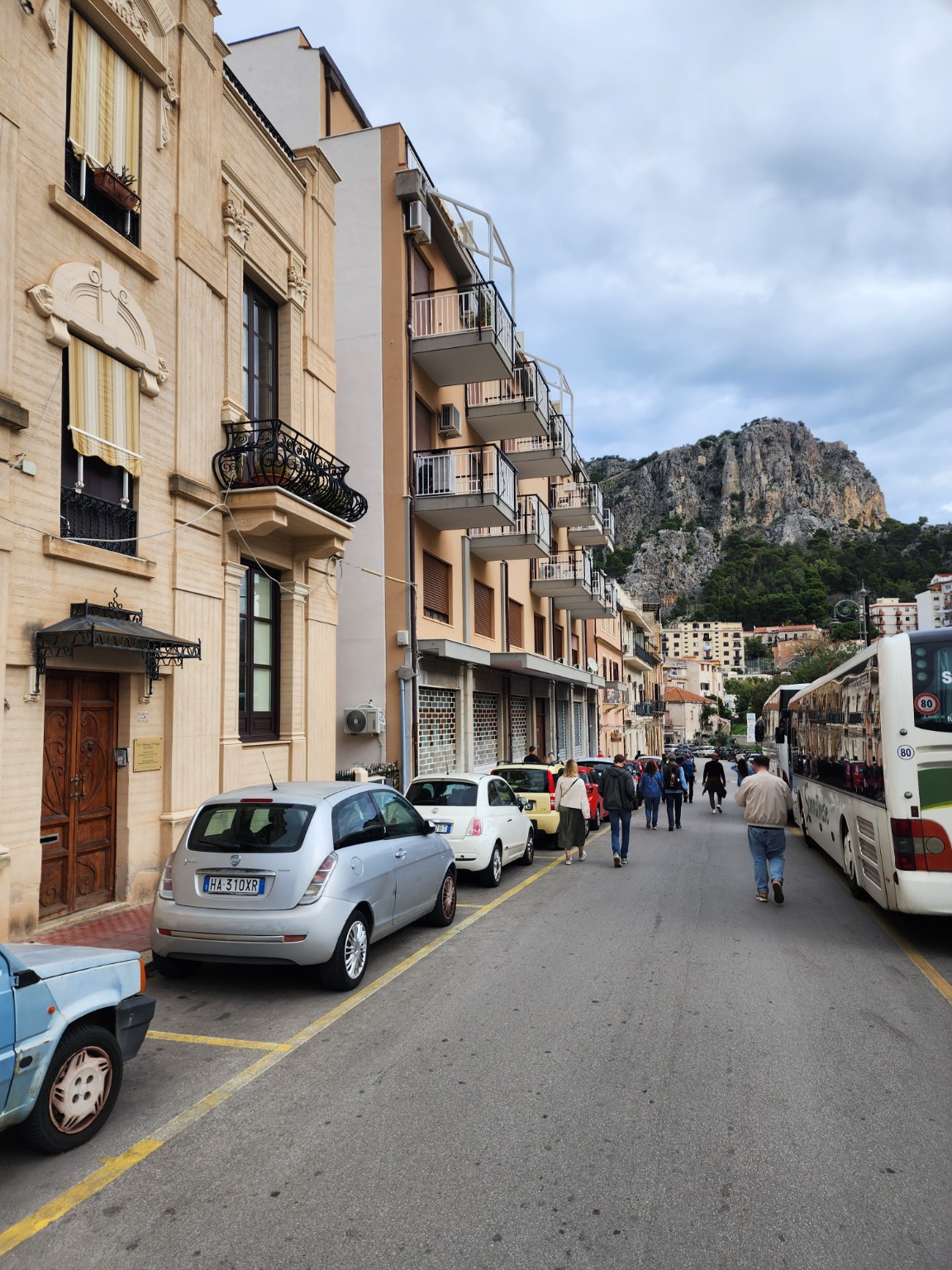
The photograph captures Cefalù from an ordinary street rather than its famous beachfront. On the left, an elegant limestone building features decorative stonework, tall windows, wrought-iron balconies and a substantial wooden entrance. Beside it stands a more modern apartment building with a succession of projecting balconies. Parked cars line the street, pedestrians walk toward the town centre, and a large tour bus occupies much of the right side of the road. Above everything rises La Rocca, the enormous rocky formation that dominates Cefalù’s skyline.
It is a particularly revealing view of the town. Cefalù is not simply a picturesque collection of medieval lanes preserved for tourists. It is a living community where historic buildings, modern apartments, traffic, local residents and visitors all share the same relatively compact space. And La Rocca is almost always somewhere in the background, reminding you how unusual the town’s setting really is.
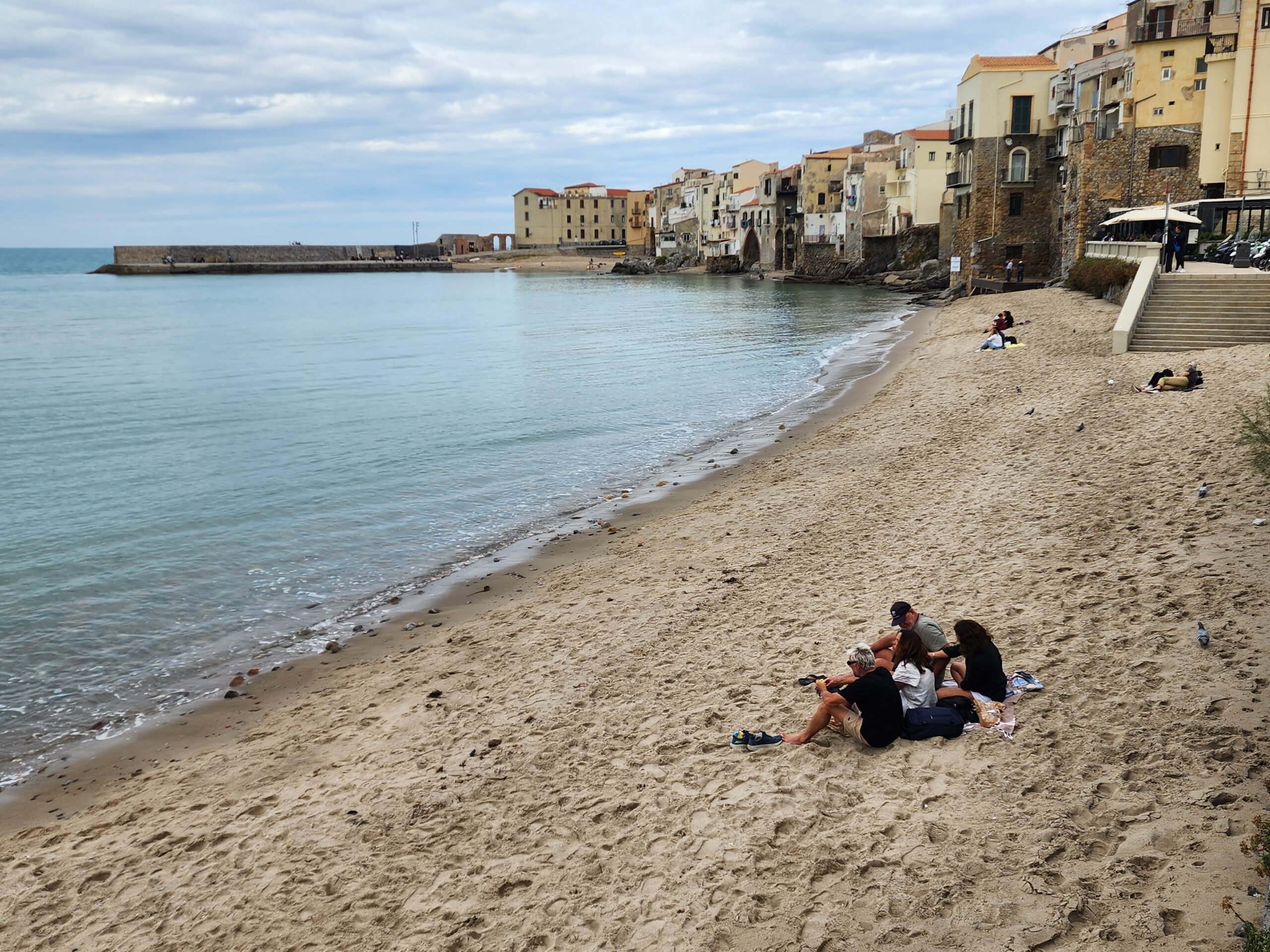
November brings cooler temperatures, shorter days and a greater possibility of rain, but these are not necessarily disadvantages. Walking through the historic centre is more comfortable than during the intense summer heat. The Norman cathedral, a UNESCO-listed monument celebrated for its Byzantine mosaics, can be appreciated at a less hurried pace. The narrow streets around Piazza del Duomo, the old harbour and the waterfront remain inviting even when swimming is no longer the main attraction.
For photographers, the softer autumn light and changing cloud cover offer opportunities that Sicily’s bright summer sunshine sometimes makes difficult. The pale stone facades take on subtle colours, architectural details become more visible, and the contrast between Cefalù’s urban landscape and its mountainous backdrop can be particularly striking.
The climb up La Rocca is another reason to visit, provided the weather and trail conditions are suitable. From above, the historic town forms a dense cluster of terracotta roofs between the mountain and the Tyrrhenian Sea. Opening hours and access conditions should be checked locally, especially outside the main tourist season.
Some seasonal restaurants and beach establishments may be closed, and the town is noticeably quieter in the evenings. Nevertheless, Cefalù remains a rewarding destination for anyone interested in architecture, photography, history and the everyday character of Sicily.
November may not be the classic month for a beach holiday, but for discovering Cefalù beyond its summer image, it has a charm of its own.