A museum visit begins before you read the first label. The entrance establishes a pace, a staircase draws you upward, and the first room suggests what deserves your attention. Some spaces present objects with deliberate restraint. Others surround them with marble, gilding, painted ceilings and long views through open doors. Spend a moment reading that setting. The room is part of the experience, and sometimes part of the collection.
The State Hall of the Austrian National Library in Vienna makes the relationship unusually clear. Built as part of the former Court Library, it presents books within a setting that also expresses imperial authority. The library’s own account describes the eighteenth-century hall as a place of dynastic display visited by scholars and diplomats. Knowledge was collected here, but the building also made a public statement about who possessed and organized it.
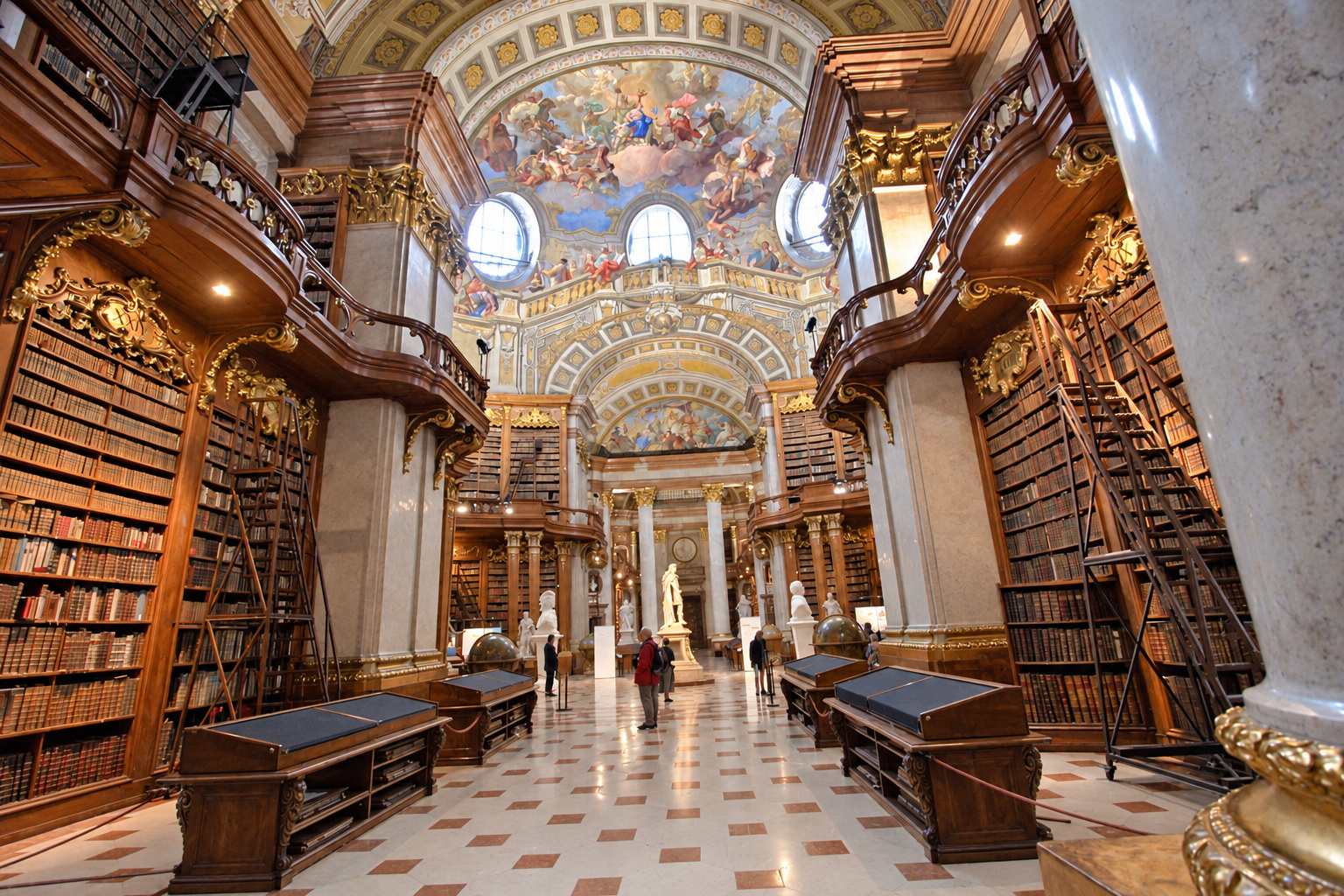
In the photograph, rows of tightly packed books rise on both sides beneath curving wooden galleries. Tall ladders lean against the shelving, giving a practical scale to a room that might otherwise feel theatrical. Pale stone columns interrupt the warm wood, their bases and capitals picked out in gold. Low, sloping display cases guide the view toward a white statue in the distance. Above, painted figures gather across an architectural framework of arches, decorative panels and bright windows. Visitors occupy only a small portion of the patterned floor.
The image contains several kinds of evidence. The ladders and shelves describe the work of housing books. The central axis makes the room easy to read from the entrance. The statue and ceiling move the attention beyond individual volumes toward patronage and representation. You do not need to decode every allegorical figure to notice that the collection has been placed within a larger story. A guide or institutional description can help separate a plausible visual reading from a precise historical identification.
Other museums make different choices. A plain wall and carefully isolated object can concentrate attention, while a reconstruction of a room can place furnishings within an interpretation of daily life. Neither arrangement is neutral simply because one looks simpler. Ask what has been included, what has been left out and where the visitor is expected to stand. Labels may explain those decisions, although their absence does not mean there were no decisions to make.
Doorways are particularly useful to watch. A painting glimpsed from the next gallery can become a destination before you know its title. A low opening followed by a large space changes the sense of scale. A narrow circulation route may make a collection feel intimate or crowded, depending on visitor numbers. These are observations about the experience of the room; attributing every effect to an original architect would need evidence about the building’s history and later alterations.
For photography, try making a sequence rather than a single impressive wide view. Begin with the room’s overall organization, then photograph a relationship between an object and its setting, and finish with a detail that reveals use or construction. Keep important verticals under control where practical, and check the edges for half-cut visitors or display cases. Follow the institution’s current photography rules. A room worth looking at is also a room other people need to move through.
Afterward, review which images explain the visit. A close view of a beautiful object may belong alongside a quieter frame showing the height of its display or the neighboring doorway. Those contextual pictures help preserve how you encountered the collection. The State Hall offers a particularly rich example, but the same habit works in a small local museum: look at the room before allowing its contents to divide your attention into separate labels.